
by David Lorehound
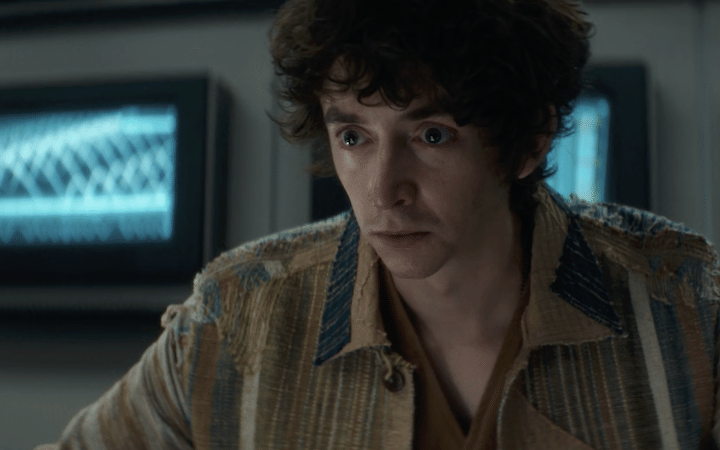
When Boy Kavalier misattributes Arthur C. Clarke's Third Law to Isaac Asimov in episode 4 of Alien Earth - "above a certain level technology is indistinguishable from magic" - it signals something deeper at work in Noah Hawley's storytelling approach. This isn't a character mistake or script error; it's a deliberate flag to viewers that philosophical inquiry itself has become the architecture driving plot development.
In the same episode, Hawley explicitly introduces the Buddhist parable of the Three Wise Monkeys through Kirsch's conversation with Slightly. Two major philosophical frameworks in one episode suggests intentional construction - Hawley is using these concepts not as thematic decoration, but as the actual structure creating dramatic tension. Characters find themselves positioned at moral crossroads where their philosophical choices determine story direction, creating what resembles a modern morality play disguised as sci-fi horror.
This approach rewards different levels of engagement. Viewers seeking entertainment about child-minded hybrids and terrifying aliens get exactly that. Those curious about the deeper layers find a sophisticated exploration of how perception, moral choice, and intellectual hubris create conditions for both breakthroughs and catastrophes.
The Philosophical Architecture

Clarke's Three Laws (1962) deal fundamentally with human limitations in recognizing possibility:
When a distinguished, elderly scientist states that something is possible, he is almost certainly right. When he states that something is impossible, he is very probably wrong.
The only way of discovering the limits of the possible is to venture a little way past them into the impossible.
Any sufficiently advanced technology is indistinguishable from magic.
While the famous third law is often quoted, the first two reveal Clarke's broader concern with intellectual hubris - our tendency to mistake current understanding for absolute boundaries. The first law warns against dismissing possibilities based on authority or conventional wisdom. The second encourages bold exploration while acknowledging that we must push boundaries to discover them. Together, they advocate for intellectual humility about what we think we know.
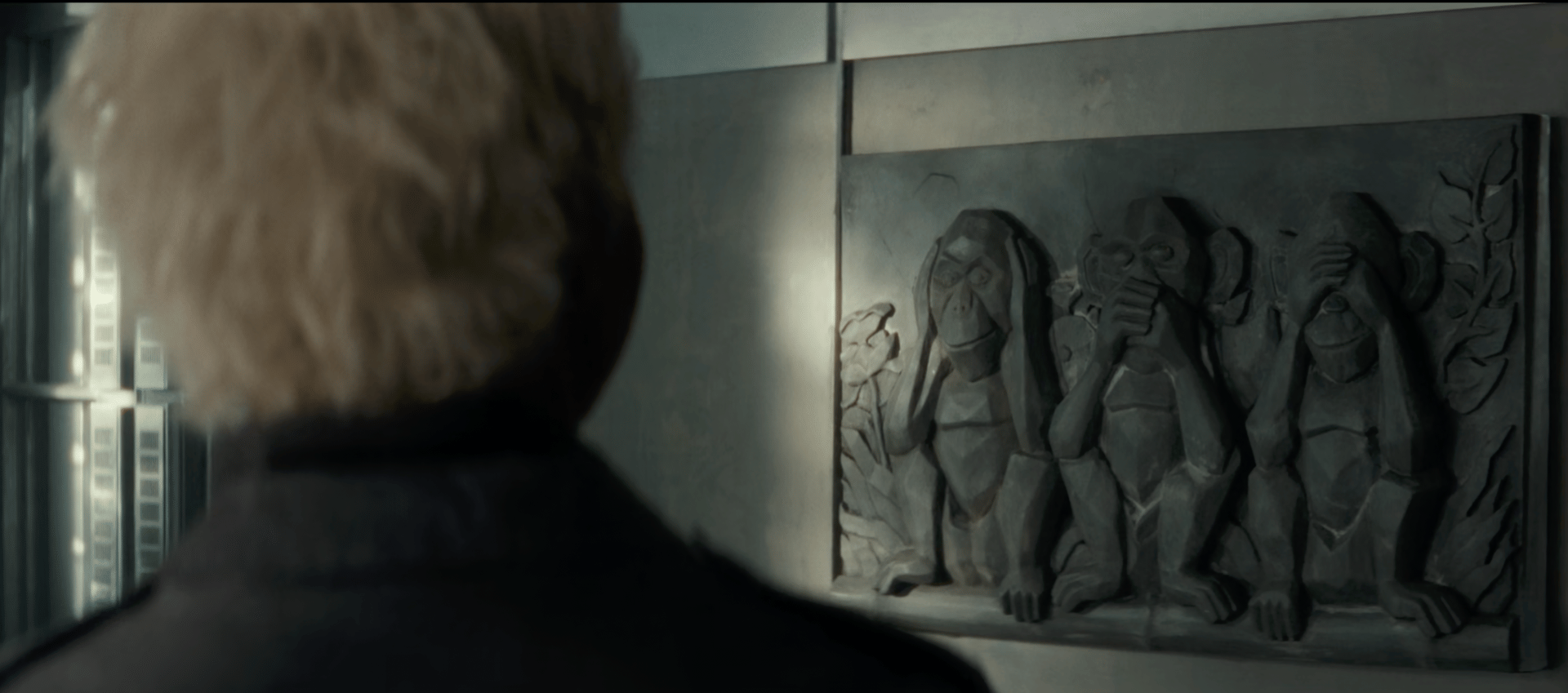
The Three Wise Monkeys parable shares a similar concern about perception, but with a crucial duality. In Eastern Buddhist tradition, "see no evil, hear no evil, speak no evil" represents spiritual discipline - training the mind to avoid destructive influences. The Western interpretation inverts this: willful ignorance and moral complicity - choosing not to see injustice or speak out against wrongdoing.
Both frameworks examine how what we choose to see, hear, and acknowledge shapes reality and choices. When Hawley places them in the same episode, he establishes the perceptual and moral terrain where characters make crucial decisions.
Characters at Philosophical Crossroads
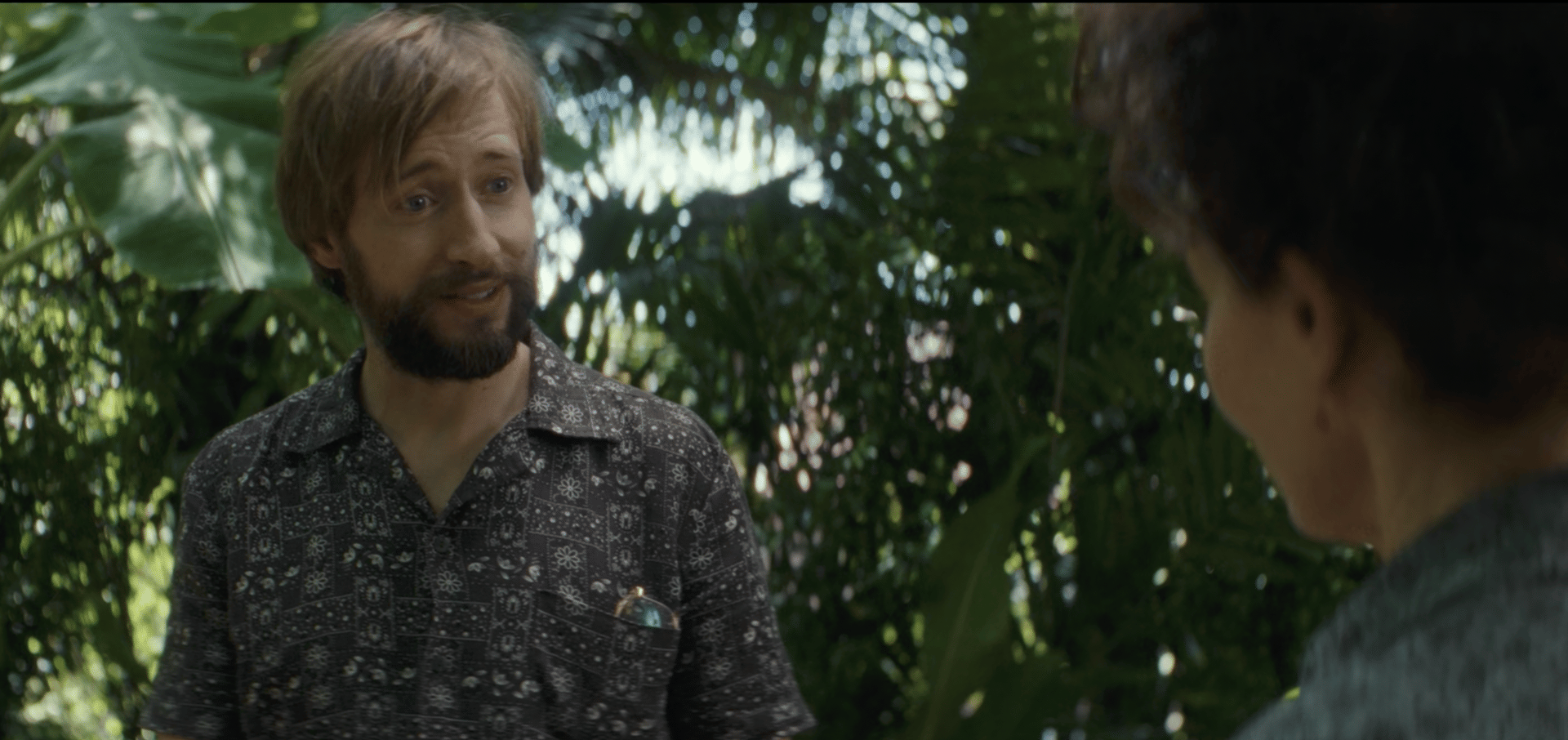
Arthur's Impossible Position: Arthur embodies the tension between exploration and responsibility. When he tells Dame Sylvia, "this isn't science," he recognizes Boy K has moved beyond methodology into recklessness. His concern - "if we did this wrong, best case, we've got a bunch of AIs thinking they're human. Worst case, we killed six kids" - shows him confronting possibilities Clarke's laws suggest exploring while recognizing ethical costs others choose not to see.
Unlike Boy K, who embraces venturing into the impossible without constraints, or Dame Sylvia, who practices willful ignorance, Arthur occupies an uncomfortable middle ground. He sees both potential and moral implications, creating growing discomfort throughout the episode.

Slightly's Moral Trap: Slightly literally "hears evil" through Morrow's disembodied voice - perfect application of the monkeys parable. Morrow operates as a proxy for negative thought patterns the parable warns against, using manipulation techniques that mirror how minds trap themselves: false binary choices ("villain or hero"), competing loyalties, and moral language like "restitution" to justify harmful actions.
When Morrow tells Slightly that taking eggs back from thieves isn't wrong because "how can you steal from a thief?", he employs rationalization leading to ethical paralysis. Slightly's vulnerability as a child makes him susceptible to these philosophical traps, while Morrow weaponizes moral concepts against someone lacking the wisdom to recognize manipulation.
The tragic irony: Kirsch, who explains the monkeys parable, may be the only adult practicing the Eastern interpretation - observing without judgment, gathering information without immediate action. His questions about preventing harm echo Asimov's robotics laws (another philosophical framework Hawley references), but his subtlety may be inadequate for a child needing clearer guidance.
Hawley's Method: Philosophy as Plot Engine
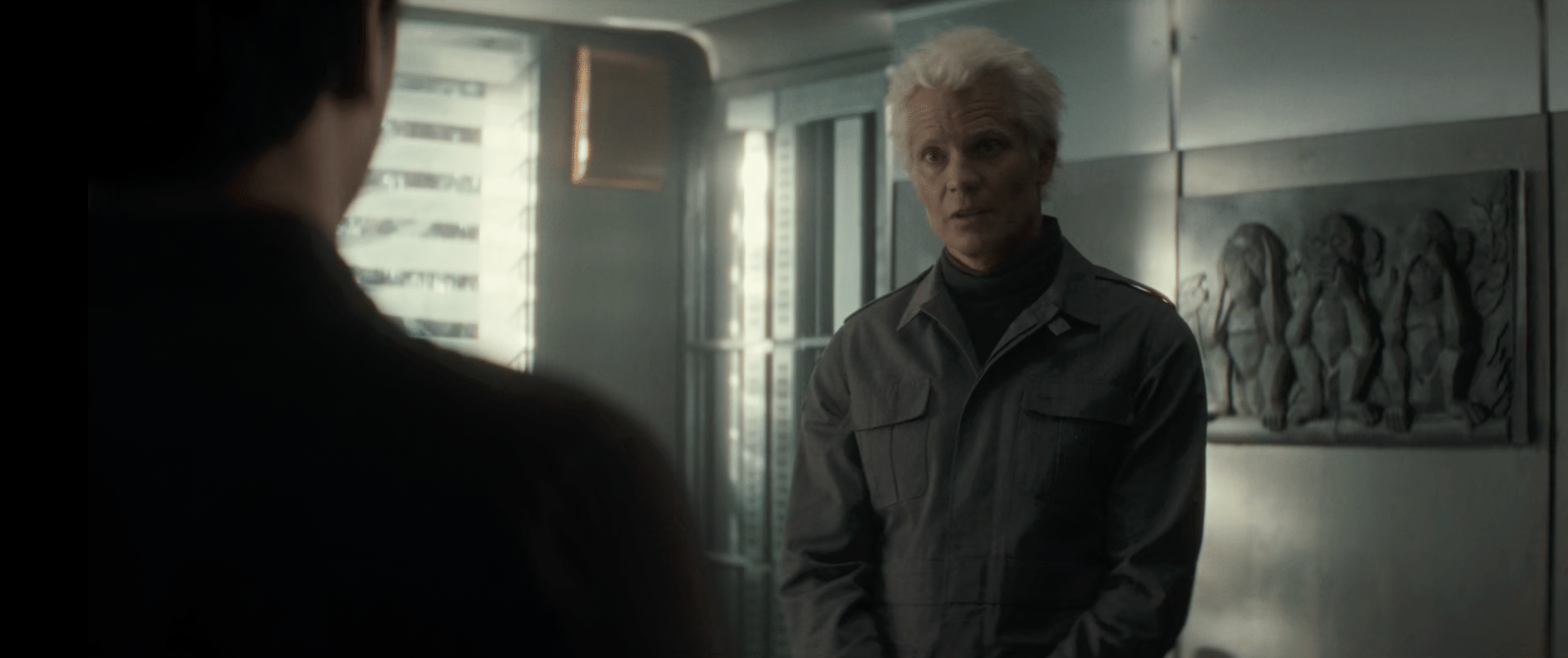
These frameworks create dramatic tensions rather than commenting on them. Arthur's discomfort grows because he can't maintain the blindness that Boy K's approach requires. Dame Sylvia's willful ignorance works until violence forces recognition. Manipulation of Slightly succeeds because he lacks the development to recognize philosophical traps.
The misattribution becomes a reward system for viewers whose curiosity is sparked by deeper engagement. Different viewers can have completely different experiences with identical content - demonstrating reader-response theory in action. Hawley encodes philosophical complexity into the narrative structure, but viewers decode these elements based on their own curiosity and analytical engagement. The frameworks generate story conflicts rather than providing commentary.
This resembles morality play traditions worldwide, where dramatic narrative explores ethical questions. But rather than providing clear instruction, Hawley positions viewers as observers of characters making philosophical choices, examining consequences without prescribing solutions.
The episode suggests our philosophical frameworks don't just influence event interpretation - they shape what events become possible. In Hawley's construction, philosophical inquiry becomes story architecture.
AI Writing Disclosure
This article was developed using Claude AI as a research and writing tool. Claude assisted with organizing my analytical framework around Clarke's Three Laws and the Three Wise Monkeys parable, helped structure the argument about philosophical inquiry as plot architecture, and transformed my extensive and detailed notes into polished prose while maintaining my established voice. The core analytical insights, interpretations, and conclusions about Noah Hawley's use of philosophical frameworks all reflect my personal analysis of the creative choices in Alien Earth.