
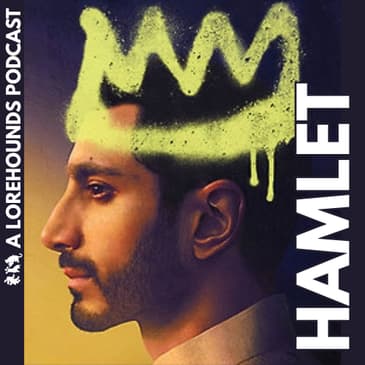
David and Elysia dive into Shakespeare's Hamlet, opening with a discussion of the play itself and some of the most classic film and stage adaptations, not to mention the whole sub-genre of films loosely adapting and referencing the Bard's longest work.
With that foundation laid, they turn their attention to the new adaptation starring Riz Ahmed, directed by Aneil Karia, that debuted at Telluride last year and is opening in theaters across North America today, April 10. How faithful is this new incarnation of the story, set in London's Asian community in the modern day? And what does and doesn't work when breaking down the source material to create what they call "the boldest adaptation to date"?
Links discussed:
- "The Name of Action" short doc
- This American Life: "Act V"
- Bait TV series: trailer
Hamlet adaptations discussed:
- Hamlet (1948) – Directed by Laurence Olivier, starring Laurence Olivier
- Hamlet (1990) – Directed by Franco Zeffirelli, starring Mel Gibson
- Hamlet (1996) – Directed by Kenneth Branagh, starring Kenneth Branagh
- Hamlet (2009) – Directed by Gregory Doran, starring David Tennant
- Hamlet (2018) – Directed by Rhodri Huw and Robert Icke, starring Andrew Scott
- Hamlet (2024) – Directed by Sean Mathias, starring Ian McKellen
- Hamlet (2025) – Directed by Aneil Karia, starring Riz Ahmed
- Hamlet: National Theatre Live (2026) – Directed by Robert Hastie, starring Hiran Abeysekera
Other films discussed:
- Rosencrantz & Guildenstern Are Dead (1990) – Directed by Tom Stoppard
- The Lion King (1994) – Directed by Roger Allers and Rob Minkoff
- In the Bleak Midwinter (1995) – Directed by Kenneth Branagh
- Rosencrantz and Guildenstern Are Undead (2009) – Directed by Jordan Galland
- Ophelia (2018) – Directed by Claire McCarthy
- The Northman (2022) – Directed by Robert Eggers
- Grand Theft Hamlet (2024) – Directed by Sam Crane and Pinny Grylls
- King Hamlet (2025) – Directed by Elvira Lind
- Scarlet (2026) – Directed by Mamoru Hosoda
Patreon, Supercast, Discord, and Network Affiliates: linktr.ee/thelorehounds
Send your questions and feedback to lorehounds@thelorehounds.com.
Any opinions stated are ours personally and do not reflect the opinion of or belong to any employers or other entities
Advertising Inquiries: https://redcircle.com/brands
Privacy & Opt-Out: https://redcircle.com/privacy
00:16 --> 00:27 [SPEAKER_02]: Hello and welcome to the Cinema Hounds, the Law Hounds podcast looking at Shakespeare's reimaginings 425 years in the making.
00:27 --> 00:33 [SPEAKER_02]: I'm David, your guide to the not so Danish court of London's Asian community.
00:33 --> 00:41 [SPEAKER_04]: And I'm Alicia Ophelia's would be therapist advising her to get to a nunnery for some time all from her consequences.
00:43 --> 00:48 [SPEAKER_04]: And this is our look at Hamlet, especially the new Hamlet releasing in the U.S. in Canadian theaters.
00:48 --> 00:52 [SPEAKER_04]: The same day, it's a episode April 10th.
00:52 --> 01:03 [SPEAKER_04]: We are by the way, we're talking about a story that as David said, 425 years old and most of you have probably read this in high school, so we are not going to give the usual spoiler warnings this time.
01:04 --> 01:13 [SPEAKER_04]: Um, sure there are some differences in setting with the new one, but basically we're just we're talking about Hamlet, so sorry, spoilers on the table.
01:13 --> 01:14 [SPEAKER_02]: open for everything.
01:15 --> 01:16 [SPEAKER_04]: Yeah.
01:16 --> 01:23 [SPEAKER_04]: So David, let's, I mean, you and I did like kind of a mini project around deepening in Hamlet.
01:23 --> 01:29 [SPEAKER_04]: What was your background in Hamlet before Hamlet, I think, was what kicked it off for both of us.
01:29 --> 01:30 [SPEAKER_02]: Yeah, exactly.
01:30 --> 01:34 [SPEAKER_02]: And then I saw the just randomly saw the Dev Patel.
01:35 --> 01:36 [SPEAKER_02]: Uh, did I see Dev Patel?
01:36 --> 01:37 [SPEAKER_02]: I mean, there's lots of them.
01:37 --> 01:38 [SPEAKER_02]: Sorry.
01:38 --> 01:39 [SPEAKER_02]: That's a beat.
01:39 --> 01:40 [SPEAKER_02]: That's a reference to.
01:40 --> 01:41 [SPEAKER_02]: He's not tall enough.
01:41 --> 01:41 [SPEAKER_02]: No, sorry.
01:41 --> 01:42 [SPEAKER_02]: That's from that show.
01:43 --> 01:43 [SPEAKER_02]: Sorry.
01:43 --> 01:43 [SPEAKER_02]: Yeah.
01:44 --> 01:47 [SPEAKER_02]: And, uh, or, uh, who's the other guy?
01:47 --> 01:47 [SPEAKER_02]: He-mish?
01:48 --> 01:48 [SPEAKER_04]: Yeah.
01:48 --> 01:49 [SPEAKER_04]: He-mish Patel.
01:49 --> 01:49 [UNKNOWN]: Yeah.
01:50 --> 02:01 [SPEAKER_02]: Anyway, I saw the trailer for Rizamids, this version that we're going to be talking about somewhere just in, you know, in my feed and I was like, oh, come on, let's go, I was super excited.
02:02 --> 02:20 [SPEAKER_02]: And I have, I think, you know, just like any generic middle upper middle class kid in the United States, you know, exposed to Hamlet pretty regularly, especially through high school, it was, you know, sort of a can and thing and.
02:20 --> 02:42 [SPEAKER_02]: We had a really big theater program at my high school and we had two amazing teachers shout out to Bruce and Barbara, or just the best, and we would have different acting troops come through and this kind of stuff, but Hamlet was always sort of thrown in there at some point.
02:43 --> 03:08 [SPEAKER_02]: And my parents, you know, I grew up in Portland, Oregon, and there's the Ashland Shakespeare festival every year every summer, and so we would go down there occasionally on a family road trips and stay at, I don't know, so what would pass for an Airbnb these days outside of Ashland, and we would see various plays and stuff like that.
03:08 --> 03:09 [SPEAKER_02]: So.
03:10 --> 03:16 [SPEAKER_02]: For me, and I've always loved like a hearshake spear and I see a play or a part of a movie or whatever.
03:16 --> 03:17 [SPEAKER_02]: And...
03:18 --> 03:19 [SPEAKER_02]: It vibrates with me.
03:19 --> 03:21 [SPEAKER_02]: I'm like, oh, Shakespeare.
03:21 --> 03:24 [SPEAKER_02]: And I kind of like, it would be a wannabe.
03:24 --> 03:31 [SPEAKER_02]: I'm not even a wannabe Shakespeare, you know, I don't want to say expert.
03:32 --> 03:34 [SPEAKER_02]: But I always wanted to be a Shakespeare expert.
03:34 --> 03:39 [SPEAKER_02]: Like, if I could have been a wannabe, I would want to be that.
03:39 --> 03:42 [SPEAKER_02]: And yeah, just one of those things where it just never happened.
03:43 --> 03:45 [SPEAKER_02]: So Hamlet.
03:46 --> 03:57 [SPEAKER_02]: Yeah, it's, it's, you know, that and our Romeo and Juliet, I mean, the two most well-known, I guess, this sort of, you know, very high pinnacle in terms of, uh,
03:58 --> 04:00 [SPEAKER_02]: perception and sort of knowing things.
04:00 --> 04:02 [SPEAKER_02]: So yeah, Hamlet's just been around, right?
04:02 --> 04:04 [SPEAKER_02]: And I've seen various versions over the years.
04:05 --> 04:10 [SPEAKER_02]: Can't remember if I've ever actually seen a full, I must have seen a full production of the play.
04:10 --> 04:18 [SPEAKER_02]: Certainly, yeah, yeah, yeah, I remember seeing one in Seattle, there was like a local Shakespeare theater company there that did one, so yeah, it's just around.
04:19 --> 04:22 [SPEAKER_02]: It's just something that's been in my life unabsorbed.
04:23 --> 04:28 [SPEAKER_02]: I have not observed Hamlet in my life more
04:28 --> 04:29 [SPEAKER_04]: Yeah
04:30 --> 04:39 [SPEAKER_04]: Yeah, I mean, as you said, it's one of the big ones, like it's one of the most famous, obviously, but also it's one of the longest.
04:39 --> 04:41 [SPEAKER_04]: I think it is the longest.
04:41 --> 04:42 [SPEAKER_04]: Really, okay.
04:42 --> 04:43 [SPEAKER_04]: We'll talk a bit more about that.
04:43 --> 04:46 [SPEAKER_04]: It is today usually divided into five acts.
04:46 --> 04:48 [SPEAKER_04]: We're not gonna get that granular.
04:48 --> 04:50 [SPEAKER_04]: We're gonna be talking about a much shorter adaptation.
04:50 --> 04:58 [SPEAKER_04]: We will talk about a couple more, but Shakespeare and South release three different versions, neither you nor our experts enough to really differentiate,
04:58 --> 05:25 [SPEAKER_04]: on that kind of level, but just to recap the story over all, you know, this was published around there's some discrepancy in the day, but around 1600 full title, the tragedy of Hamlet Prince of Denmark, and the plot goes, set in Denmark, the play depicts the Prince Hamlet and his attempts to exact revenge against his uncle, Claudius, who has murdered Hamlet's father in order to seize his throne and marry Hamlet's mother, Gertrude.
05:25 --> 05:46 [SPEAKER_04]: along the way Hamlet talks to his father's ghosts, breaks the heart if his sweetheart of filia accidentally kills her father polonius, engages in a duel with her brother lairties, and after some exchanges of poison and sword points everyone ends up dead, and barely seen Fortumbra prints from Norway takes the vacant throne.
05:46 --> 05:58 [SPEAKER_04]: So, yeah, this is one that, like, as you said, it's one of the biggest ones, of course, I read about it in high school, you know, I've read the play, but it was never one of my personal favorites.
05:59 --> 06:09 [SPEAKER_04]: I am especially partial to make Beth, I would say, it's like my, I kind of feel like there's one of these tragedies that you love more than the other.
06:10 --> 06:13 [SPEAKER_04]: It's like,
06:13 --> 06:15 [SPEAKER_02]: Um, and I don't, don't forget Led Zeppelin in there too.
06:16 --> 06:18 [SPEAKER_02]: So, you know, yeah, but I, yeah, exactly.
06:18 --> 06:20 [SPEAKER_02]: It's like, oh, how do you compare these?
06:21 --> 06:28 [SPEAKER_04]: But, um, so I just didn't have the depth of familiarity that I do with, say, amid summer night stream or make Beth, as I said.
06:29 --> 06:42 [SPEAKER_04]: Um, but since Hamlet's kind of having a moment from now, right now, of course, there was ham nets, which you and I did a subscriber
06:42 --> 06:51 [SPEAKER_04]: And in addition to that, there's as documentary, I've talked about a few times in other places, Grand Theft Hamlets about staging the play inside Grand Theft Auto during the pandemic.
06:52 --> 06:59 [SPEAKER_04]: There's a recent animated film from Memoroo Hosada, Hosoda, who
06:59 --> 07:02 [SPEAKER_04]: I like some of his films, some of his adaptations are just way off.
07:02 --> 07:04 [SPEAKER_04]: This one's Scarlet was okay.
07:04 --> 07:12 [SPEAKER_04]: Anyway, but there is, and there's a new national theater adaptations just released also by the way, has a Southeast Asian leave, but that's not like a focus of it.
07:12 --> 07:15 [SPEAKER_04]: It's just more color-right blind casting.
07:15 --> 07:17 [SPEAKER_04]: It looks like I haven't gotten a chance to see it yet.
07:17 --> 07:26 [SPEAKER_04]: But yeah, and also, just within the past year, there's been an Oscar Isaac documentary about playing Hamlet, Amy Kelly and did a version as an old man version of Hamlet.
07:27 --> 07:28 [SPEAKER_04]: There's a film Shakespeare in the park.
07:28 --> 07:34 [SPEAKER_04]: There's a low budget horror Hamlet, like it's just insane not to mention the Hamlet adjacent films.
07:35 --> 07:41 [SPEAKER_04]: Now, I know you said, you used to love Rosencrantz and Gilden Stirner dead, but this time it wasn't doing it for you.
07:42 --> 07:49 [SPEAKER_02]: Yeah, in my, what am I going to watch leading up to this resommet version?
07:49 --> 07:55 [SPEAKER_02]: I was like, oh, I haven't watched that 1990 film in quite some time.
07:55 --> 08:04 [SPEAKER_02]: It was the Tom Stopper play that was true to a movie with Oldman and Gary Oldman and Tim Roth.
08:05 --> 08:20 [SPEAKER_02]: and Richard Dreyfus is in it and it's it's just sort of this really fun interesting take it's like bail wolf, but from Grendel's point of view, I think there's a book called Grendel as well right there is a book that breaks the monster's point of view, I remember reading that once.
08:21 --> 08:24 [SPEAKER_02]: and you know, oh, cool.
08:24 --> 08:27 [SPEAKER_02]: And I remember, so 1990 was a particular time for me.
08:27 --> 08:32 [SPEAKER_02]: And lots of films, the Seattle International Film Festival was happening.
08:32 --> 08:36 [SPEAKER_02]: There was a big animated film festival in Seattle at that time too.
08:36 --> 08:38 [SPEAKER_02]: We had great indie media.
08:38 --> 08:40 [SPEAKER_02]: We had the stranger magazine, Dan Savage.
08:41 --> 08:42 [SPEAKER_02]: Well, that's where he got to start.
08:42 --> 08:44 [SPEAKER_02]: Actually, he used to know his boyfriend and now husband.
08:45 --> 08:47 [SPEAKER_02]: We used to work together at the same video store.
08:47 --> 08:51 [SPEAKER_02]: And so it was just this time when stuff was what's happening.
08:51 --> 08:56 [SPEAKER_02]: And so I have these great memories of Rosencarrison, Guilden, the Turner dead.
08:57 --> 08:59 [SPEAKER_02]: So I remember seeing it on at the Guilden 45.
09:00 --> 09:03 [SPEAKER_02]: And I went to go, I was excited to watch it this time.
09:03 --> 09:06 [SPEAKER_02]: I couldn't even check it barely finish it.
09:07 --> 09:27 [SPEAKER_02]: It was so slow and ponderous and I didn't, it just didn't, it didn't gel for me this time and I'm really sad but it was really great to see Oldman and Roth, you know, as young men together in it, but yeah, I, I didn't enjoy this watching of it.
09:27 --> 09:42 [SPEAKER_04]: Yeah, I mean, so this is this this play movie that has has been on my for shameless forever because I did watch in 2009 there was this really Shlaki vampire movie called Rosencrantz and Gildenstern are undead
09:42 --> 09:58 [SPEAKER_04]: I'm sad to say they have almost nothing in common other than, you know, claiming, using those characters' names and being very loosely associated with Hamlet.
09:58 --> 10:10 [SPEAKER_02]: Yeah, so that's the thing, too, is that Hamlet, in all parts of it, get sort of broken up and distributed culture around, it's like throwing Hamlet dust around culture and people use it in all kinds of weird ways.
10:10 --> 10:11 [SPEAKER_04]: Yeah, yeah, exactly.
10:11 --> 10:14 [SPEAKER_04]: See that Scarlet animated film I talked about.
10:15 --> 10:27 [SPEAKER_04]: Yeah, so I finally watched Rosencrantz and Golden Surtre dead, and then I rewatched Rosencrantz and Kuntz and her undead, and I may have slightly preferred the latter, even though it's pretty
10:27 --> 10:30 [SPEAKER_04]: Um, but it's so stupid, but it's fun.
10:31 --> 10:38 [SPEAKER_04]: But yeah, I saw someone a lot of multiple people actually comparing residents and government certain are dead.
10:38 --> 10:47 [SPEAKER_04]: They, you know, one of the people, like, stopped or to waiting for good dough, which is a play that
10:48 --> 10:53 [SPEAKER_04]: I never really enjoyed, but it's kind of just like always been there, like I've had to read it.
10:53 --> 11:00 [SPEAKER_04]: I've had to be in it, you know, it's just always a pop culture touchstone, right?
11:00 --> 11:03 [SPEAKER_04]: But I feel like Rosencrens and Gildenson are dead.
11:03 --> 11:05 [SPEAKER_04]: It's like a sillier kind of
11:06 --> 11:06 [SPEAKER_02]: Well, that's interesting.
11:07 --> 11:08 [SPEAKER_02]: It's interesting comparison.
11:08 --> 11:08 [SPEAKER_02]: I like that.
11:09 --> 11:11 [SPEAKER_04]: But then does that mean that Hamlet is God.
11:13 --> 11:15 [SPEAKER_02]: Yeah, I don't know if it's a one-to-one like that.
11:15 --> 11:17 [SPEAKER_02]: Yeah, interesting.
11:17 --> 11:22 [SPEAKER_04]: Yeah, interestingly, no, no Rose and Cranson Guildinson and new adaptation.
11:22 --> 11:24 [SPEAKER_04]: We'll talk about what they left out.
11:24 --> 11:26 [SPEAKER_04]: But yeah, I went through it.
11:26 --> 11:29 [SPEAKER_02]: Yeah, right, they're in this new in this movie that we're going to talk about.
11:29 --> 11:41 [SPEAKER_04]: No, no, yeah, they often seem to leave them out for some reason, even though they've become especially cold favorites because of that film, but yeah, there's other like Hemlyn adjacent films, as you said, sprinkled throughout culture.
11:41 --> 11:50 [SPEAKER_04]: There is one from Ophelia's perspective, called Ophelia from 2018, starring Daisy Ridley as you'll never guess.
11:50 --> 11:59 [SPEAKER_04]: Oh, Phelia, and Naomi wants to place the queen and she also plays a case boiler coming for an eight-year-old film press board once if you don't want to hear it.
12:00 --> 12:14 [SPEAKER_04]: She plays a wood switch who is secretly the twin sister of the queen, like she's just really a medicine woman that's who everyone's getting the poisons from, but she is actually the twin sister of the queen.
12:14 --> 12:18 [SPEAKER_04]: And that just made me think of him
12:18 --> 12:19 [SPEAKER_04]: I got it.
12:19 --> 12:20 [SPEAKER_04]: Yeah, yeah, I can.
12:20 --> 12:22 [SPEAKER_04]: That whole connection, which, by the way, this came out before that.
12:22 --> 12:33 [SPEAKER_04]: So I don't know if she was inspired by that at all or it made her think about like, oh, there is a lot of these, you know, this knowledge of medicines in the book.
12:34 --> 12:34 [SPEAKER_02]: Right.
12:34 --> 12:35 [SPEAKER_02]: Did you catch this one?
12:36 --> 12:36 [SPEAKER_04]: We'll feel you.
12:36 --> 12:36 [SPEAKER_04]: Yes.
12:37 --> 12:37 [SPEAKER_04]: Yes, I watched it.
12:38 --> 12:38 [SPEAKER_04]: I enjoyed it.
12:38 --> 12:41 [SPEAKER_04]: Like, it's poopood a lot, but I quite liked it.
12:41 --> 12:41 [SPEAKER_04]: I'll talk about it.
12:42 --> 12:46 [SPEAKER_02]: It's hanging at like a 3.2
12:46 --> 12:46 [SPEAKER_02]: You know, that's fine.
12:46 --> 12:49 [SPEAKER_04]: Yeah, it's respectable ratings.
12:49 --> 12:50 [SPEAKER_04]: But I gave it a 3.5.
12:50 --> 12:51 [SPEAKER_04]: Okay.
12:51 --> 12:52 [SPEAKER_04]: Yeah.
12:53 --> 13:06 [SPEAKER_04]: Okay, questions, since we talked about Hamlet before, what do you think about the theory that Hamlet, the play we're talking about today, was inspired by the death of Shakespeare's son, Hamlet.
13:06 --> 13:09 [SPEAKER_04]: Now that we've delved further into the plot,
13:11 --> 13:18 [SPEAKER_02]: It's tough, part of when I was doing my watch, and we'll talk about all the ones that we watched in a minute, I guess.
13:19 --> 13:26 [SPEAKER_02]: The, I was looking for that thread, that ham net thread in the different productions.
13:27 --> 13:34 [SPEAKER_02]: And it was a harder, it was harder to find that through line than I expected it would be.
13:34 --> 13:37 [SPEAKER_02]: And,
13:38 --> 13:46 [SPEAKER_02]: the hem net movie and where we resolve to at the end of that.
13:48 --> 13:51 [SPEAKER_02]: is such an interesting interpretation.
13:51 --> 13:59 [SPEAKER_02]: And now I know that the author of the book that the movie was based on did extensive research into the storyline and how it worked.
14:00 --> 14:07 [SPEAKER_02]: And so I was trying to sort of think, and I think they talked about that in that podcast that you suggested I listen to.
14:07 --> 14:12 [SPEAKER_04]: Right, not just the tutors, when they interviewed the author of HamNet.
14:12 --> 14:13 [SPEAKER_02]: Right.
14:13 --> 14:17 [SPEAKER_02]: And then I forget then they interviewed a Shakespeare expert or somebody who's very conversed.
14:17 --> 14:17 [SPEAKER_02]: Right.
14:17 --> 14:18 [SPEAKER_02]: He works at the globe.
14:19 --> 14:19 [SPEAKER_02]: Right.
14:21 --> 14:32 [SPEAKER_02]: And so I think that's what I've kind of come away from not only with this resommet interpretation and the brahna and the Zephyrelli and those are the ones that I watch on the novel.
14:32 --> 14:35 [SPEAKER_02]: If you see Rose and Quincy Gildens, sirn, the
14:38 --> 14:43 [SPEAKER_02]: It's kind of a cliche thing to say, but it's a crystal, it's a prism, right?
14:43 --> 14:51 [SPEAKER_02]: And every time we change the angle of what we look at, we get different viewpoints and different colors and see things differently.
14:52 --> 15:05 [SPEAKER_02]: So I think, and it's such a deeply layered story, and we'll talk about fortune bras and
15:07 --> 15:29 [SPEAKER_02]: that it's a what's the way I want to say this I'm I'm really trying to find it's a very hard I was very hard for me to find the ham net through line because the the play itself is so layered and I don't know where the that interpretation came from even though that I know that the book author
15:29 --> 15:33 [SPEAKER_02]: did extensive research into this and really keyed in on that.
15:33 --> 15:41 [SPEAKER_02]: And so I almost have to go back to maybe watch Hamlet again and go back to listening to that podcast again to see what I can pick up.
15:41 --> 15:50 [SPEAKER_04]: I mean, I feel like I should read the her book to really get more, but I mean, I see Hamlet is a story about grief for certain it is that.
15:50 --> 15:51 [SPEAKER_02]: That's one part.
15:51 --> 15:52 [SPEAKER_02]: Yeah, that's one element.
15:52 --> 15:53 [SPEAKER_02]: Yeah.
15:53 --> 15:57 [SPEAKER_04]: But it is also, you know, Shakespeare in general, he would
15:57 --> 16:00 [SPEAKER_04]: pretty much all the stories on older stories.
16:00 --> 16:13 [SPEAKER_04]: So, in this case, most especially the Scandinavian story of Amleth, which you can see a more direct telling of in the Northman, the 2022 film with Alexander Skarsker.
16:14 --> 16:15 [SPEAKER_02]: Oh, interesting.
16:15 --> 16:21 [SPEAKER_02]: I think I was so overwhelmed by the Northman in terms of
16:22 --> 16:33 [SPEAKER_02]: brutality, and violence, and gore, then that I didn't really pick up on with a story line, necessary, you know, or the elements, the seed kernels for the story.
16:33 --> 16:34 [SPEAKER_02]: That's interesting.
16:35 --> 17:01 [SPEAKER_04]: Yeah, I mean, and then Adeca's for it into like the Lion King is famously a sort of telling of Hamlet, I have enjoyed, I'll talk in a minute about one that Kenneth Brandt all did and already talks about Grand Theft Hamlet, but I know you also had an adaptation you like that's, there's a whole like subgenre of stories that are about adapting Hamlet.
17:01 --> 17:10 [SPEAKER_02]: It goes into the Rosa Cranson Guild instead of dead kind of thing as well where let's take a part and examine from all these different directions.
17:12 --> 17:14 [SPEAKER_02]: So that's funny, but yeah, there was a there's a podcast.
17:15 --> 17:18 [SPEAKER_02]: Well, a radio show and now podcast.
17:18 --> 17:22 [SPEAKER_02]: that I think a lot of people are familiar with it's called this American life, right?
17:22 --> 17:24 [SPEAKER_02]: It's just a little podcast, you know, it's just a small thing.
17:25 --> 17:31 [SPEAKER_02]: And, oh god, I don't remember what year this one was, but it's the episode is entitled Act Five.
17:31 --> 17:34 [SPEAKER_02]: I think we might put a link in the show notes for it.
17:34 --> 17:34 [SPEAKER_02]: Yes.
17:35 --> 17:41 [SPEAKER_02]: And it's the, you know, this American life often times will break up their episodes with different storylines.
17:41 --> 17:45 [SPEAKER_02]: This is one of those mono stories where the whole episode is about one story.
17:46 --> 18:04 [SPEAKER_02]: And this is about a production of Hamlet that takes place in a prison through a program where professional theater people were working in a prison as part of activity and rehabilitation and all this kind of stuff.
18:06 --> 18:11 [SPEAKER_02]: And I remembered it sort of midway through our little mini project.
18:11 --> 18:15 [SPEAKER_02]: And I was like, oh yeah, so I cut it up and listen to it.
18:16 --> 18:23 [SPEAKER_02]: And man, I think of all of the things that we've watched for this, at least that I watched for this.
18:24 --> 18:29 [SPEAKER_02]: That podcast is my favorite.
18:29 --> 18:39 [SPEAKER_02]: piece of media about the making of Hamlet in the subgenre of the making of, you know, or weird, hinge-end-all angles to it.
18:40 --> 18:41 [SPEAKER_02]: It really...
18:42 --> 19:10 [SPEAKER_02]: is profound and insightful in ways that I also found the resume at version that we're going to be talking about here in a minute, is super fascinating in terms of taking a different point of view or examining different aspects that are non-traditional, non-canonical interpretations or presentations of it.
19:11 --> 19:19 [SPEAKER_02]: And so yeah, I would, of all of the secondary pieces, I would put this as my number one thing to suggest to people go check this podcast out.
19:20 --> 19:29 [SPEAKER_02]: Because one of the fun things is they do is they have a rather than having a single actor playing the Hamlet role.
19:29 --> 19:31 [SPEAKER_02]: They have a gang of hamlets.
19:31 --> 19:32 [SPEAKER_02]: They have like five hamlets.
19:32 --> 19:38 [SPEAKER_02]: And they sort of all move as a group of five people and they rotate in and out their lines.
19:38 --> 19:46 [SPEAKER_02]: It's really interesting because they want to give people an opportunity to play, because they can only do so many performances and their performances are strictly controlled.
19:47 --> 20:02 [SPEAKER_02]: But then, you know, the podcast, the story host, you know, he's interviewing the prisoners and they talk about their real world interpretations of things and it's just it's an incredible look at examining.
20:03 --> 20:17 [SPEAKER_02]: Hamlet and the tragedy of Hamlet and the violence of Hamlet and the violence that's being done in and around this family from a very, very modern real-world look at it.
20:17 --> 20:23 [SPEAKER_02]: So I would be a top-notch interpretation or a secondary interpretation.
20:23 --> 20:45 [SPEAKER_04]: Um, my much more frivolous than that, uh, my favorite of that specific shot shot shot run is probably the one that Kenneth Brunnell released in 1995, while he was preparing his own massive cinematic Hamlet production, he released this tiny black and white indie movie called In the Bleak Mid Winter.
20:45 --> 20:47 [SPEAKER_04]: Or I never heard of it.
20:47 --> 20:53 [SPEAKER_04]: It has a different name sometimes, and now I'm forgetting what it is, something with winter in it as well.
20:54 --> 21:06 [SPEAKER_04]: But yeah, it's so it's about a community theater in the lead-up to Christmas, staging their interpretation of Hamlet in an old church, and it is
21:06 --> 21:15 [SPEAKER_04]: so like idiosyncratic and charming and quirky and the humor for the mid-90s has aged surprisingly well.
21:15 --> 21:18 [SPEAKER_04]: So I really liked in the bleak midwinter by Kenneth Brannow.
21:18 --> 21:29 [SPEAKER_02]: I just went to the the letterbox page and your review popped up because you know I follow you and I love your I love your opening sentence of your review.
21:29 --> 21:35 [SPEAKER_02]: Kenneth Brannow
21:35 --> 21:38 [SPEAKER_02]: It's such a really, I'm like, wow, that's a world.
21:38 --> 21:42 [SPEAKER_02]: I just, I just, you brought me into the world of this interpretation.
21:42 --> 21:42 [SPEAKER_02]: So.
21:44 --> 21:44 [SPEAKER_04]: Yeah.
21:44 --> 21:47 [SPEAKER_04]: Right way of like coffee and cigarettes at times, you know?
21:47 --> 21:47 [SPEAKER_02]: 100%.
21:47 --> 21:48 [SPEAKER_02]: Yeah.
21:48 --> 21:49 [SPEAKER_02]: And, oh, God.
21:49 --> 21:50 [SPEAKER_02]: Who's it?
21:50 --> 21:52 [SPEAKER_02]: I'm taking, like, who's the poet?
21:53 --> 21:56 [SPEAKER_02]: Oh, anyway, I'm, I'm just falling into a world.
21:56 --> 21:57 [SPEAKER_02]: Moving on.
21:57 --> 22:24 [SPEAKER_04]: Yeah, so let's talk about Brana's and the others classic quote unquote faithful adaptations is apparently there's more than 50 film adaptations that are like straight up, it's supposed to be faithful right all that we'll discuss more and less, but yeah, obviously we weren't going to do that between us we recently watched you watched the at least part of the Lawrence Olivier won from 1948 this was the one and I watched that one.
22:24 --> 22:29 [SPEAKER_04]: Um, this is the one that won four Oscars, including best picture.
22:29 --> 22:36 [SPEAKER_04]: It was the first non-Hollywood movie to win the best picture Oscar and Hollywood had a temper tantrum and a meltdown after that.
22:36 --> 22:37 [SPEAKER_04]: So like, Hollywood is over.
22:38 --> 22:45 [SPEAKER_04]: The brits have taken over like, and then somebody, you know, some calmer minds were like, everybody chill out.
22:45 --> 22:47 [SPEAKER_04]: It's okay.
22:47 --> 22:51 [SPEAKER_02]: And now we're, that we're, even from this year's Oscars, right?
22:51 --> 22:53 [SPEAKER_02]: We're sort of breaking down that barrier as well.
22:53 --> 22:56 [SPEAKER_04]: So yeah, yeah.
22:56 --> 23:01 [SPEAKER_04]: You watched also the Franco's Epharelli version from 1990 with Mel Gibson as Hamlet.
23:01 --> 23:04 [SPEAKER_04]: I, that's the one I watched what growing up, but I haven't seen it since.
23:04 --> 23:05 [SPEAKER_04]: So I'm going to start.
23:05 --> 23:17 [SPEAKER_04]: We both watched the Kenneth Bronow one from 1996, which, yeah, this one includes the entirety of the play all like four hours and 10 minutes of it.
23:17 --> 23:20 [SPEAKER_04]: I think it's the only film adaptation that keeps the whole thing.
23:20 --> 23:26 [SPEAKER_04]: I think you watched a bit of the Gregory Doran in one from 2009 with David Tenon.
23:26 --> 23:28 [SPEAKER_04]: I've not seen that one at all.
23:28 --> 23:31 [SPEAKER_02]: Right, and I believe it's the Royal Shakespeare.
23:31 --> 23:34 [SPEAKER_02]: Yeah, I think you're right.
23:34 --> 23:47 [SPEAKER_04]: And I watched another approach shot of a stage play from 2018 directed by Rody Hue and Robert's Ike with starring Andrew Scott as Hamlet.
23:48 --> 24:02 [SPEAKER_04]: My question for you is, of the ones you've seen, how would you rank them including the new one?
24:03 --> 24:07 [SPEAKER_02]: Can we, how do you compare this new one to these?
24:07 --> 24:16 [SPEAKER_04]: I mean, Laura, Olivier, cut a lot too, or yeah, and I suppose I've seen like the 2018 one is also set in the modern day.
24:16 --> 24:17 [SPEAKER_02]: Right.
24:17 --> 24:25 [SPEAKER_02]: But it's, so this is gonna be something where we'll talk about after we do our break and we get into the movie proper.
24:25 --> 24:27 [SPEAKER_02]: There is,
24:27 --> 24:34 [SPEAKER_02]: Dressing it up in, you know, putting on, oh, we're going to embarrass suits and ties instead of, you know, capes and and swords, right?
24:35 --> 24:35 [SPEAKER_02]: There's that.
24:36 --> 24:52 [SPEAKER_02]: Oh, we're going to put it in a, you know, and I think there was one that was a play that was once put on on empty floor and an office high rise and it, you know, it's a sort of vaguely sort of corporate thing or something, whatever, you know, you do that and then you do something that like all meds done.
24:53 --> 24:58 [SPEAKER_02]: where they've taken the, they've taken a part from the Lego blog, building blog, stage.
24:59 --> 25:08 [SPEAKER_02]: So I almost have a hard time thinking of how to compare, how they, how they, the others is interesting.
25:08 --> 25:15 [SPEAKER_02]: Like you said, I didn't finish all of our, Olivier's 48, but it was one of the most interesting.
25:15 --> 25:17 [SPEAKER_02]: And the reason I didn't finish it was just sort of,
25:17 --> 25:24 [SPEAKER_02]: a time and busy life, you know thing and other stuff to watch, mall, and of you other things.
25:25 --> 25:29 [SPEAKER_02]: But it was fascinating, visually just incredible.
25:29 --> 25:34 [SPEAKER_02]: I can't believe the quality of the cinematography from 1948.
25:34 --> 25:36 [SPEAKER_02]: It blew me away.
25:36 --> 25:40 [SPEAKER_02]: The use of the staging, the way that
25:40 --> 25:57 [SPEAKER_02]: The visual storytelling represents Hamlet's inner life in terms of all of these mazes and tunnels and looking through and people very far off, you know, looking, you know, framed within a frame, within a frame and stairwell is going off at weird angles and such.
25:57 --> 26:01 [SPEAKER_02]: It was just beautiful and so impressive.
26:01 --> 26:11 [SPEAKER_04]: You know, Olivier is the only actor to have to any one to have everyone in acting award for playing a, you know, character speaking Shakespearean tongue.
26:13 --> 26:14 [SPEAKER_02]: Oh, really?
26:14 --> 26:17 [SPEAKER_02]: I had to process that for a minute.
26:18 --> 26:18 [SPEAKER_02]: Wow.
26:18 --> 26:18 [SPEAKER_02]: Okay.
26:19 --> 26:19 [SPEAKER_02]: That's interesting.
26:19 --> 26:22 [SPEAKER_02]: And then they did a bunch of it where we're voiceovers.
26:23 --> 26:25 [SPEAKER_02]: Like his monologues weren't spoken.
26:25 --> 26:26 [SPEAKER_02]: They were voice, you know.
26:26 --> 26:31 [SPEAKER_02]: And so he was just face acting for the playback.
26:31 --> 26:32 [SPEAKER_02]: I mean, come on.
26:32 --> 26:34 [SPEAKER_02]: It's just an incredible production.
26:35 --> 26:39 [SPEAKER_02]: Yeah, and anybody who's interested in his sort of all of these Shakespeare things.
26:39 --> 26:41 [SPEAKER_02]: I definitely would say go see the 481.
26:42 --> 27:06 [SPEAKER_02]: The 1990 Franco Zephorelli, and I lead with Zephorelli and not Gibson, because this is not Gibson's movie, he's the lead actor, it's Zephorelli's interpretation, and Zephorelli is known for doing some of these, obviously Romeo and Juliet with what's his name and what's her name, right, they were, that was a famous movie too.
27:06 --> 27:21 [SPEAKER_02]: That one was a great adaptation for cinema, so it follows the same beats, it doesn't, we don't drop that many, we drop Forten Bros, but Forten Bros always gets dropped, except for Brona.
27:21 --> 27:42 [SPEAKER_02]: From a cinematic adaptation, I thought Zeffa really did a really, really good job, and I thought Mel Gibson did a really, really good job because he plays that sort of just crazy vibrating hamlet that's, you know, angsty and angry and twisted and playing crazy, playing, you know, a sane person playing a crazy person.
27:42 --> 27:44 [SPEAKER_02]: That's Mel Gibson.
27:44 --> 27:48 [SPEAKER_02]: He knows the stock and trade acting bits, right?
27:48 --> 27:50 [SPEAKER_02]: So, I really enjoyed Desafarelli.
27:50 --> 27:52 [SPEAKER_02]: It holds up well.
27:52 --> 27:56 [SPEAKER_02]: Glenn Close is great in it, and who played a felia?
27:56 --> 27:56 [SPEAKER_02]: What's her name?
27:57 --> 28:00 [SPEAKER_02]: Helen Abohana Carter playing a felia.
28:01 --> 28:03 [SPEAKER_02]: So, just really, really good.
28:04 --> 28:11 [SPEAKER_02]: The Kenneth Brana, I loved it up until the end.
28:13 --> 28:17 [SPEAKER_02]: was just like, what the fuck are you talking about, man?
28:17 --> 28:24 [SPEAKER_02]: That was just the most ridiculous sort of right, you know, the pinnacle of the action was just.
28:25 --> 28:28 [SPEAKER_04]: The jousting suit had nipples on them.
28:28 --> 28:31 [SPEAKER_04]: It was visually spectacular.
28:32 --> 28:33 [SPEAKER_02]: The set was gorgeous.
28:33 --> 28:36 [SPEAKER_02]: The use of the mirrors, the camera worked.
28:36 --> 28:42 [SPEAKER_02]: That they could flow all of the one or different One shots that they had in there.
28:43 --> 28:46 [SPEAKER_02]: The grounds, the costuming
28:47 --> 29:00 [SPEAKER_02]: And it really, say what you want about bra and he knows what he's doing when it comes to bringing Shakespeare to life and bringing these characters to life and giving these words meaning.
29:01 --> 29:07 [SPEAKER_02]: And I love the fact that it keeps the Fortenbross storyline, which is a kind of an important aspect.
29:07 --> 29:11 [SPEAKER_02]: One of the different, how many different hamlets are there as many as you want to interpret.
29:12 --> 29:15 [SPEAKER_02]: But if we want to go back to the original source text,
29:15 --> 29:34 [SPEAKER_02]: There is a key story line, a key element of the storyline, which is comparing Leirty's Hamlet and Fortune Bross as three, would you fatherless men who are all reacting to the world with their different temperaments?
29:33 --> 29:36 [SPEAKER_02]: and they're different emotional states.
29:36 --> 29:46 [SPEAKER_02]: And obviously Hamlet even has that play or that that that that that that that that that whole little so little.
29:46 --> 29:51 [SPEAKER_02]: It's not a silly little because it's not it by himself, but he saw I believe he's talking to the speech right between.
29:51 --> 29:53 [SPEAKER_02]: Yeah, no, I'm trying to, I can't remember who he is.
29:53 --> 30:02 [SPEAKER_02]: He talking to, um, to, uh, Rosencrantz and Guilden Stern, or is he talking to, um, which speech?
30:02 --> 30:11 [SPEAKER_02]: It's the one about, um, the quintess, the quintessence of man, the sort of, you know, if you, what the, the flaw of man, like you've got, you have this little flaw.
30:11 --> 30:13 [SPEAKER_02]: I'm, my brain is a wash with so many things.
30:13 --> 30:14 [SPEAKER_02]: I'm, I'm.
30:14 --> 30:15 [SPEAKER_02]: or time remembering everything.
30:15 --> 30:18 [SPEAKER_02]: But there's this idea that, yeah, you have a fault as a person.
30:19 --> 30:20 [SPEAKER_02]: And what that fault is, who knows?
30:20 --> 30:22 [SPEAKER_02]: It's up to you, right?
30:22 --> 30:23 [SPEAKER_02]: It's your past.
30:23 --> 30:26 [SPEAKER_02]: But then that sort of is this driver within you.
30:26 --> 30:31 [SPEAKER_02]: It's this key component in your psychology and how you act in the world.
30:31 --> 30:40 [SPEAKER_02]: And so there's this great comparison of looking at Lair-T's Hamlet and Fortenbross's three men without fathers and how they interact with the world.
30:40 --> 30:43 [SPEAKER_02]: Lair-T's is angry and rash to action.
30:43 --> 30:50 [SPEAKER_02]: Hamlet is indecisive and moody and Fortenbross is clear and Marshall, right?
30:50 --> 30:56 [SPEAKER_02]: He's a military guy and he's clear of purpose and maneuvers everything.
30:56 --> 31:00 [SPEAKER_02]: And Lair-T's in Fortenbross
31:00 --> 31:07 [SPEAKER_02]: What you want to say, like a spectrum between?
31:07 --> 31:08 [SPEAKER_02]: Yeah.
31:08 --> 31:16 [SPEAKER_04]: Because I think Fortenbrough, I see the Hamlet and Lairties as sort of mirrors in a way of each other.
31:16 --> 31:21 [SPEAKER_04]: But Fortenbrough is such a projection because we see so little of him.
31:21 --> 31:27 [SPEAKER_04]: We'll see him at the very beginning in the end and hear about his movements throughout.
31:27 --> 31:32 [SPEAKER_04]: But at the end, it just feels to me like he just kind of lucks into it because everybody else has done it.
31:34 --> 31:37 [SPEAKER_02]: And but that's the weird thing is is that he, yeah, he kind of lucks into it.
31:37 --> 31:38 [SPEAKER_02]: But they invaded right?
31:38 --> 31:43 [SPEAKER_02]: And I think that's what Brana's interpretation gave me that I'd never seen before.
31:43 --> 31:45 [SPEAKER_02]: because I don't think I've ever seen the full thing.
31:45 --> 31:48 [SPEAKER_04]: Right, they, yeah, visually it's spectacular.
31:48 --> 31:50 [SPEAKER_04]: You see like the armies and, yeah.
31:50 --> 31:59 [SPEAKER_02]: And you, you get the, and for most production, most stage productions, they, of course you can do that.
31:59 --> 32:04 [SPEAKER_02]: Yeah, well, even with the armies, but even just that, that form rush shows up and takes, you know, takes over.
32:05 --> 32:10 [SPEAKER_02]: And so I was like, oh, and so yeah, I really appreciate brawnas interpretation.
32:10 --> 32:17 [SPEAKER_02]: I also liked the interpretation that the relationship between a failure and Hamlet was much more involved.
32:17 --> 32:42 [SPEAKER_02]: And it was in a lot of places, yeah, they were actually having relationships like that's a great interpretation and that helps me understand the the poison that Hamlet uses to mess with Ophelia why it's even more important, not the literal poison, but the emotional poison that he does to her
32:42 --> 32:49 [SPEAKER_02]: That makes it more sense to me in a way, like why that would be very much more emotionally impactful.
32:50 --> 32:59 [SPEAKER_02]: Then it's not just like, oh, I wrote you some nice letters, but no, we were full on impassionate, very personal relationship, let's say.
33:00 --> 33:05 [SPEAKER_02]: So yeah, I enjoyed the hell out of the brawner, except for the flying sword.
33:05 --> 33:06 [SPEAKER_02]: Thank you.
33:09 --> 33:11 [SPEAKER_02]: that was just nuts.
33:11 --> 33:14 [SPEAKER_04]: But the tenet one you said you did.
33:14 --> 33:14 [SPEAKER_02]: I checked out.
33:15 --> 33:16 [SPEAKER_04]: Yeah, it wasn't doing it for you.
33:16 --> 33:17 [SPEAKER_04]: I've never tried that one.
33:18 --> 33:18 [SPEAKER_04]: So I don't know.
33:19 --> 33:20 [SPEAKER_02]: John's those reviews here.
33:20 --> 33:20 [SPEAKER_02]: Yeah.
33:20 --> 33:21 [SPEAKER_02]: Yeah, it does.
33:21 --> 33:25 [SPEAKER_02]: And I think maybe I was hamletted out by the day.
33:25 --> 33:25 [SPEAKER_02]: Yeah, sure.
33:25 --> 33:27 [SPEAKER_02]: We're just watching Brona.
33:27 --> 33:31 [SPEAKER_02]: John says it's his favorite because it's David Tenet.
33:31 --> 33:31 [SPEAKER_02]: Sure.
33:32 --> 33:33 [SPEAKER_02]: Fair.
33:33 --> 33:34 [SPEAKER_02]: I can't knock him
33:34 --> 33:40 [SPEAKER_02]: But when I started watching it, it was just like, oh, okay, we're just dressing up the same play again, right?
33:40 --> 33:53 [SPEAKER_02]: It's not a cinematic interpretation and I think I felt by the time I got there, like I had sort of filled my, my, my hamlet well was pretty full at that point.
33:53 --> 33:56 [SPEAKER_02]: And anything else that I was going to watch was just going to spill over and finish it.
33:57 --> 33:57 [SPEAKER_02]: Sure.
33:58 --> 34:00 [SPEAKER_02]: But yeah, what's the Andrew Scott one?
34:00 --> 34:19 [SPEAKER_04]: Yeah, well, so just starting with the Bruno one that you were talking about, that's a one that I thought was gobsmackingly gorgeous, but it was not, you know, of these prior adaptations, it was my least favorite of the three that I watched just now.
34:19 --> 34:24 [SPEAKER_04]: I mean, I still gave it three and a half stars, especially for how beautiful it was.
34:24 --> 34:26 [SPEAKER_04]: And I don't, I think it was good.
34:26 --> 34:28 [SPEAKER_04]: They did the full four hours.
34:28 --> 34:32 [SPEAKER_04]: And obviously, there's a lot of interesting visual stuff going on on screen.
34:32 --> 34:35 [SPEAKER_04]: I think I just, I just didn't really hook into the acting.
34:35 --> 34:40 [SPEAKER_04]: And I don't want to be the person who's like, well, I prefer all the British adaptations.
34:40 --> 34:42 [SPEAKER_04]: But I can't prefer the British adaptations.
34:42 --> 34:43 [SPEAKER_04]: I watch it.
34:43 --> 34:58 [SPEAKER_04]: I don't know, Lou just like they were felt more like in this film like they were reciting the lines and I would say particularly Kenneth Brunnell and I am a defender of his Frankenstein adaptation, which is one of my favorite Frankenstein adaptations, even though that's far less faithful.
34:59 --> 35:04 [SPEAKER_04]: Also, Helen and Bond and Carter hadn't really really, oh, we know that was in the other ones, sorry.
35:04 --> 35:07 [SPEAKER_04]: That's in the same way, yeah.
35:07 --> 35:22 [SPEAKER_04]: Yeah, I, I just, um, he, he kind of like a little too, um, manic, you know, or I just, his interpretation wasn't connecting with me as much as, um, I watched after that, the Lauren to live.
35:22 --> 35:24 [SPEAKER_04]: Yeah, one, I was like, oh, yes, this is a stuff.
35:24 --> 35:27 [SPEAKER_04]: But of course, that one is,
35:27 --> 35:33 [SPEAKER_04]: just over two hours, I think, and it cuts a lot.
35:33 --> 35:39 [SPEAKER_04]: It cuts, you know, as we talked about, Rosenkranz and Gildenstern, it cuts for Timbrough.
35:40 --> 35:41 [SPEAKER_04]: Yeah, it cuts a lot.
35:42 --> 35:54 [SPEAKER_04]: But just the acting for that one, oh my goodness, the cinematography, as you said, the editing, just operating at a level that's
35:54 --> 36:00 [SPEAKER_04]: at least decades ahead of its time, always, yeah, I just, I really got sucked into that one.
36:00 --> 36:06 [SPEAKER_04]: The only one that I liked even more than that is the 2018 Andrew Scott one.
36:06 --> 36:08 [SPEAKER_04]: You like that one, okay?
36:08 --> 36:10 [SPEAKER_04]: Yeah, that's my favorite still.
36:10 --> 36:11 [SPEAKER_01]: Oh, it's interesting, okay?
36:11 --> 36:16 [SPEAKER_04]: I'll say it is the first I watched out of this project and it's one, it's an hour shorter.
36:16 --> 36:28 [SPEAKER_04]: than the Kenneth Brown all-one, but I can't really tell you what they cut because they do keep rose in her aunts and go to store and go to the store and go to the store and they do keep forge and bro, they do keep all of the things that often do get cut.
36:28 --> 36:37 [SPEAKER_04]: Um, but it made all of these characters feel the most human to me and sure it is they use a Shakespeare and language, but they set it in the modern day.
36:37 --> 36:39 [SPEAKER_04]: You can find it on YouTube by the way.
36:39 --> 36:50 [SPEAKER_04]: Um, but it's someone was saying about Andrew Scott that when he he delivered his lines is if he had just come up with them on the spot in a positive way.
36:50 --> 36:50 [SPEAKER_04]: And that's yeah.
36:50 --> 36:51 [SPEAKER_04]: Indeed.
36:51 --> 36:56 [SPEAKER_04]: It's just sort of like as if you're just responding to someone.
36:56 --> 37:10 [SPEAKER_04]: some of the the choices they made in staging and casting and and the delivery and of course this this goes back to the directors again just helped me understand the content of the play on a level that nothing else has.
37:11 --> 37:14 [SPEAKER_04]: So I think yeah that's that's definitely still my favorite.
37:14 --> 37:16 [SPEAKER_02]: That's a strong recommendation.
37:16 --> 37:22 [SPEAKER_02]: I think I might have to reconsider that when I didn't
37:22 --> 37:24 [SPEAKER_02]: I don't know why too much.
37:25 --> 37:30 [SPEAKER_02]: I give maybe, but maybe I should have put that one in instead of the tenant one.
37:30 --> 37:33 [SPEAKER_02]: So, huh, okay, that's good to know.
37:33 --> 37:35 [SPEAKER_02]: I will take that under recommendation.
37:35 --> 37:50 [SPEAKER_02]: I will say the one thing just to add just to put a little backspan on the bra and 01, I'm glad it's out there, because we need that full textual representation.
37:52 --> 37:56 [SPEAKER_02]: besides the ending being done, you know, the sort of final action being done.
37:58 --> 38:01 [SPEAKER_02]: The stunt casting, I just remembered I was thinking about when you were talking.
38:01 --> 38:06 [SPEAKER_02]: The stunt casting that they did in there actually took me out of it in a couple of places.
38:06 --> 38:12 [SPEAKER_02]: And there were a few of those more well-known actors that were in there.
38:12 --> 38:13 [SPEAKER_02]: I don't need to name any names.
38:13 --> 38:15 [SPEAKER_04]: And then they wasted Robin Williams.
38:15 --> 38:24 [SPEAKER_02]: Yeah, and some of it worked, and some of it didn't, and I think, you know, your mileage may vary depending on who you are.
38:24 --> 38:34 [SPEAKER_02]: The one that didn't work for me was, well, Depardue was, I don't think it was great, but Jack Lemon was the one that really threw me out of it.
38:35 --> 38:39 [SPEAKER_02]: But weirdly the one that worked, the best for me was Charlton Estin.
38:39 --> 38:39 [SPEAKER_02]: I don't know.
38:41 --> 38:44 [SPEAKER_02]: I don't know how to interpret any of that.
38:45 --> 38:46 [SPEAKER_02]: Cool.
38:46 --> 38:51 [SPEAKER_02]: Well, I'm going to have to put the Scott one on my to watch some day list, I think.
38:51 --> 38:52 [SPEAKER_04]: Yeah.
38:52 --> 38:53 [SPEAKER_02]: No.
38:53 --> 38:57 [SPEAKER_04]: Well, shall we take quick break and then come back and talk about the new movie?
38:57 --> 38:58 [SPEAKER_02]: Sounds like a plan.
39:09 --> 39:16 [SPEAKER_02]: And we're back, and we're going to start talking about the, is it Korea is the director?
39:16 --> 39:17 [SPEAKER_02]: I know.
39:17 --> 39:18 [SPEAKER_04]: I guess so.
39:18 --> 39:23 [SPEAKER_02]: Yeah, we're going to talk about, are we supposed to call it the the resomet or we supposed to call call.
39:23 --> 39:26 [SPEAKER_04]: I mean, we should call the director's name, but starring resomet.
39:26 --> 39:26 [SPEAKER_02]: Yeah.
39:27 --> 39:29 [SPEAKER_02]: And is it 25 or 26?
39:29 --> 39:29 [SPEAKER_02]: I don't know.
39:30 --> 39:31 [SPEAKER_02]: It was really used.
39:31 --> 39:32 [SPEAKER_04]: So it was.
39:32 --> 39:51 [SPEAKER_04]: in development hell for years and then it premiered at the tell you ride film festival in August of 2025 and then it was released but then wasn't released in theaters until February 6th of this year in the UK and now in the U.S. and Canada April 10th.
39:51 --> 39:57 [SPEAKER_02]: Okay, so I think the wide release date is what typically we use as the reference year for a movie.
39:58 --> 40:08 [SPEAKER_04]: Um, I mean usually, officially it's where it first played, so often be that's why indie movies often have a release year of a year before you're seeing them in the theater.
40:08 --> 40:09 [SPEAKER_02]: Okay, got it.
40:09 --> 40:09 [SPEAKER_02]: Right.
40:09 --> 40:11 [SPEAKER_02]: So this is technically Hamlet 2025.
40:11 --> 40:12 [SPEAKER_02]: Technically.
40:12 --> 40:12 [SPEAKER_04]: Yeah.
40:12 --> 40:12 [SPEAKER_04]: Technically.
40:12 --> 40:13 [SPEAKER_02]: Yeah.
40:14 --> 40:14 [SPEAKER_02]: But then, yeah.
40:14 --> 40:16 [SPEAKER_04]: Really see the theaters now.
40:16 --> 40:17 [SPEAKER_02]: Yeah.
40:17 --> 40:17 [SPEAKER_02]: Yeah.
40:17 --> 40:18 [SPEAKER_02]: Okay, whatever.
40:18 --> 40:19 [SPEAKER_02]: Okay.
40:19 --> 40:37 [SPEAKER_04]: Um, yeah, and this one, I mean, this one we do have to credit a screenwriter because we'll talk about there are some significant changes, although they do Okay, yeah, so Michael Leslie was a screenwriter cinematography, it will also bring up by Stuart Bentley
40:37 --> 40:57 [SPEAKER_04]: You may recognize that name from some other things, and then the twist on this one is haunted by his father's ghost, Prince Hamlet descends from elite London society into the city's underground, moving between Hindu temples and homeless camps, in seeking to avenge his father's murder, he begins to question his own role in his family's corruption.
40:58 --> 41:02 [SPEAKER_04]: And this one, this version has so far,
41:02 --> 41:05 [SPEAKER_04]: We only have the critic score on Rotten Tomatoes, because it's just releasing.
41:05 --> 41:17 [SPEAKER_04]: So 82% from critics who summarize fuel by Riz Ahmed's electrifying turn is gritty, streamlined hamlet, boldly reimagines the classic tragedy with ferocious emotion and intent.
41:18 --> 41:20 [SPEAKER_04]: So what did you think of it over?
41:20 --> 41:26 [SPEAKER_02]: I like that ferocious emotion that works for me as a two word descriptor.
41:27 --> 41:44 [SPEAKER_02]: uh... thank you again for a meeting for us to be able to to catch it a little ahead of time i really wish i had gotten the opportunity to watch it a couple more times because the my first watch
41:45 --> 42:00 [SPEAKER_02]: I was fighting with my brain to stop tracking the differences and to stop interpreting because I've seen hamlet enough times, you know, both in the past and just recently.
42:00 --> 42:11 [SPEAKER_02]: My neurons were waiting for, you know, oh, for this to happen and for this scene to happen and I was waiting for the progression as I've known it to occur and unfold.
42:12 --> 42:15 [SPEAKER_02]: And when that didn't happen, my brain would go, hey, wait, this is different.
42:16 --> 42:16 [SPEAKER_02]: Right.
42:16 --> 42:22 [SPEAKER_02]: And so a good chunk of my processing was just fighting with myself.
42:23 --> 42:26 [SPEAKER_02]: And I just was like, okay, that's just what's gonna happen.
42:26 --> 42:31 [SPEAKER_02]: That's fine, you know, I'll have an opportunity to watch it again, and obviously, I didn't.
42:32 --> 42:35 [SPEAKER_02]: But that said, this movie is still sitting with me.
42:36 --> 42:37 [SPEAKER_02]: Uh, what is it?
42:37 --> 42:41 [SPEAKER_02]: Well, one, two, three days after seeing it.
42:42 --> 42:46 [SPEAKER_02]: It's still like I still have a sense memory of the movie.
42:46 --> 42:50 [SPEAKER_02]: And my body is still processing what I saw.
42:51 --> 43:11 [SPEAKER_02]: and for the cinematic adaptations that I have seen and by no means I have seen that many, to me, this is the boldest version that I would assert that anyone has done.
43:12 --> 43:20 [SPEAKER_02]: It is the most, they really go to work and go right to the center of the story.
43:20 --> 43:22 [SPEAKER_02]: They take everything apart.
43:23 --> 43:25 [SPEAKER_02]: They spread the Lego pieces all out on the floor.
43:25 --> 43:29 [SPEAKER_02]: They throw out the instruction manual that Lego provides you.
43:29 --> 43:41 [SPEAKER_02]: And they build their own interpretation of Hamlet based on a point of view and an interpretation
43:43 --> 44:05 [SPEAKER_02]: And a lot of times our interpretations are about hamlet psychology, indecision, action, the state of being, shitty shit that we do to people that are close to us, these ideas of heaven and hell and your mortal soul.
44:05 --> 44:11 [SPEAKER_02]: And who's, like, there's a great, that whole great thing
44:12 --> 44:26 [SPEAKER_02]: Hamlet is thinking about killing the king while the king is in prayer, right, and he's like, well, shit, if I kill him now, he's going to automatically go to heaven, right?
44:26 --> 44:33 [SPEAKER_02]: There are these ideas of salvation embedded in there, but this one is like,
44:34 --> 44:38 [SPEAKER_04]: I mean, but there is, like, it's interesting how they did, I was going to, I might sort of bring it up now.
44:39 --> 44:39 [SPEAKER_04]: Yeah.
44:39 --> 44:40 [SPEAKER_04]: I was going to bring it up later.
44:40 --> 45:04 [SPEAKER_04]: Is that thing where, so he kills Plonius, and he drags him out, and in this version, so instead of that whole church confrontation, you're saying, in this version, he drags Plonius's body into a temple, because he's just trying to hide it, you know, because in this world set in the modern day, there are consequences when you kill people, even
45:04 --> 45:20 [SPEAKER_04]: And but then when he's sitting there with the body he looks around and realizes he's in a temple and I took that to be the moment that does that same thing with just questioning and then so it actually kind of helped me understand that aspect of the play better with the purpose of it is.
45:21 --> 45:26 [SPEAKER_02]: And this is what I really love about this version of the move of the play of the story.
45:26 --> 45:30 [SPEAKER_02]: Let's call it the story.
45:30 --> 45:40 [SPEAKER_02]: they take things apart and put them out of order that in a way, you know, in the expected order, and so we do get exactly what you're talking about.
45:41 --> 45:44 [SPEAKER_02]: Oh, I didn't think about it this way.
45:44 --> 45:49 [SPEAKER_02]: I see a new line in here that I never considered before.
45:49 --> 45:52 [SPEAKER_02]: This idea that
45:52 --> 46:01 [SPEAKER_02]: Hamlet is the sign on of this very rich and powerful family, but what effect is that family having?
46:01 --> 46:03 [SPEAKER_02]: What effect is this royalty having?
46:03 --> 46:09 [SPEAKER_02]: Corporate royalty or Monarchal royalty, God, God, given royalty.
46:09 --> 46:17 [SPEAKER_02]: But what's the effect on the people around the communities and society around this?
46:19 --> 46:28 [SPEAKER_02]: that part of what Hamlet is struggling with is his divine or his, you know, that he's going to inherit all of this stuff.
46:28 --> 46:30 [SPEAKER_02]: And what does that mean to him?
46:30 --> 46:35 [SPEAKER_02]: It's just so, so fascinating.
46:35 --> 46:38 [SPEAKER_02]: So I really appreciate the work that they did in the screenplay.
46:38 --> 46:41 [SPEAKER_02]: I did look try to find
46:42 --> 46:51 [SPEAKER_02]: how much of the script that we see in the movie was original versus the original Shakespearey in text?
46:52 --> 46:53 [SPEAKER_02]: And there are some fillers.
46:53 --> 46:56 [SPEAKER_02]: There's some little bridge gaps that they bring in there to make it.
46:56 --> 46:58 [SPEAKER_02]: But they blend it so well.
46:58 --> 46:59 [SPEAKER_04]: Like some films.
46:59 --> 47:02 [SPEAKER_04]: And I'm going to admit my ignorance of front.
47:02 --> 47:04 [SPEAKER_04]: I'm not, at some points, they're speaking.
47:04 --> 47:07 [SPEAKER_04]: Other languages might be multiple other languages.
47:07 --> 47:14 [SPEAKER_04]: In my mind, I'm like, I know Riz Ahmed has a Pakistani British background of guessing Urdu.
47:14 --> 47:18 [SPEAKER_04]: can do not know Southeast Asian languages enough to know if that's the case.
47:18 --> 47:22 [SPEAKER_04]: So if I refer to the wrong language, apologies.
47:22 --> 47:24 [SPEAKER_04]: You can ask.
47:24 --> 47:26 [SPEAKER_02]: What are we sitting at hounds at the lower head?
47:27 --> 47:28 [SPEAKER_02]: Is it linked in the show?
47:28 --> 47:29 [SPEAKER_04]: Yeah, yeah.
47:29 --> 47:31 [SPEAKER_04]: I think it's the lower hounds at the lower end.
47:31 --> 47:31 [SPEAKER_02]: Okay.
47:31 --> 47:31 [SPEAKER_02]: All right.
47:31 --> 47:32 [SPEAKER_04]: Well, yeah, you can add us.
47:32 --> 47:34 [SPEAKER_04]: Please tell you know whatever you want to.
47:34 --> 47:35 [SPEAKER_04]: Yeah, no, no, please educate us.
47:35 --> 47:37 [SPEAKER_04]: We would love to be educated more.
47:37 --> 47:49 [SPEAKER_04]: And that's one reason, I think, why we love that resume, we'll obviously bring up another thing project that recent project of his recently, that also wants to, yeah, exactly.
47:49 --> 48:00 [SPEAKER_04]: And that's another one, because they're at least when I watch bait, I have the subtitles that tell me, like, okay, this isn't Urdu, this isn't Hindi, this is, you know, the, the, the, the, the,
48:00 --> 48:12 [SPEAKER_04]: Yeah, the blend of languages and here they're blending that in a way that feels natural with Shakespeare and text and you know they're editing some of the text because I know the difference is but then
48:12 --> 48:14 [SPEAKER_04]: The other times it's like, well, what do I miss?
48:14 --> 48:16 [SPEAKER_04]: Because I do not have this play memorized.
48:16 --> 48:18 [SPEAKER_04]: I'm not going to pretend that you're not going to lie.
48:20 --> 48:26 [SPEAKER_02]: So I think, you know, to sum up is that this is a real adaptation.
48:26 --> 48:27 [SPEAKER_02]: This is an adaptation.
48:27 --> 48:30 [SPEAKER_02]: And it has a point of view.
48:30 --> 48:34 [SPEAKER_02]: It makes a stand on that point of view.
48:34 --> 48:43 [SPEAKER_02]: And it says, this is what our interpretation at this time in this place with these actors, with these directors, with these writers, this is the aspect of the story that we're telling.
48:44 --> 48:55 [SPEAKER_02]: I read some reviews here there and people were like, I didn't like it because it's modern language, or you know, it's Shakespeare and language and modern setting, mine and they just said, I'm like, okay, whatever.
48:55 --> 48:58 [SPEAKER_02]: get into the story and you know with it.
48:58 --> 49:02 [SPEAKER_02]: And then if you don't like that there's a social justice message in there.
49:02 --> 49:10 [SPEAKER_02]: And if you don't like that there's a critique of capitalism in there, if you don't like that there's a critique of hereditary, you know, wealth.
49:10 --> 49:14 [SPEAKER_02]: And if you don't like all kinds of things, that's fine.
49:14 --> 49:25 [SPEAKER_02]: But that's where they're standing with this film, and I respect the shit out of that, that they made an adaptation that is interesting and fresh and bold, and I have some critiques of it.
49:26 --> 49:27 [SPEAKER_02]: We'll talk about it later.
49:27 --> 49:36 [SPEAKER_02]: But I think I was like, thank God that they didn't just dress up the same play and delivered in the same order.
49:36 --> 49:43 [SPEAKER_02]: This is, I have been waiting for this interpretation.
49:43 --> 49:56 [SPEAKER_02]: They always just run the same play and then just put them in a suit in a tie or they put in weird space age bubble, but they never break the play that they broke the play down and reconstructed it.
49:57 --> 50:02 [SPEAKER_02]: I just, I have nothing but praise because I think they do a credible, credible job.
50:02 --> 50:06 [SPEAKER_02]: You can disagree with their job, you know, with their interpretation, that's fine.
50:06 --> 50:10 [SPEAKER_02]: But that work that they did is, is unassailable, I think.
50:10 --> 50:10 [SPEAKER_04]: Yeah.
50:11 --> 50:12 [SPEAKER_04]: Yeah.
50:12 --> 50:12 [SPEAKER_04]: Yeah.
50:12 --> 50:16 [SPEAKER_04]: I mean, this is definitely, you know, the Andrew Scott won.
50:16 --> 50:22 [SPEAKER_04]: It does look at things for new angles, but it does keep pretty, the text pretty intact.
50:22 --> 50:27 [SPEAKER_04]: And this one, indeed, it's really, it makes it more about the titular character Hamlet.
50:27 --> 50:32 [SPEAKER_04]: I'm trying to think if we ever even leave his perspective during the entire thing.
50:33 --> 50:34 [SPEAKER_04]: That's a good question.
50:34 --> 50:34 [SPEAKER_04]: I don't.
50:34 --> 50:40 [SPEAKER_04]: because in the play, yeah, we definitely, we open from someone else's perspective, a scene Hamlet's not even in.
50:40 --> 50:49 [SPEAKER_04]: But here, yeah, we just, we open immediately with what Hamlet would be doing during that scene, which is, you know, honoring his father's body for pairing before.
50:50 --> 50:51 [SPEAKER_02]: That was so beautiful.
50:52 --> 50:55 [SPEAKER_02]: And something that we'd never seen before, we get that connects us to Hamlet's grief.
50:56 --> 50:57 [SPEAKER_02]: Right.
50:57 --> 50:59 [SPEAKER_02]: in a way that I'd never been connected to as grief before.
50:59 --> 50:59 [SPEAKER_02]: Sorry.
50:59 --> 51:01 [SPEAKER_04]: Yeah, no, I mean, yeah.
51:01 --> 51:08 [SPEAKER_04]: And then, so because the core of this play, as we said, it is a play about grief in defense of the hamlet theory.
51:09 --> 51:22 [SPEAKER_04]: And we, it's immediately in, you know, credit to the writing and directing, and obviously to resume its performance as well, of the just the hamlets.
51:22 --> 51:37 [SPEAKER_04]: Heartbreak at his father's death is really truly palpable in the opening here and that is what we need to buy into now all question later whether I need bought into it at certain key moments, but
51:37 --> 51:46 [SPEAKER_04]: when it opens, yeah, we are grounded in that this is the state of grief of this central character that's going to drive everything after this.
51:47 --> 51:49 [SPEAKER_04]: And then it closes at the end.
51:49 --> 51:56 [SPEAKER_04]: Fortune bra is mentioned in this, but I don't, I think we only get like flashes of newspaper articles or something.
51:56 --> 52:01 [SPEAKER_04]: Um, but the end brought is a movement, not a person.
52:01 --> 52:01 [SPEAKER_04]: Right.
52:02 --> 52:09 [SPEAKER_04]: Yeah, and there is a person at the head of it, but yeah, um, and I don't, I don't know that they were named fortune.
52:09 --> 52:09 [SPEAKER_02]: No.
52:09 --> 52:09 [SPEAKER_02]: Yeah.
52:09 --> 52:10 [SPEAKER_02]: Yeah.
52:10 --> 52:12 [SPEAKER_02]: But then so they embodied fortune.
52:12 --> 52:18 [SPEAKER_04]: We, we don't see somebody, you know, we don't need to see fortune,
52:18 --> 52:20 [SPEAKER_04]: Always hamlets perspective.
52:20 --> 52:22 [SPEAKER_04]: So it closes with hamlet dying against tree.
52:24 --> 52:29 [SPEAKER_04]: So very just hamlet centered all the way through and it's, you know, it's interesting.
52:29 --> 52:30 [SPEAKER_02]: It's really interesting.
52:30 --> 52:31 [SPEAKER_02]: I didn't I sort of interrupt you with that.
52:31 --> 52:33 [SPEAKER_02]: That's that's really interesting.
52:33 --> 52:35 [SPEAKER_02]: I hadn't considered that.
52:35 --> 52:37 [SPEAKER_02]: that we do we do never leave his point of view.
52:37 --> 52:38 [SPEAKER_02]: We're in the play.
52:38 --> 52:39 [SPEAKER_02]: We're all over the place.
52:40 --> 52:40 [SPEAKER_02]: Yeah.
52:40 --> 52:41 [SPEAKER_02]: We're appropriately, right?
52:41 --> 52:41 [SPEAKER_04]: Yeah.
52:41 --> 52:42 [SPEAKER_04]: Yeah.
52:42 --> 52:45 [SPEAKER_04]: And so that's also a lot of the side conversations are cut out.
52:46 --> 52:49 [SPEAKER_04]: And there's a lot more silence in this film than you would ever get.
52:50 --> 52:52 [SPEAKER_04]: Like there's five minutes past I counted.
52:52 --> 52:53 [SPEAKER_04]: I looked at the clock.
52:53 --> 52:56 [SPEAKER_04]: I was curious before the first piece of dialogue is exchanged.
52:56 --> 53:03 [SPEAKER_04]: And the first piece of dialogue isn't even in English and we don't even get
53:03 --> 53:13 [SPEAKER_04]: And yeah, and then it's just throughout there's sequences of silent observation or it's just hamlet taking in what's happening around him.
53:13 --> 53:22 [SPEAKER_04]: So you just you have those moments away from the content constant rat attack of the Shakespearean English, which is I think we're kind of warm me down with the Bronow on.
53:23 --> 53:29 [SPEAKER_02]: Yeah, I totally I watched the Bronow on in four settings.
53:29 --> 53:30 [SPEAKER_04]: It's a lot.
53:30 --> 53:32 [SPEAKER_04]: It's a lot.
53:32 --> 53:55 [SPEAKER_04]: Um, but here, you know, instead of like listening in on another conversation, you see Hamlet observing the fact that the bed his father was laid out in the bedding's been laundered now, and that's kind of a ratio of his father, and you're given the breath and the space to contemplate that, um, you know, and he sees the play being practiced out the window.
53:55 --> 53:57 [SPEAKER_04]: And yeah, it's just waiting.
53:57 --> 54:05 [SPEAKER_02]: We actually have a wedding ceremony, which is then folded in with the, like, brilliant interpretation.
54:06 --> 54:13 [SPEAKER_04]: And it's these, these extra moments of, of quiet observation that really grounded in the modern era, I would say.
54:14 --> 54:16 [SPEAKER_02]: Or going over to a furious apartment.
54:17 --> 54:17 [SPEAKER_02]: Mm-hmm.
54:17 --> 54:24 [SPEAKER_02]: And I was like, is affiliate laherties or or affiliate was they confused or no, no, no, they're not the laherties.
54:24 --> 54:25 [SPEAKER_02]: Um, what's his buddy's name?
54:26 --> 54:27 [SPEAKER_02]: Horatio Horatio.
54:27 --> 54:27 [SPEAKER_02]: Thank you.
54:28 --> 54:34 [SPEAKER_02]: Uh, you know, is is affiliate Horatio and then laherties as Rosencrantz and Gildenstern as well as laherties?
54:34 --> 54:34 [SPEAKER_02]: Yeah.
54:35 --> 54:35 [SPEAKER_02]: Wow.
54:35 --> 54:43 [SPEAKER_02]: The the way that they collapsed these elements were just so insightful
54:44 --> 54:49 [SPEAKER_02]: along with the plot device purpose of that character in a way that just made sense.
54:50 --> 54:58 [SPEAKER_02]: Yeah, and compressed the storyline, but didn't compress it and degraded right in photography.
54:58 --> 55:00 [SPEAKER_02]: We talk about lossy versus loss less, right?
55:00 --> 55:05 [SPEAKER_02]: Lossy, you know, you throw out pixels because these two reds are really close to each other.
55:05 --> 55:10 [SPEAKER_02]: So, we'll just call it one red and we'll throw out the rest of them as opposed to keeping every color and every pixel.
55:10 --> 55:12 [SPEAKER_02]: But that makes a huge or file size.
55:12 --> 55:20 [SPEAKER_02]: So they were just the compression ratio of the information into these characters was just brilliant.
55:20 --> 55:27 [SPEAKER_04]: Yeah, I mean, yeah, so it was, you know, as we said, the Bruno one, like four hours in 10 minutes, that's the full play.
55:27 --> 55:30 [SPEAKER_04]: This is only an hour and 51 minutes.
55:30 --> 55:34 [SPEAKER_04]: And it has these moments of silence that allows time for us.
55:34 --> 55:37 [SPEAKER_04]: So that means a lot got cut.
55:37 --> 55:41 [SPEAKER_04]: A lot of the iconic speeches, there's no yorek to a last.
55:43 --> 55:43 [SPEAKER_04]: Right.
55:43 --> 55:46 [SPEAKER_04]: We talked about Rosencrens and Gildenstern has gone there.
55:46 --> 56:06 [SPEAKER_04]: I see the most common gripe I see with its film from people is that through watching these prior adaptations, especially the Olivia one and most especially the Andrew Scott one, I appreciate really the humorous elements of Hamlet.
56:06 --> 56:09 [SPEAKER_04]: And they were stripped away here.
56:09 --> 56:10 [SPEAKER_04]: This is not a humorous film.
56:10 --> 56:13 [SPEAKER_04]: This is plays out more like a thriller, especially as it gets.
56:14 --> 56:14 [SPEAKER_02]: toward the end.
56:14 --> 56:15 [SPEAKER_02]: It's a really good observation.
56:16 --> 56:16 [SPEAKER_02]: I haven't thought about that.
56:17 --> 56:34 [SPEAKER_02]: And that, like with polonius, being out of a beggar, a lender, you know, that whole thing, the rivity, a brevity, and wit, and of course, he's not being, you know, brief, Rosencrantz and Gillian Cern, and, you know, would you play me like a flu?
56:34 --> 56:37 [SPEAKER_02]: All of those things that make it funny,
56:38 --> 56:39 [SPEAKER_02]: are stripped out of that.
56:39 --> 56:45 [SPEAKER_02]: This, but I think when you go back to the play, those are playing to the audience stuff right there.
56:45 --> 56:48 [SPEAKER_02]: He's, he's looking at the audience and having fun.
56:48 --> 56:53 [SPEAKER_02]: And we're going to like turn these pompous assholes upside down and we can all laugh at them.
56:54 --> 56:57 [SPEAKER_02]: And so that helps levin the, the, the, the, the, the, the, the, the, the, the, the, the, the, the, the
56:57 --> 57:03 [SPEAKER_02]: the heaviness of the storyline, the original storyline, and in this, I think you're absolutely right.
57:03 --> 57:04 [SPEAKER_02]: This is like a thriller.
57:04 --> 57:10 [SPEAKER_02]: Like if you approach it as a thriller, a crime, dark crime thriller, grimdark.
57:10 --> 57:11 [SPEAKER_02]: It's a grimdark thing.
57:11 --> 57:15 [SPEAKER_02]: There's no hope on here.
57:15 --> 57:21 [SPEAKER_02]: If I had known that, I think I would have
57:22 --> 57:30 [SPEAKER_02]: was, again, my mind, my mental map for the movie was expecting those, those humorous points that they're gone.
57:30 --> 57:32 [SPEAKER_02]: And so I was, I think, struggling with that a little bit as well.
57:33 --> 57:33 [SPEAKER_04]: Yeah.
57:34 --> 57:35 [SPEAKER_02]: No, I like that interpretation a lot.
57:36 --> 57:42 [SPEAKER_04]: Yeah, I mean, it's a surprisingly small cast, so like it is small and large at the same time.
57:42 --> 57:45 [SPEAKER_02]: Yeah, I mean, because the background acting is huge.
57:46 --> 57:48 [SPEAKER_04]: I mean, it's it's more intimate adaptation overall.
57:48 --> 57:53 [SPEAKER_04]: And I would say it's one that like, it does not, it's not interested in fan service.
57:53 --> 57:54 [SPEAKER_04]: Like it's like, I'm sorry.
57:54 --> 57:54 [SPEAKER_03]: I agree.
57:55 --> 57:57 [SPEAKER_04]: You want me to say I knew poor York well.
57:57 --> 57:59 [SPEAKER_04]: I'm not going to because that's not the point of this one.
58:00 --> 58:01 [SPEAKER_04]: I want to do other things instead.
58:01 --> 58:11 [SPEAKER_04]: It just, it obviously wants to take something new from from this tale that the makers of this film know that we all
58:11 --> 58:16 [SPEAKER_04]: have heard this tale a thousand times or at least have had the opportunity to whether or not we've taken advantage of it.
58:17 --> 58:18 [SPEAKER_04]: And they know their stuff.
58:19 --> 58:23 [SPEAKER_02]: Now, you can't put this back together again if you don't know what the play is.
58:23 --> 58:30 [SPEAKER_02]: You can't say something new unless you have digested the previous, you know, digested it previously.
58:30 --> 58:39 [SPEAKER_04]: Yeah, but still, without, you know, we don't have her ratio, Marcellus Fernando, all these other characters, we don't, as I said, have these other perspectives.
58:40 --> 58:47 [SPEAKER_04]: It's, you know, I call this a thriller, but is the theme of spying as prevalent.
58:48 --> 58:51 [SPEAKER_04]: It seems that part seems taken out.
58:52 --> 58:56 [SPEAKER_02]: Yeah, no, it's more of a mob boss crime syndicate thing, right?
58:56 --> 59:07 [SPEAKER_02]: Because we don't, obviously, we cut the actual army that's, you know, Fortenbross's army moving across into Poland, you know, from, from Norway.
59:07 --> 59:18 [SPEAKER_02]: So there's no observation, there's no, you know, what are we building, you know, an army thing, which I thought the tenant did pretty good because I saw a part of that, that one, cover some of that.
59:21 --> 59:32 [SPEAKER_02]: And then the whole thing of sending him to England, which has changed into Delhi, but that's where it's really crime sitting, they just take him to the empty lot and they're gonna whack him, right, you know?
59:32 --> 59:37 [SPEAKER_02]: So there's no intrigue, it's just mobster, straight mobster stuff.
59:38 --> 59:40 [SPEAKER_02]: So, does I don't know if that answers your question about the spying?
59:40 --> 59:40 [SPEAKER_02]: Yeah.
59:40 --> 59:41 [SPEAKER_02]: I think of where the spying is.
59:42 --> 59:47 [SPEAKER_04]: No, it's not, yeah, you might have thought, I just, at the end of the day, it's like I'm with spying on people.
59:47 --> 59:48 [SPEAKER_04]: Right.
59:48 --> 59:48 [SPEAKER_02]: Yeah.
59:48 --> 01:00:03 [SPEAKER_04]: It was like a, you know, at the end of the day, like I was saying about Frankenstein adaptations is everyone, as something so often adapted, everyone is, should bring something new to the table and not everyone is interested in the same themes.
01:00:04 --> 01:00:04 [SPEAKER_04]: Right.
01:00:05 --> 01:00:08 [SPEAKER_04]: And there's really drills down on the themes
01:00:08 --> 01:00:13 [SPEAKER_04]: 100%, which I guess maybe we should talk about more after a break.
01:00:13 --> 01:00:15 [SPEAKER_04]: Sounds good, we'll be right back.
01:00:26 --> 01:00:27 [SPEAKER_02]: And we're back.
01:00:27 --> 01:00:31 [SPEAKER_02]: So let's talk a little bit about modern day London.
01:00:32 --> 01:00:33 [SPEAKER_02]: Mm-hmm.
01:00:33 --> 01:00:39 [SPEAKER_04]: How did this setting in the Southeast Asian community, how did that work for you?
01:00:39 --> 01:00:41 [SPEAKER_02]: Fides play.
01:00:41 --> 01:00:42 [SPEAKER_02]: Thought it was brilliant.
01:00:43 --> 01:00:45 [SPEAKER_02]: I thought it was an interesting look.
01:00:45 --> 01:00:48 [SPEAKER_02]: It's my...
01:00:48 --> 01:00:53 [SPEAKER_02]: my reactions are intermingled because we just watched bait.
01:00:53 --> 01:00:56 [SPEAKER_02]: My wife and I, well, yeah, I mostly watched it.
01:00:56 --> 01:00:58 [SPEAKER_02]: My wife was like, oh, she wasn't as into it as me.
01:00:59 --> 01:01:01 [SPEAKER_02]: And then I binge, I think I binge the last four.
01:01:01 --> 01:01:03 [SPEAKER_02]: And so it's just kind of a blob in my brain.
01:01:03 --> 01:01:09 [SPEAKER_02]: So I'm now mixing like brick lane with what part of London were we in with the.
01:01:09 --> 01:01:12 [SPEAKER_04]: Well, I mean, they are both thoroughly grounded in London.
01:01:12 --> 01:01:14 [SPEAKER_04]: Yeah, exactly.
01:01:14 --> 01:01:21 [SPEAKER_04]: Oh, the bait is a six hour six hour six episode limited series episodes are quite short actually.
01:01:21 --> 01:01:28 [SPEAKER_04]: It's only like three hours and total then less and yeah, that one is especially I did.
01:01:28 --> 01:01:34 [SPEAKER_04]: I watched I finished it up today just before he recorded and I watched the brick lane one and it was funny.
01:01:34 --> 01:01:38 [SPEAKER_04]: Like rate where they came out of the basement of that restaurant on to the street.
01:01:38 --> 01:01:44 [SPEAKER_04]: I was like, hey, I know where this is and then on the street it goes brick lane.
01:01:44 --> 01:01:49 [SPEAKER_04]: Um, yeah, this one I guess goes less out and about in the city probably had a little bit of budget.
01:01:50 --> 01:02:01 [SPEAKER_04]: Interestingly, same mother, both base and Hamlet have, uh, Shiba Chata playing good food in Hamlet and then also plays mother and bait.
01:02:01 --> 01:02:02 [SPEAKER_04]: Yeah.
01:02:02 --> 01:02:06 [SPEAKER_02]: I really in and I really enjoyed seeing her on screen.
01:02:06 --> 01:02:09 [SPEAKER_02]: So, so, closely again, I thought she was really fantastic.
01:02:10 --> 01:02:12 [SPEAKER_02]: But I thought the, uh,
01:02:12 --> 01:02:20 [SPEAKER_02]: the idea of setting this in this sort of, how are you going to have an inherited?
01:02:22 --> 01:02:47 [SPEAKER_02]: you know, claim to a crown in a modern age, but for, uh, I don't want to say it's not insular, but it's a, you know, it's a community that has culture and tradition and historicity around it with its own ways and more ways, but it's modern, but yet it holds a center to itself.
01:02:47 --> 01:02:54 [SPEAKER_02]: And this idea that this son of the corporate head of this family, it just made sense.
01:02:55 --> 01:03:03 [SPEAKER_02]: And it made sense visually, it made, and that, you know, I think part of the story line of, of Beats.
01:03:03 --> 01:03:13 [SPEAKER_02]: is breaking cultural stereotypes, and so to take Hamlet and move it around, you know, I think is really smart.
01:03:13 --> 01:03:18 [SPEAKER_02]: I know Star Trek famously, you know, pull some Shakespeare into it in the undiscovered country movie.
01:03:20 --> 01:03:25 [SPEAKER_02]: So I just, I thought it was, I'm just really glad that
01:03:26 --> 01:03:31 [SPEAKER_02]: Riz Ahmed had the muscle to be able to make this happen.
01:03:32 --> 01:03:47 [SPEAKER_02]: And I think it gives a license to other people to take what is universal in Shakespeare and apply it to culture and time and to re-center it for yourself.
01:03:48 --> 01:03:53 [SPEAKER_02]: Because if we do drill down into some common human elements,
01:03:53 --> 01:03:57 [SPEAKER_02]: How can we examine and explore those from different cultural lenses?
01:03:58 --> 01:04:01 [SPEAKER_02]: I think that's, I hope he gives license for that.
01:04:01 --> 01:04:16 [SPEAKER_02]: I hope that this movie gives other non European centered or non Hollywood centered producers, actors, directors, the license to go, hey, let's start breaking stuff apart and let's start reinterpreting.
01:04:17 --> 01:04:28 [SPEAKER_04]: Um, so you love your scales and, um, or your metrics, I would say I learned about a new metric when I was doing background for this show.
01:04:28 --> 01:04:35 [SPEAKER_04]: And this was invented in 2018 by Sadiya Habib and Shafts Chowdri,
01:04:35 --> 01:04:45 [SPEAKER_04]: or two researchers in the UK who were inspired by Riz Ahmed to determine a method to quantify the nature of Muslim representation and film and TV.
01:04:46 --> 01:04:51 [SPEAKER_04]: So this is sort of like the backthold test, but like is it responsible Muslim representation?
01:04:51 --> 01:04:53 [SPEAKER_04]: I love this, I love this.
01:04:53 --> 01:05:04 [SPEAKER_04]: So I'll read the list and I ask you to question yourself how well do you think it's done these check-off in Hamlet and in BATE.
01:05:05 --> 01:05:17 [SPEAKER_04]: And it's interesting to think that Hamlet, I think actually I'll say in advance, I think Hamlet does more poorly on this even though it was
01:05:17 --> 01:05:19 [SPEAKER_04]: uh don't translate well.
01:05:20 --> 01:05:25 [SPEAKER_02]: I know that we didn't intend this to be a bait hamlet, you know, sort of connected.
01:05:25 --> 01:05:26 [SPEAKER_02]: It's how can we not?
01:05:27 --> 01:05:33 [SPEAKER_02]: But you really can and I would encourage everyone to check out bait because we're not going to spoil it.
01:05:33 --> 01:05:33 [SPEAKER_02]: Yeah.
01:05:33 --> 01:05:39 [SPEAKER_02]: No, we're not going to spoil it, but the the it is going to be in my
01:05:39 --> 01:05:41 [SPEAKER_02]: it's going to be hard to knock it out of my top 10.
01:05:42 --> 01:05:47 [SPEAKER_02]: It is a strong contender for it right up there was Wonderman.
01:05:48 --> 01:05:57 [SPEAKER_04]: Yeah, and it is that we should say it is about Resumid is in bait he is auditioning to play James Bond and that's the stated promise of the show.
01:05:57 --> 01:05:58 [SPEAKER_04]: Yeah, free get out of us.
01:05:58 --> 01:06:08 [SPEAKER_04]: No, that's where it begins and yeah, and then so it follows that and it gets surreal and yes, great.
01:06:08 --> 01:06:11 [SPEAKER_04]: Yeah, you you you brought up an addition to Wonderman.
01:06:11 --> 01:06:12 [SPEAKER_04]: You brought up at Lanton.
01:06:12 --> 01:06:14 [SPEAKER_04]: Like, yeah, yeah, there's definitely that element in it.
01:06:15 --> 01:06:16 [SPEAKER_02]: So you can do a little bit.
01:06:17 --> 01:06:17 [UNKNOWN]: Yeah.
01:06:17 --> 01:06:22 [SPEAKER_04]: Yeah, so really Hollywood, referential, um, yeah, anyway.
01:06:22 --> 01:06:23 [SPEAKER_04]: But it's okay.
01:06:23 --> 01:06:29 [SPEAKER_02]: So keeping those two in, and just just to say, because these are both coming out at the same time, that's also sort of correct this.
01:06:29 --> 01:06:30 [SPEAKER_02]: Yeah, exactly.
01:06:30 --> 01:06:35 [SPEAKER_02]: And I didn't know about beat until I heard an interview with Razam, I had talking about him and they bring it up.
01:06:35 --> 01:06:40 [SPEAKER_02]: And I was like, oh, that's how I caught on to it, like a couple of days before released.
01:06:40 --> 01:06:43 [SPEAKER_02]: And so yeah, it's it's timing.
01:06:43 --> 01:06:45 [SPEAKER_02]: So I think they're working
01:06:45 --> 01:06:55 [SPEAKER_02]: Yeah, and then I think it gives us this opportunity to look at Riz Ahmed a little bit as well through these two because they're both substantial productions.
01:06:55 --> 01:07:00 [SPEAKER_02]: These are not minor shows or these are really significant pieces of work.
01:07:00 --> 01:07:04 [SPEAKER_04]: Yeah, and I'm sure there's no accident that they held the Hamlet release for right now.
01:07:05 --> 01:07:06 [SPEAKER_02]: Yeah, we're fair.
01:07:06 --> 01:07:12 [SPEAKER_04]: But so, okay, so the risk test, if you keep in mind for both of these, is here's the checklist.
01:07:12 --> 01:07:19 [SPEAKER_04]: If a character is identifiably Muslim, is the character talking about the victim of or the perpetrator of terrorism?
01:07:20 --> 01:07:23 [SPEAKER_04]: is the character presented as rationally angry and like Hamlet?
01:07:24 --> 01:07:24 [SPEAKER_04]: Hell yeah.
01:07:24 --> 01:07:25 [SPEAKER_04]: Yeah.
01:07:25 --> 01:07:29 [SPEAKER_04]: Actually, I mean, I haven't seen bait also deals a bit with madness.
01:07:29 --> 01:07:36 [SPEAKER_04]: But anyway, he's a character presented as superstitious culturally backward or anti-modern.
01:07:36 --> 01:07:37 [SPEAKER_04]: No to those.
01:07:37 --> 01:07:40 [SPEAKER_04]: Not to the least, you know, culturally-buckered and trademarked.
01:07:41 --> 01:07:47 [SPEAKER_04]: Um, presented as a threat to a Western way of life, like, ooh, yeah, no, definitely not.
01:07:47 --> 01:07:58 [SPEAKER_04]: But definitely presented in both cases, or especially in bait where they can call it out, as other people seeing him as a threat and acting on it.
01:07:58 --> 01:08:02 [SPEAKER_04]: Um, if the character is male, is he presented as misogynistic?
01:08:02 --> 01:08:02 [SPEAKER_04]: No.
01:08:03 --> 01:08:07 [SPEAKER_04]: If female presented as a pressed by her male counterparts.
01:08:07 --> 01:08:09 [SPEAKER_02]: Interesting.
01:08:09 --> 01:08:10 [SPEAKER_02]: I like this.
01:08:10 --> 01:08:12 [SPEAKER_02]: Is it actually called the wrist test?
01:08:12 --> 01:08:12 [SPEAKER_02]: Yeah.
01:08:13 --> 01:08:13 [SPEAKER_02]: Okay.
01:08:14 --> 01:08:14 [SPEAKER_04]: Yeah.
01:08:14 --> 01:08:17 [SPEAKER_04]: I mean, yeah, I'm vented by the, those two researchers.
01:08:17 --> 01:08:18 [SPEAKER_04]: I love it.
01:08:18 --> 01:08:19 [SPEAKER_02]: I think it's great.
01:08:19 --> 01:08:20 [SPEAKER_02]: I love frameworks.
01:08:20 --> 01:08:22 [SPEAKER_02]: I love the, yeah, back-to-al-tast in this now, it was test.
01:08:22 --> 01:08:23 [SPEAKER_02]: That's cool.
01:08:23 --> 01:08:23 [SPEAKER_04]: Yeah.
01:08:24 --> 01:08:24 [SPEAKER_02]: All right.
01:08:24 --> 01:08:29 [SPEAKER_02]: I have to keep that one auxiliary, because it's not often that we, we deal with, right.
01:08:30 --> 01:08:30 [SPEAKER_02]: Yeah.
01:08:30 --> 01:08:31 [SPEAKER_02]: Muslim storytelling.
01:08:32 --> 01:08:39 [SPEAKER_04]: But it can be on the list, because we don't always talk about adaptations, but the astrption metrics are on there.
01:08:40 --> 01:08:54 [SPEAKER_04]: But yeah, for me, a lot of I think something that helped me with the framing of at least what Riz Ahmed wanted to get out of this interpretation is this nine minute documentary that was just released called The Name of Action.
01:08:54 --> 01:08:57 [SPEAKER_04]: I think it was released to coincide with the UK release of the film.
01:08:58 --> 01:09:00 [SPEAKER_04]: And so it was actually, it was commissioned by We Transfer.
01:09:00 --> 01:09:10 [SPEAKER_04]: But it's a pretty, it has a decent dock, it's actually an extremely well-edited dock
01:09:10 --> 01:09:13 [SPEAKER_04]: But you can find it on the prod co site.
01:09:13 --> 01:09:15 [SPEAKER_04]: That's the production company literally called prod co.
01:09:15 --> 01:09:16 [SPEAKER_04]: I'll put that link in the show notes.
01:09:17 --> 01:09:38 [SPEAKER_04]: But what the summary of it is a short documentary on Hamlet resistance and who owns the stories that they heart of our culture, a look at why Hamlet, a play that's over 400 years old, holds up a mirror to society today, filmed across four days of workshops with youth theater groups across London.
01:09:38 --> 01:09:52 [SPEAKER_04]: and to quote, resume from within this documentary, something he says in this dark short, is Hamlet is about someone who is grieving the illusion that the world is a fair place.
01:09:52 --> 01:09:54 [SPEAKER_04]: And that's the thing that sticks with me the most.
01:09:54 --> 01:09:58 [SPEAKER_04]: He elaborates, Hemlet thought that the world was kind of fucked up, but not that fucked up.
01:09:58 --> 01:10:00 [SPEAKER_04]: He's like, are you kidding me?
01:10:00 --> 01:10:02 [SPEAKER_04]: They're doing that blatantly now.
01:10:02 --> 01:10:07 [SPEAKER_04]: And then the editing cuts to police pulling people out of car windows.
01:10:08 --> 01:10:10 [SPEAKER_04]: So he's really is grounding.
01:10:10 --> 01:10:12 [SPEAKER_04]: He's saying this is a timeless tale.
01:10:12 --> 01:10:13 [SPEAKER_04]: And it's interesting.
01:10:13 --> 01:10:15 [SPEAKER_04]: He's approaching it from that angle.
01:10:16 --> 01:10:23 [SPEAKER_02]: This is what I was saying before, and I hadn't really picked up on the deeper intentionality here.
01:10:23 --> 01:10:29 [SPEAKER_02]: I heard a little bit of this in the interview that I heard with him, but it didn't go very far into this.
01:10:30 --> 01:10:59 [SPEAKER_02]: but it's pretty clear in this movie that there is a critique of modern society in the center of this interpretation and why my vigorous defenses in the right way, I wanna say this, my vigorous praise for this movie is in that it does take a, it has an interpretation and it stands on that interpretation.
01:11:00 --> 01:11:01 [SPEAKER_02]: mm-hmm.
01:11:01 --> 01:11:03 [SPEAKER_02]: It doesn't back away from the interpretation.
01:11:03 --> 01:11:05 [SPEAKER_02]: Oh, we kind of saw this and we're kind of putting out there that I know.
01:11:06 --> 01:11:12 [SPEAKER_02]: We're talking about something year and we're putting it forward in this vehicle with this improper tour around it.
01:11:13 --> 01:11:14 [SPEAKER_02]: And that's what we're saying.
01:11:14 --> 01:11:17 [SPEAKER_02]: And if you don't like it, fair, but that's what we're saying.
01:11:18 --> 01:11:25 [SPEAKER_02]: So that's really interesting that this is this is even deeper at the
01:11:25 --> 01:11:26 [SPEAKER_04]: And he does question it.
01:11:26 --> 01:11:33 [SPEAKER_04]: He says, is it actually subversive and contemporary and relevant to take Shakespeare's Hamlet and put it in a contemporary British Asian setting?
01:11:33 --> 01:11:37 [SPEAKER_04]: Or is it in a way giving the dinosaur a blood transition?
01:11:38 --> 01:11:39 [SPEAKER_04]: What do you think?
01:11:41 --> 01:11:50 [SPEAKER_02]: Yeah, well, and that's what I was saying as well before that I really hope that this creates some velocity around
01:11:51 --> 01:11:53 [SPEAKER_02]: taking Shakespeare.
01:11:53 --> 01:12:01 [SPEAKER_02]: God, this is so interesting, bait, and this are so in conversation with each other.
01:12:02 --> 01:12:11 [SPEAKER_02]: But taking this icon, this pillar of Western civilization and going, no, it doesn't, yeah, that's his home.
01:12:12 --> 01:12:20 [SPEAKER_02]: England was his home and the cultural and historical aspect
01:12:20 --> 01:12:24 [SPEAKER_02]: But the reason that Shakespeare, well, I mean, Shakespeare, I had not had Hamlet.
01:12:24 --> 01:12:31 [SPEAKER_02]: For say, the reason that Shakespeare is potent is because he's speaking to universal human truths.
01:12:31 --> 01:12:33 [SPEAKER_04]: Yeah.
01:12:33 --> 01:12:36 [SPEAKER_02]: That exists beyond culture and time that we can still examine.
01:12:36 --> 01:12:39 [SPEAKER_02]: So no, Shakespeare doesn't bull, he's...
01:12:40 --> 01:12:45 [SPEAKER_02]: London belongs to England, but it is an international city, New York, LA, Paris.
01:12:46 --> 01:12:55 [SPEAKER_02]: Jakarta, you know, a lot of these big mega cities, yeah, they're hosted by a country, but they are, they kind of rise above their host country.
01:12:55 --> 01:13:01 [SPEAKER_02]: And they belong more in a global sense than they do to their home country.
01:13:01 --> 01:13:06 [SPEAKER_02]: And I think Shakespeare occupies that same kind of space, that if we,
01:13:08 --> 01:13:15 [SPEAKER_02]: limit him to Western European culture, we actually do damage to what Shakespeare is actually saying to us.
01:13:16 --> 01:13:25 [SPEAKER_04]: where yeah, why limit why and just as we should be interested in stories that were born of other continents.
01:13:25 --> 01:13:26 [SPEAKER_04]: Oh well, yeah, look at first.
01:13:26 --> 01:13:31 [SPEAKER_02]: And we just don't have enough cultural flow back around.
01:13:31 --> 01:13:32 [SPEAKER_02]: Why don't we have the ramen yama?
01:13:32 --> 01:13:35 [SPEAKER_02]: Why don't we have the Mahabharata?
01:13:35 --> 01:13:38 [SPEAKER_02]: Why don't I don't I don't even know what stories we would pull from China or Japan?
01:13:38 --> 01:13:42 [SPEAKER_02]: You know, I will show gun, but that's a Western man's telling his person, you know, so
01:13:42 --> 01:13:46 [SPEAKER_04]: I mean, but look at like, we have taken a lot of the tails from a thousand and one night.
01:13:47 --> 01:13:48 [SPEAKER_04]: So maybe a night set sort of thing.
01:13:49 --> 01:13:49 [SPEAKER_02]: Very good point.
01:13:50 --> 01:13:50 [SPEAKER_02]: Very good point.
01:13:52 --> 01:13:52 [SPEAKER_02]: Oh, yeah.
01:13:52 --> 01:13:55 [SPEAKER_02]: So yeah, that's.
01:13:55 --> 01:13:56 [SPEAKER_02]: or Tolkien, right?
01:13:56 --> 01:14:05 [SPEAKER_02]: You'll take another, you know, a sion of Western European culture, you know, Tolkien speaks beyond culture as well, right?
01:14:06 --> 01:14:09 [SPEAKER_02]: So we'll start with speaks beyond culture.
01:14:09 --> 01:14:09 [SPEAKER_04]: Yeah.
01:14:09 --> 01:14:16 [SPEAKER_04]: I mean, we should, like, the Arabic language is such a poetic one.
01:14:16 --> 01:14:23 [SPEAKER_04]: And obviously, I think Urdu is the same, the Indians have continents, these are all,
01:14:23 --> 01:14:29 [SPEAKER_04]: hotbeds of storytelling, then we know Samba we should know more.
01:14:29 --> 01:14:42 [SPEAKER_02]: Yeah, it'd be great to know more if we just had if the cultural winds were blowing around, I can go and get ramen, I can go and get a quote unquote Americanized Chinese food, right?
01:14:42 --> 01:14:52 [SPEAKER_02]: I can go get Indian food, I can go to these restaurants and I can
01:14:52 --> 01:15:12 [SPEAKER_04]: Yeah, yeah, and hopefully this provides a bridge between those two sides because it does, as we say, silently in this case, and I would love to see an adaptation that just drops the pretenses of Shakespeare text and just use a story structure to, you know, with the plot points, the beats, right?
01:15:12 --> 01:15:14 [SPEAKER_04]: Yeah, yeah.
01:15:14 --> 01:15:20 [SPEAKER_04]: Um, before we stop talking about resume, I do want to just quickly acknowledge that it was pointed out.
01:15:20 --> 01:15:25 [SPEAKER_04]: I didn't even know about this, that there's the new Harry Potter audiobook coming out.
01:15:25 --> 01:15:27 [SPEAKER_04]: Resumid is one of 200 actors.
01:15:27 --> 01:15:28 [SPEAKER_04]: Damn.
01:15:28 --> 01:15:38 [SPEAKER_04]: There are a lot of characters in that who are participating and a lot of people are quite upset about it because, uh, yeah, I'll say openly I support trans rights.
01:15:38 --> 01:15:41 [SPEAKER_04]: I don't think that's political.
01:15:41 --> 01:15:45 [SPEAKER_04]: Um, I don't care if you give me a one-star review because I care about people.
01:15:46 --> 01:15:47 [SPEAKER_04]: Transwrites are human rights.
01:15:47 --> 01:15:47 [SPEAKER_04]: Yeah.
01:15:47 --> 01:15:55 [SPEAKER_04]: And I do think that Riz Ahmed, I think people were disappointed in his participating because he is typically someone who is an activist who is very empathetic and caring.
01:15:56 --> 01:16:06 [SPEAKER_04]: Um, and a lot of actors are at this moment for a couple of different reasons being asked to, you know, why are you doing this thing that puts money in the pocket of anti-trans organizations?
01:16:06 --> 01:16:06 [SPEAKER_04]: Right.
01:16:06 --> 01:16:20 [SPEAKER_04]: And he has not responded, so I'm disappointed that he hasn't responded, some people have responded poorly, some people have responded well, and as far as I know he has not responded at all.
01:16:20 --> 01:16:25 [SPEAKER_04]: So just putting that out there, resume it if you're ever listening to this big fan of yours.
01:16:25 --> 01:16:28 [SPEAKER_04]: come out and say something in support of trans people.
01:16:28 --> 01:16:31 [SPEAKER_02]: So weird because there's a whole beat angle here as well, right?
01:16:31 --> 01:16:35 [SPEAKER_02]: There's a whole thing, how do you respond to this stuff like this?
01:16:35 --> 01:16:35 [SPEAKER_04]: Yeah, yeah.
01:16:36 --> 01:16:37 [SPEAKER_04]: Oh my god, that whole plot.
01:16:37 --> 01:16:40 [SPEAKER_04]: What?
01:16:40 --> 01:16:41 [SPEAKER_02]: That's it.
01:16:41 --> 01:16:42 [SPEAKER_04]: That's about something I'll say.
01:16:42 --> 01:16:48 [SPEAKER_02]: Yeah, the boy, that's a sticky, I mean, it's not a sticky wicked.
01:16:48 --> 01:16:53 [SPEAKER_02]: It's very clear in some regards, but then in other regards, this Harry Potter is one of those.
01:16:53 --> 01:16:54 [SPEAKER_02]: I know.
01:16:54 --> 01:17:00 [SPEAKER_04]: My cat was named her man, Hermione, you know, but Tainted anyway.
01:17:00 --> 01:17:02 [SPEAKER_04]: Um, rest of the podcast.
01:17:02 --> 01:17:05 [SPEAKER_04]: Yeah, so resulment is not the only person in the cast.
01:17:05 --> 01:17:09 [SPEAKER_04]: We did shout out his mom, Sheba Chadra who Chadra fabulous.
01:17:09 --> 01:17:24 [SPEAKER_04]: who also is in Bay to art Malik plays Claudius, the uncle, VGdut plays Hamlet's father as in ghost form and I'll say the ghost things one of those things that worked for me last but I guess we'll come back to that.
01:17:24 --> 01:17:30 [SPEAKER_04]: And then we had we had on the
01:17:30 --> 01:17:34 [SPEAKER_04]: Yeah, we had our white representation, our token whites here.
01:17:34 --> 01:17:42 [SPEAKER_04]: This was Polonia, so it was played by Timothy Spall, who, again, people might know from Harry Potter, he played, what's his face?
01:17:43 --> 01:17:43 [SPEAKER_04]: Peter.
01:17:44 --> 01:17:45 [SPEAKER_04]: the one who turns into a mouse.
01:17:45 --> 01:17:47 [SPEAKER_04]: Anyway, uh, a rat.
01:17:48 --> 01:17:58 [SPEAKER_04]: And Joe Allwin played Lair T's, um, and more of it, the Clark whom Laura Hounds will best know likely as gladrial.
01:17:58 --> 01:17:59 [SPEAKER_02]: Right.
01:17:59 --> 01:18:00 [SPEAKER_04]: For, uh, rings a power.
01:18:00 --> 01:18:00 [SPEAKER_04]: Right.
01:18:00 --> 01:18:03 [SPEAKER_04]: Or from horror movies like St. Mod, she played Ophelia.
01:18:04 --> 01:18:06 [SPEAKER_04]: So it's did add this,
01:18:06 --> 01:18:28 [SPEAKER_04]: you know this this white family being the sort of the advisors and children added some more complications that you know you can't again call out in the text because they're using Shakespeare's text but it's there it's apparent right what did you think we'll say that Timothy's ball was great he reminded me of a kind of a worm tongue like character
01:18:28 --> 01:18:31 [SPEAKER_02]: You know, the advisor to the King, the exactly.
01:18:31 --> 01:18:55 [SPEAKER_02]: Who has his own motivations and own, you know, that supersede the King's and his manipulative and parasitical, while at the same time, having two great kids, you know, and obviously Morphid Clark as a failure was really lovely, but she wasn't just this flat love interest.
01:18:55 --> 01:19:15 [SPEAKER_02]: It seemed to me that she was, because there was some of the haratio embedded in her as well, that she was a... She was the kind of... Yeah, and advisor, and not only connected just through family, because of her father, but because of... She brought something...
01:19:15 --> 01:19:21 [SPEAKER_02]: to that dynamic politically, you know, to the political dynamic of her own.
01:19:22 --> 01:19:26 [SPEAKER_02]: And I thought that that was a really interesting thing.
01:19:26 --> 01:19:27 [SPEAKER_02]: So and she's great.
01:19:27 --> 01:19:29 [SPEAKER_02]: I just think she's a fabulous actor as well.
01:19:29 --> 01:19:32 [SPEAKER_02]: So I hadn't seen Joe all in before.
01:19:32 --> 01:19:49 [SPEAKER_04]: uh... but uh... well he was in hamnet for example he played um... he played anus's brother in hamnet oh okay he did seem a little familiar about it i couldn't feel yeah no he's yeah he's he's been in all he's definitely an up-and-coming actor
01:19:49 --> 01:19:50 [SPEAKER_04]: Okay.
01:19:50 --> 01:19:51 [SPEAKER_04]: You'll be seeing more of.
01:19:51 --> 01:20:06 [SPEAKER_04]: Um, I thought it was interesting about Leir, he's here, is that he did, especially since there wasn't Rosencrenson, Gilden, Sorne, or Hurray, she or whatever, Leir, he's you had the feeling was the old friend who's trying to comfort him.
01:20:06 --> 01:20:17 [SPEAKER_04]: Yeah, comfort his friend, whose dad has just died, but Hamlet is keeps pushing him away into ultimately, yeah, then Hamlet once Hamlet kills his father,
01:20:17 --> 01:20:19 [SPEAKER_04]: I think it's got a little tense.
01:20:19 --> 01:20:20 [SPEAKER_02]: Yes.
01:20:20 --> 01:20:28 [SPEAKER_02]: And there was a great scene when they win Lair, he takes him to the club after all of the funeral stuff.
01:20:28 --> 01:20:35 [SPEAKER_02]: And he, uh, there's like a little scene of him giving him a little bump of cocaine on the web of his thought between someone is for Orbinger.
01:20:35 --> 01:20:38 [SPEAKER_02]: And I was like, that is just so...
01:20:38 --> 01:20:58 [SPEAKER_02]: real and grounded and he's like he's not only trying to pat him on the back and say buck up buddy and it's okay but taking him out for a night on town come on let's do our old you know routines and and you know let's let loose it just it just worked so well so that then when they're
01:20:59 --> 01:21:06 [SPEAKER_02]: Conflict starts to brew, and he starts to do the Rosenkrans and Gildensern thing like, hey, were you sent for?
01:21:06 --> 01:21:13 [SPEAKER_02]: Were you being propped up by the King and Queen to make me feel differently than I am?
01:21:13 --> 01:21:21 [SPEAKER_02]: and then obviously with Polonius and in his sister and then Ephelia, it just builds and builds and builds the tension between them so well.
01:21:22 --> 01:21:26 [SPEAKER_02]: But then by brain was expecting, well, how are they going to do a fight?
01:21:26 --> 01:21:27 [SPEAKER_02]: And then they didn't.
01:21:28 --> 01:21:31 [SPEAKER_02]: You know, it was like, whoa, just that voice and drink.
01:21:31 --> 01:21:31 [SPEAKER_04]: Yeah.
01:21:31 --> 01:21:32 [SPEAKER_04]: Yeah.
01:21:33 --> 01:21:48 [SPEAKER_04]: and that he pours it on yeah like that was like wow like you like I don't know how I feel about that I'm still processing you know I mean yeah of course it would have been weird if they started fencing giving exactly right now the thing we do
01:22:00 --> 01:22:01 [SPEAKER_04]: I always found it.
01:22:01 --> 01:22:09 [SPEAKER_04]: So with these previous hamlets, this is why I'm so glad that we watched the previous hamlets as sort of set the context for this.
01:22:09 --> 01:22:17 [SPEAKER_04]: One thing that I've been noticing is how Gertrude is portrayed, the queen is portrayed differently across them, and in particular,
01:22:17 --> 01:22:46 [SPEAKER_04]: how she is portrayed and, you know, she ends up dead at the end and in most cases, in most versions and the original version obviously because she drinks the poison and some of them, some of the staging's make it clear that she knows she's drinking the poison and she's doing it for a reason and all the children and right to say to save a more and her son about
01:22:46 --> 01:22:50 [SPEAKER_04]: And this, this one goes in that direction where she just drinks right out of the bottle.
01:22:50 --> 01:22:57 [SPEAKER_04]: Whereas others, yeah, I prefer that where she makes the choice herself rather than she's just like, oopsies, drink out of the wrong cup, you know?
01:22:57 --> 01:22:58 [SPEAKER_04]: Right.
01:22:58 --> 01:23:03 [SPEAKER_04]: And this is definitely the case where she sees the, she sees what's happening.
01:23:03 --> 01:23:05 [SPEAKER_04]: She realizes her son's strength poison.
01:23:05 --> 01:23:09 [SPEAKER_04]: She just starts slapping it out of the bottle, like, well, the F. y'all.
01:23:09 --> 01:23:11 [SPEAKER_02]: Yeah, yeah, it's wild.
01:23:11 --> 01:23:13 [SPEAKER_02]: It's an absolute wild.
01:23:13 --> 01:23:18 [SPEAKER_04]: Yeah, and then Hamlet, like basically waterboards there, he said, that's how he gets the poison, like, well, I guess that works.
01:23:18 --> 01:23:20 [SPEAKER_04]: And then he does actually stab his uncle.
01:23:21 --> 01:23:30 [SPEAKER_04]: Who, by the way, his uncle, Claudius, I feel like he had a smaller role in this, but I guess it's because of that lack of seeing things from his perspective at all.
01:23:32 --> 01:23:38 [SPEAKER_02]: Yeah, I thought he was, um, um, he was distance, he was,
01:23:38 --> 01:23:46 [SPEAKER_02]: Regul, he was not at all sympathetic, and I thought the portrayal was good.
01:23:46 --> 01:23:56 [SPEAKER_02]: I felt that it it set the conflict between Hamlet and his uncle very clearly, and it made the stakes very clear as well.
01:23:57 --> 01:23:57 [SPEAKER_02]: I am taking control.
01:23:58 --> 01:23:59 [SPEAKER_02]: When we're in the play,
01:24:00 --> 01:24:06 [SPEAKER_02]: Denmark as a kingdom and as an important regional power is kind of lost because we're so insular.
01:24:06 --> 01:24:11 [SPEAKER_02]: We're so inside of this thing, but this allows us to see.
01:24:12 --> 01:24:40 [SPEAKER_02]: how impactful what's the name of the castle elseamir as a corporation is on the world because when we go out in the world we see the company brand logo on buildings on places you know that it's a big deal they're in the news so we really get I got a real sense of the the power
01:24:40 --> 01:24:52 [SPEAKER_02]: And the fact that the uncle did this is even more of a, you know, sin, then, then I've ever felt before.
01:24:53 --> 01:25:00 [SPEAKER_02]: I really got that connectivity, like how pissed off Hamlet is at his uncle, and what a shitty thing his uncle did.
01:25:00 --> 01:25:04 [SPEAKER_02]: Regardless of the fact that this whole thing is a corrupt enterprise, right?
01:25:04 --> 01:25:07 [SPEAKER_02]: He'd like this old business as a corrupt enterprise.
01:25:07 --> 01:25:30 [SPEAKER_04]: Yeah, I mean, in terms of setting up the motives better, I love the play, the play aspect the play within the play of it, that's another one that I like to pay attention to how it's handled in the various interpretations because it's really a great opportunity for that director to bring their own, you know.
01:25:30 --> 01:25:53 [SPEAKER_04]: their own vision in the play and here it was there was no words spoken it was more of a dance performance and so we're keeping with the southeast Asian culture of course but the huge difference with that is here rather than just re-enacting the style of the murder the players straight out point right at the king yeah yeah yeah
01:25:53 --> 01:25:56 [SPEAKER_04]: just openly accusing him.
01:25:56 --> 01:26:06 [SPEAKER_04]: So in a way, like that's a huge breaking of the play, as you say, but on the other hand, does it make the uncles reaction running out of the room more believable?
01:26:09 --> 01:26:19 [SPEAKER_02]: On the, the, the, the, the, the pulse of the beat, the flashing of the lighting, the movements of the dancers,
01:26:19 --> 01:26:27 [SPEAKER_02]: I just thought that the idea of setting it in this traditional style of dance play storytelling right?
01:26:27 --> 01:26:28 [SPEAKER_02]: Whatever form I don't know.
01:26:29 --> 01:26:33 [SPEAKER_02]: I don't know the correct form to explain this.
01:26:33 --> 01:26:33 [SPEAKER_01]: Yeah.
01:26:33 --> 01:26:35 [SPEAKER_02]: I just don't have the understanding.
01:26:37 --> 01:26:38 [SPEAKER_02]: But it's storytelling, right?
01:26:38 --> 01:26:40 [SPEAKER_02]: It's a play, but it's set with music and dance.
01:26:40 --> 01:26:48 [SPEAKER_02]: No, it's a great visual, you know, it's a little bit like, yeah, just so potent.
01:26:50 --> 01:26:55 [SPEAKER_02]: It's character putting on the shawl and the lipstick and the microphone at the time.
01:26:55 --> 01:26:56 [SPEAKER_02]: Oh my god.
01:26:56 --> 01:26:57 [SPEAKER_02]: It's just stunning.
01:26:57 --> 01:27:00 [SPEAKER_02]: And so he's he's really driving.
01:27:00 --> 01:27:07 [SPEAKER_02]: He's you know, Hamlet is just really twisting and twisting and twisting his uncle further and further.
01:27:07 --> 01:27:11 [SPEAKER_02]: So so that whole prelude to the dance play.
01:27:12 --> 01:27:26 [SPEAKER_02]: is has everybody unnerved and then when that guy points at him, it's like this palpable impact of, yeah, you know, sort of a bitch, I got you and and the uncle feels it.
01:27:27 --> 01:27:28 [SPEAKER_02]: Yeah, you know,
01:27:28 --> 01:27:29 [SPEAKER_02]: Yeah, wow.
01:27:30 --> 01:27:32 [SPEAKER_02]: Yeah, I'm like, he living the movie and on my head right now.
01:27:33 --> 01:27:47 [SPEAKER_04]: Well, like, as I was saying, the, I thought that they set his grief in the beginning very well, but then they do also, I think this is one of the best descents into madness that I've seen because he doesn't go immediately hysterical, Pranal.
01:27:47 --> 01:28:11 [SPEAKER_04]: There's just this uncomfortable sort of calm intensity that slowly builds into more and more erratic behavior like what you're describing and we see how he's particularly in that scene and the way he behaves towards his mother and a failure, we see how he's alienating the people left who love him.
01:28:11 --> 01:28:35 [SPEAKER_04]: Yeah, and you know, and you can see how he's to that point where they change slightly how he kills Polonia after this, but he's reached this point of hysteria and Polonia says just trying to calm him down but comes from behind and he has a knife because he was thinking about going after his uncle and so he just stabs behind him, thinking it's his uncle, I assume, and that's how he kills Polonia.
01:28:36 --> 01:28:39 [SPEAKER_04]: And it's like, yeah, a lot of this, it's like they've really thought about
01:28:39 --> 01:28:50 [SPEAKER_04]: How do we reconcile these horrible things with a central character that people need to be able to be empathetic towards, right?
01:28:50 --> 01:28:51 [SPEAKER_02]: Our protagonist, right?
01:28:51 --> 01:28:52 [SPEAKER_02]: Yeah.
01:28:52 --> 01:28:58 [SPEAKER_04]: Yeah, we don't learn Hamlet's lessons unless we can identify with him in some way.
01:28:58 --> 01:29:00 [SPEAKER_02]: Right, right, that's a really good insight.
01:29:00 --> 01:29:01 [SPEAKER_02]: That's a really good insight.
01:29:01 --> 01:29:07 [SPEAKER_04]: And I thought one of the highlights of that descendant to madness was the to be or not to be speech.
01:29:08 --> 01:29:14 [SPEAKER_04]: Where in this case, he's talking to himself while driving a car and letting go of the wheel of the car.
01:29:14 --> 01:29:20 [SPEAKER_04]: So you really feel like this is a guy who's questioning, like, do I even care if I live or die?
01:29:21 --> 01:29:33 [SPEAKER_02]: I think this is the part that I had the hardest time with, but this is the hardest speech to pull off for any production, because it is one of the most well-known, right?
01:29:33 --> 01:29:44 [SPEAKER_02]: So, again, I think I was processing how am I approaching this and what I'm used to and when we got into it, I wasn't...
01:29:45 --> 01:29:46 [SPEAKER_02]: sure how I felt.
01:29:46 --> 01:29:58 [SPEAKER_02]: So I really need to watch this a couple more times to see what to see how Ahmed is centering this in placing this particular speech for his character.
01:29:58 --> 01:30:01 [SPEAKER_02]: It was too much for me to process in the moment.
01:30:01 --> 01:30:01 [SPEAKER_04]: Yeah, fair.
01:30:02 --> 01:30:04 [SPEAKER_04]: What were some other higher low lights for you?
01:30:05 --> 01:30:09 [SPEAKER_02]: The biggest little light for me was too much floaty cam.
01:30:09 --> 01:30:11 [SPEAKER_02]: I was just, I was getting motion.
01:30:11 --> 01:30:13 [SPEAKER_04]: The shaky, the shaky cam was out of control.
01:30:13 --> 01:30:17 [SPEAKER_02]: It was out of control and it really, I thought, distracted.
01:30:17 --> 01:30:25 [SPEAKER_02]: The shaky cam, in my opinion, can be such a potent and effective tool, but you need to use it sparingly.
01:30:25 --> 01:30:31 [SPEAKER_02]: if you overspice your food too much salt right and you can kill a dish but not enough salt and you don't have enough flavor.
01:30:33 --> 01:30:35 [SPEAKER_02]: So for me it was just over the top too much.
01:30:35 --> 01:30:37 [SPEAKER_02]: I really wish they had dialed that back.
01:30:37 --> 01:30:45 [SPEAKER_02]: The other thing maybe on a second watch and I think maybe on a larger screen I was watching it in bed on a laptop.
01:30:45 --> 01:30:51 [SPEAKER_02]: and so maybe the small screen with the shaky cam was maybe that was an effect that was occurring.
01:30:52 --> 01:31:01 [SPEAKER_02]: So maybe when it comes out officially and I can watch it on streaming on my normal TV, I'll see how I feel about it.
01:31:01 --> 01:31:06 [SPEAKER_02]: It's interesting that you pointed out the long stretches of silence.
01:31:07 --> 01:31:12 [SPEAKER_02]: I think that was another thing that I was bumping against because I was waiting for the Bronis de Cato.
01:31:14 --> 01:31:15 [SPEAKER_02]: And it wasn't there.
01:31:15 --> 01:31:16 [SPEAKER_02]: And I was like, oh, what's going on here?
01:31:17 --> 01:31:18 [SPEAKER_02]: Like, is there a pacing problem?
01:31:18 --> 01:31:22 [SPEAKER_02]: And I hate using pacing as a critique, because it just gets overused.
01:31:23 --> 01:31:31 [SPEAKER_02]: There are times when pacing needs to be appropriately critique, but it's like a go-to for a lot of people in our business who critiques us.
01:31:31 --> 01:31:33 [SPEAKER_02]: And oh, the pacing was bad.
01:31:34 --> 01:31:42 [SPEAKER_02]: I never got in sync with the movie, but again, I think that would have to do with the fact that I was processing the differences.
01:31:44 --> 01:31:50 [SPEAKER_02]: I don't have a lot of critiques, um, so yeah, I think it's just a floaty camera, um, I think it was too much.
01:31:50 --> 01:31:51 [SPEAKER_02]: What about you?
01:31:51 --> 01:31:59 [SPEAKER_04]: Um, I mean, I, I did like the pacing as I said I like that they added these silent moments and I thought that it was I want to like that.
01:31:59 --> 01:31:59 [SPEAKER_03]: Yeah.
01:31:59 --> 01:32:15 [SPEAKER_04]: I think that they were places you put that, you know, Brannas Dakota speech with, uh, there's a sort of droning throbbing score going underneath it that I think it was that sort of driving intensity without.
01:32:15 --> 01:32:18 [SPEAKER_04]: making Hamlet too chatty since we only saw it from his perspective.
01:32:19 --> 01:32:22 [SPEAKER_04]: I also noticed I was wondering what you thought about.
01:32:22 --> 01:32:24 [SPEAKER_04]: So we talked about the shaky camera I agree too much.
01:32:25 --> 01:32:34 [SPEAKER_04]: But it had this grainy filmic texture, and it had this sort of like, I called it Gen X dim lighting.
01:32:34 --> 01:32:35 [SPEAKER_04]: it was very dim.
01:32:35 --> 01:32:38 [SPEAKER_04]: But then in 2020's high definition.
01:32:39 --> 01:32:42 [SPEAKER_04]: So would you think about the mood that created?
01:32:42 --> 01:32:43 [SPEAKER_04]: Did that work for you?
01:32:43 --> 01:32:58 [SPEAKER_02]: It's interesting because I'm going to pull up a comp that maybe is not expected necessarily and that's the new Star Wars mall animated feature that we're just starting to cover.
01:32:59 --> 01:33:12 [SPEAKER_02]: water, color, sketch art, like animation where there's a lot of painted textures and apparently they use a lot of actual real-world techniques, they filmed painting on glass and something like that.
01:33:13 --> 01:33:26 [SPEAKER_02]: And Aaron K. One of the our affiliate hosts over at Radioactive Ramlings said, you know, it's interesting because he's grown up with the Star Wars animated as a Gen Z.
01:33:26 --> 01:33:30 [SPEAKER_02]: I had to remember, which is the glory of what the next ones are appropriate gold.
01:33:31 --> 01:33:33 [SPEAKER_02]: And he said, you know, he's grown up with it.
01:33:33 --> 01:33:48 [SPEAKER_02]: And he feels that the animation styles that he's been watching over the years are growing and maturing from that really clean, but goofy computer animation from like the original, was it a regional Clone Wars?
01:33:49 --> 01:33:52 [SPEAKER_02]: The one with the dooku and the guy flying around with dooku and the guy flying around.
01:33:52 --> 01:34:02 [SPEAKER_02]: Sure, yeah, just like really like, oh boy, to now being we have sophisticated the first the first animation from the Clone Wars is rough.
01:34:02 --> 01:34:16 [SPEAKER_02]: Hey, Rob, but here we are and so I feel like with HD cams we lose that it's
01:34:16 --> 01:34:19 [SPEAKER_02]: Oh, what was the movie, the horror movie that was up for Oscars, weapons?
01:34:20 --> 01:34:23 [SPEAKER_02]: I mean, it's, it's that HD can clean, especially the night shots, right?
01:34:23 --> 01:34:31 [SPEAKER_02]: There's no, there's no grain because they've dialed the ISO up, it's clean, and that has a look and that has a feeling.
01:34:31 --> 01:34:40 [SPEAKER_02]: And so then you add grain back artificially to create texture, to create a sense of something.
01:34:40 --> 01:34:47 [SPEAKER_02]: I think it's a little too dark, but I think the grain works because if you're using HD cameras, it can look weird.
01:34:47 --> 01:34:48 [SPEAKER_02]: It looks hyper real.
01:34:48 --> 01:34:55 [SPEAKER_02]: And I think the grain gives it that crime boss, you know, that sort of mobster feel to it.
01:34:55 --> 01:35:08 [SPEAKER_04]: Yeah, in the Oscar's series for this year, in the episode where we're talking about cinematography, Dakota Arsenal, my guest for that, who works in the film industry himself.
01:35:08 --> 01:35:21 [SPEAKER_04]: We were talking about, I was asking him, why does he think that there's so much 35 millimeter filming used now, so many references to classic films, like the French connection, and you know, his point
01:35:21 --> 01:35:26 [SPEAKER_02]: What was the technique that one bottle after another used and some other movies are using?
01:35:26 --> 01:35:29 [SPEAKER_02]: And this division is a big thing.
01:35:29 --> 01:35:36 [SPEAKER_04]: And he was pointing out that a lot of these filmmakers, these 70s films are the ones that they grew up on.
01:35:36 --> 01:35:39 [SPEAKER_04]: So that's why they're recreating this textured.
01:35:39 --> 01:35:40 [SPEAKER_04]: visual imagery.
01:35:41 --> 01:35:41 [SPEAKER_02]: Right.
01:35:41 --> 01:35:41 [SPEAKER_02]: Right.
01:35:41 --> 01:35:42 [SPEAKER_02]: That makes sense.
01:35:42 --> 01:35:43 [SPEAKER_02]: But then what is the texture?
01:35:44 --> 01:35:45 [SPEAKER_02]: What is the medium?
01:35:45 --> 01:35:49 [SPEAKER_02]: What is the texture of the medium in part to us that we're missing?
01:35:49 --> 01:35:50 [SPEAKER_02]: That we're trying to bring back.
01:35:50 --> 01:35:51 [SPEAKER_02]: That's yeah.
01:35:51 --> 01:35:52 [SPEAKER_02]: Interesting.
01:35:52 --> 01:35:54 [SPEAKER_04]: A feeling of authenticity perhaps.
01:35:54 --> 01:35:54 [SPEAKER_02]: Yeah.
01:35:55 --> 01:35:55 [SPEAKER_02]: Exactly.
01:35:55 --> 01:35:58 [SPEAKER_02]: Where is the a clean digital signal?
01:35:58 --> 01:35:59 [SPEAKER_02]: Is hyper real?
01:35:59 --> 01:36:02 [SPEAKER_02]: So we lose something there.
01:36:03 --> 01:36:11 [SPEAKER_04]: Yeah, um, for me, the one thing that was a little too could have used a little more something was the whole ghost in the roof sequence.
01:36:11 --> 01:36:17 [SPEAKER_04]: It was just like that's just a dude standing on a roof like you do something with this part.
01:36:17 --> 01:36:20 [SPEAKER_04]: Parties is that for me was the weakest part, just a bit underproduced.
01:36:20 --> 01:36:22 [SPEAKER_04]: Um,
01:36:21 --> 01:36:35 [SPEAKER_04]: And I have medium feelings about one other thing I always notice is like, how do you handle the get the to a nunnery scene, which is one of the most misogynistic lines in this or maybe any Shakespeare.
01:36:35 --> 01:36:38 [SPEAKER_04]: And I've seen like,
01:36:38 --> 01:36:58 [SPEAKER_04]: some just showing it as Hamlet being particularly cruel, which fair find, um, I've seen like Ophelia that one because they could add extra context, they added lower whispers between them where they were actually plotting, where he's like, listen, I know both this get the to a known ring performing for the spires, but them to her.
01:36:58 --> 01:36:58 [SPEAKER_04]: Right.
01:36:58 --> 01:36:59 [SPEAKER_04]: There's people there.
01:37:00 --> 01:37:07 [SPEAKER_04]: And here, it's just sort of like, he uses as like a throwaway line like, I just get out of here, you know, forget about it.
01:37:07 --> 01:37:10 [SPEAKER_04]: Get the preliminary.
01:37:10 --> 01:37:11 [SPEAKER_02]: That's interesting.
01:37:11 --> 01:37:11 [SPEAKER_02]: Yeah, that's good.
01:37:12 --> 01:37:12 [SPEAKER_02]: Yeah.
01:37:13 --> 01:37:41 [SPEAKER_04]: And then the other thing that I think was really interesting and I think I ultimately really like it, but I'm still sorting through what it means and I might be missing some full contextual basis for this is the end, where not the end, but the almost end, where Hamlet, he's not sent away as in the play, he's normally, he's supposed to be sent off to England and then he's gonna be killed there but then he finds out so he gets off.
01:37:41 --> 01:37:48 [SPEAKER_04]: But here, instead, it looks like he's being sent away to protect him because he's just killed Polonius.
01:37:48 --> 01:37:49 [SPEAKER_04]: Right.
01:37:49 --> 01:37:50 [SPEAKER_02]: It's a way to hide the crime.
01:37:51 --> 01:37:55 [SPEAKER_04]: But actually, he's at, of course, his uncle's command.
01:37:56 --> 01:38:04 [SPEAKER_04]: He's being taken to a vacant lot to be beaten and his wrist slit until others come to Hamlet's aid.
01:38:04 --> 01:38:07 [SPEAKER_04]: and then take him into their own, you know, they're like, oh, we'll come with us.
01:38:08 --> 01:38:10 [SPEAKER_04]: And they take him into this tent city in the sewers.
01:38:11 --> 01:38:12 [SPEAKER_04]: So there's no cemetery here.
01:38:12 --> 01:38:28 [SPEAKER_04]: Instead, they go to this tent city in the sewers, which reminds me of, there's this 2000 documentary called Dark Days by Mark Singer, which is about people who were living in the 90s in the vacant train areas below New York City.
01:38:28 --> 01:38:33 [SPEAKER_04]: and I think about it all the time and this made me think so much about that.
01:38:33 --> 01:38:47 [SPEAKER_04]: But I just find it fascinating that they plunge into this underground world and it's as Rizama is saying in that documentary short I was talking about that this is a play that's
01:38:47 --> 01:38:55 [SPEAKER_04]: In and of itself, it really only focuses on nobility, but he believes that it actually is saying things that are relevant to all classes.
01:38:55 --> 01:39:02 [SPEAKER_04]: And so I take this part to be exploring that, but I'm still not sure where I land on it.
01:39:02 --> 01:39:04 [SPEAKER_04]: What are your thoughts on that sequence?
01:39:05 --> 01:39:21 [SPEAKER_02]: that the collapse, Fortenbross into this social movement, sort of a no kings or what was the 2011 stuff, what do we call it?
01:39:21 --> 01:39:23 [SPEAKER_02]: Yeah, the Wall Street stuff.
01:39:24 --> 01:39:25 [SPEAKER_02]: I think it's
01:39:26 --> 01:39:27 [SPEAKER_02]: interesting.
01:39:27 --> 01:39:32 [SPEAKER_02]: And I think I'm with you that I'm still processing that.
01:39:32 --> 01:39:46 [SPEAKER_02]: I think I need to watch that stuff again to understand how I want to contextualize it because it is the central, it is a key aspect of Hamlet's face turn.
01:39:47 --> 01:39:47 [SPEAKER_02]: He'll turn face turn.
01:39:48 --> 01:39:55 [SPEAKER_02]: I don't know like he's a
01:39:57 --> 01:39:57 [SPEAKER_02]: Yeah, right.
01:39:57 --> 01:40:02 [SPEAKER_02]: He gets in touch with the what extractive capitalism does to society.
01:40:03 --> 01:40:07 [SPEAKER_02]: And so how does that affect his behaviors and his actions?
01:40:08 --> 01:40:10 [SPEAKER_02]: He's almost just got whacked by his family.
01:40:10 --> 01:40:11 [SPEAKER_02]: So he's pissed off about that.
01:40:13 --> 01:40:14 [SPEAKER_02]: And then he realizes that they're the bad guys.
01:40:15 --> 01:40:16 [SPEAKER_02]: Are we the bad guys?
01:40:17 --> 01:40:17 [SPEAKER_02]: Yeah, you know.
01:40:18 --> 01:40:22 [SPEAKER_02]: And so, yeah, I'm still processing it.
01:40:22 --> 01:40:23 [SPEAKER_02]: I don't know enough.
01:40:23 --> 01:40:27 [SPEAKER_02]: I don't know how to to to to to scored the circle here.
01:40:27 --> 01:40:27 [SPEAKER_04]: Yeah.
01:40:27 --> 01:40:31 [SPEAKER_04]: Oh, we'd love to hear other people's thoughts on that.
01:40:31 --> 01:40:38 [SPEAKER_04]: If you see this film as well, we do have a chat set up for it in on the discord.
01:40:39 --> 01:40:40 [SPEAKER_04]: A question for you.
01:40:40 --> 01:40:45 [SPEAKER_04]: If you major own Franken-Handland, if you like it, you can be well played.
01:40:47 --> 01:40:54 [SPEAKER_04]: If you, you know, took elements of Hamlet adaptations you've seen or questions that you wish were explored more,
01:40:55 --> 01:40:59 [SPEAKER_04]: What might your Hamlet look like as an outline or a sketch?
01:40:59 --> 01:41:04 [SPEAKER_02]: That's an interesting question, man, and I hadn't thought about that ahead of time.
01:41:06 --> 01:41:18 [SPEAKER_02]: So, I think, and I mentioned this before, like there's a couple of things I like that Prana did, which is seeing the political machinery occupy, that's operating in operation around the world.
01:41:19 --> 01:41:26 [SPEAKER_02]: So Norwegian troops are crossing Denmark to go fight in Poland, and then they come back and complete there.
01:41:27 --> 01:41:29 [SPEAKER_02]: So what is Pau?
01:41:28 --> 01:41:54 [SPEAKER_02]: What are the machinery of power and politics having to do to drive, to pressurize the Danish royal family, the relationship between a failure and Hamlet, I always felt in the traditional
01:41:54 --> 01:42:23 [SPEAKER_02]: fell short because they never saw enough of their relationship to understand how important their relationship was to each other and so I like this version where he's like, blah, blah, blah, blah, blah, blah, blah, blah, blah, blah, blah, blah, blah, blah, blah, blah, blah, blah, blah, blah, blah, blah, blah, blah, blah, blah, blah, blah, blah, blah, blah, blah, blah, blah, blah, blah, blah, blah, blah, blah, blah, blah, blah, blah, blah, blah, blah, blah, blah, blah, blah, blah, blah, blah, blah, blah, blah, blah, blah, blah, blah, blah, blah, blah, blah, blah, blah, blah, blah, blah, blah, blah, blah, blah, blah, blah, blah, blah, blah, blah, blah, blah, blah, blah, blah, blah, blah, blah, blah, blah, blah, blah, blah, blah, blah,
01:42:23 --> 01:42:31 [SPEAKER_02]: And all of their body, so I don't know, I'm being weird about explaining that they were, you know, they were doing it.
01:42:33 --> 01:42:36 [SPEAKER_02]: So I really like that.
01:42:36 --> 01:42:50 [SPEAKER_02]: I do miss Rosenkransen Guilden Stern, because they stick out like sore thums, both from a, so Hamlet's just like, you guys, come on, you're, you're trying to bullshit or bullshit or you're, but I also miss the, the comedy.
01:42:51 --> 01:43:01 [SPEAKER_02]: So there is a comedy in the Rosenkransen Guilden
01:43:01 --> 01:43:06 [SPEAKER_02]: Anyway, that guy, you know, having them involved in some way.
01:43:06 --> 01:43:07 [SPEAKER_02]: Gary, open.
01:43:07 --> 01:43:07 [SPEAKER_02]: Yeah, Gary, open.
01:43:07 --> 01:43:08 [SPEAKER_02]: Thank you.
01:43:09 --> 01:43:11 [SPEAKER_02]: So yeah, I kind of missed that element.
01:43:13 --> 01:43:14 [SPEAKER_02]: I don't miss it.
01:43:14 --> 01:43:20 [SPEAKER_02]: I really enjoy this efferaley and the Gibson performance, but I don't miss the elements of that.
01:43:20 --> 01:43:37 [SPEAKER_02]: But I do like the Olivier mysterious, you know, the halls of his mind, are these sort of this mad, fun house mirror kind of place.
01:43:37 --> 01:43:38 [SPEAKER_02]: So I really like that.
01:43:39 --> 01:43:46 [SPEAKER_02]: And I liked the voice-over monologues at times where you could really play with that in a modern version.
01:43:46 --> 01:43:50 [SPEAKER_02]: So a character is like looking at somebody
01:43:50 --> 01:43:51 [SPEAKER_02]: without speaking them.
01:43:51 --> 01:43:54 [SPEAKER_02]: So, yeah, I don't know, I would sprinkle a bunch a little bit.
01:43:54 --> 01:43:58 [SPEAKER_02]: I don't know if that makes it go here in film or not.
01:43:58 --> 01:44:01 [SPEAKER_04]: I mean, I think that is, yeah, at this point, I want to see something different.
01:44:01 --> 01:44:07 [SPEAKER_04]: So I think I would start with that affiliate adaptation, which I think you might enjoy.
01:44:07 --> 01:44:10 [SPEAKER_04]: It's far from perfect film, but I do like that it.
01:44:10 --> 01:44:12 [SPEAKER_04]: it shows things more from the female perspective.
01:44:12 --> 01:44:28 [SPEAKER_04]: So obviously, I'm a bit partial to it, but it does have that more explaining the motivations between the play behind the play of how people, hamlets acting mad for others, but what's really at the core of it.
01:44:28 --> 01:44:36 [SPEAKER_04]: And yeah, I would definitely take the editing and such from the Olivier one, that's fantastic.
01:44:36 --> 01:44:37 [SPEAKER_04]: Yeah.
01:44:37 --> 01:44:47 [SPEAKER_04]: But I love the grounded staging of the Andrew Scott one from 2018 and I don't know which acting I like better.
01:44:47 --> 01:44:53 [SPEAKER_04]: Like the Olivier version has the best version I think I've seen of the classical style.
01:44:53 --> 01:45:02 [SPEAKER_04]: Shakespearean acting, and the version with Andrew Scott as Hamlet, that is a very modern take.
01:45:02 --> 01:45:07 [SPEAKER_04]: And that is the first one where I really felt like, oh, he was really friends with Rosencrantz and Gildenstern.
01:45:07 --> 01:45:11 [SPEAKER_04]: So I felt that betrayal on both of their parts.
01:45:11 --> 01:45:16 [SPEAKER_02]: just saying, yeah, because we don't often get the fact that they actually were, yeah, they were school friends, right?
01:45:16 --> 01:45:16 [SPEAKER_02]: There were chums.
01:45:16 --> 01:45:17 [SPEAKER_02]: They were right.
01:45:18 --> 01:45:18 [SPEAKER_02]: Right.
01:45:18 --> 01:45:18 [SPEAKER_02]: Right.
01:45:19 --> 01:45:22 [SPEAKER_02]: So, because it goes straight into the conflict with them.
01:45:23 --> 01:45:23 [SPEAKER_04]: Yeah.
01:45:24 --> 01:45:39 [SPEAKER_04]: But I think what I would take from this adaptation is just the liberty to break things a bit, as you say, but also just to make it specific and from a different perspective than the Danish
01:45:40 --> 01:45:41 [SPEAKER_04]: like that about this.
01:45:41 --> 01:45:41 [SPEAKER_04]: Yeah.
01:45:41 --> 01:45:42 [SPEAKER_04]: Cool.
01:45:43 --> 01:45:44 [SPEAKER_02]: All right.
01:45:45 --> 01:45:47 [SPEAKER_02]: Well, um, that was fun.
01:45:47 --> 01:45:48 [SPEAKER_02]: This was a fun little side project.
01:45:48 --> 01:45:49 [SPEAKER_02]: Unexpected.
01:45:49 --> 01:45:49 [SPEAKER_02]: Yeah.
01:45:50 --> 01:45:50 [SPEAKER_04]: Yeah.
01:45:50 --> 01:45:56 [SPEAKER_04]: And now we have educated ourselves a bit better about Hamlet in general and in the end.
01:45:56 --> 01:45:57 [SPEAKER_04]: And Resodment's career.
01:45:59 --> 01:46:00 [SPEAKER_02]: Cool.
01:46:00 --> 01:46:03 [SPEAKER_02]: Um, I guess we can sort of wrap things up.
01:46:03 --> 01:46:07 [SPEAKER_02]: I wanted to throw in a couple of quick reminders for folks.
01:46:07 --> 01:46:15 [SPEAKER_02]: We have if you're a member of the discord if not why aren't you I get it so don't worry about it if you're not it's it's it's a hard space social space sir.
01:46:15 --> 01:46:18 [SPEAKER_04]: It's free of course this place for you is anyone doesn't know.
01:46:18 --> 01:46:27 [SPEAKER_02]: It's a great place to hang out with other like-minded folk and talk about everything from Hamlet to Star Wars and we have a new server tag.
01:46:27 --> 01:46:34 [SPEAKER_02]: So if you want to wear sort of a little lapel pin, if you're on other places in discord, you can get a server tag, a lower-hound server tag for free.
01:46:34 --> 01:46:40 [SPEAKER_02]: You just have to go up to the top of the screen and click open the little menu at the top of that says lower-hounds, and then there's a little thing that says tag.
01:46:40 --> 01:46:45 [SPEAKER_02]: And you can add a little, it's a little flare to your user name.
01:46:45 --> 01:46:54 [SPEAKER_02]: Also wanted to shout out, we do have a new podcast called Into the West and that is two of our community members, Red Zippy and Brian 863.
01:46:54 --> 01:47:07 [SPEAKER_02]: They're both big film nerds and we're kind of in this phase where a generation of film of actors and other filmmakers and producers are passing into the West.
01:47:07 --> 01:47:20 [SPEAKER_02]: and so this is sort of our funeral durs for them at that show and we're actually closing the voting for the Gene Hackman movie that we're going to review on the next version of that.
01:47:20 --> 01:47:26 [SPEAKER_02]: So hop into the discord or maybe we'll put a link in the show notes for the thing.
01:47:26 --> 01:47:30 [SPEAKER_02]: But I think it will, the poll closes tomorrow relative to when we're recording.
01:47:30 --> 01:47:32 [SPEAKER_02]: or actually tonight actually relative to an recording of that.
01:47:32 --> 01:47:35 [SPEAKER_02]: Okay, so anyway, just flagging it for future.
01:47:35 --> 01:47:36 [SPEAKER_02]: It'll be in the past.
01:47:36 --> 01:47:37 [SPEAKER_02]: Yeah, that there'll be more.
01:47:37 --> 01:47:38 [SPEAKER_02]: Exactly, there'll be more.
01:47:38 --> 01:47:42 [SPEAKER_02]: And I think we're doing Catherine Han next is our next one.
01:47:42 --> 01:47:43 [SPEAKER_02]: Okay.
01:47:43 --> 01:47:45 [SPEAKER_02]: Our next conversation we're doing.
01:47:45 --> 01:47:49 [SPEAKER_02]: We're going to be having a conversation about Catherine Han in our life and her legacy.
01:47:49 --> 01:47:51 [SPEAKER_02]: How about if I not objectify her in that way?
01:47:51 --> 01:47:55 [SPEAKER_02]: And then the last thing I would want to flag is the show tracker.
01:47:56 --> 01:48:03 [SPEAKER_02]: If you've not checked out the show tracker yet, go to our link tree, or pop on in the discord.
01:48:03 --> 01:48:05 [SPEAKER_02]: It's a free resource for everyone to check.
01:48:06 --> 01:48:09 [SPEAKER_02]: It's a curated list of movies and television shows.
01:48:09 --> 01:48:16 [SPEAKER_02]: So you can see what's coming on and sort of organized by quarter, but we also have a gant chart view, which is like a timeline thing.
01:48:16 --> 01:48:17 [SPEAKER_02]: So you can see what shows are overlapping and stuff.
01:48:18 --> 01:48:21 [SPEAKER_02]: So definitely check those resources out.
01:48:21 --> 01:48:24 [SPEAKER_02]: Uh, what else do we got going on in the feed these days, Alicia?
01:48:24 --> 01:48:28 [SPEAKER_04]: Uh, well you guys didn't, you didn't say the pit yet, right?
01:48:28 --> 01:48:30 [SPEAKER_04]: You're doing weekly coverage of the pit.
01:48:30 --> 01:48:31 [SPEAKER_02]: Yeah, we're almost done.
01:48:31 --> 01:48:50 [SPEAKER_04]: And just started weekly coverage of mall shadow lord for which I am I am of what do you call submitting come link messages for yes with lower bombs and record our first episodes for that tonight so okay yeah already that should be out before this.
01:48:51 --> 01:49:00 [SPEAKER_04]: I think coming out probably right after this is the wrap up of season two of the live action one piece with John and I'm very
01:49:00 --> 01:49:29 [SPEAKER_04]: and also right after this is the Daredevil born again season two midseason check in with Sean Luke and I seems like Disney's getting real dark because it's every thing that I see in the discord chatter is that Daredevil is pretty grim this season is that I mean it's always been dark they knew it's okay but yeah the show runners are it is about there is a police force that is
01:49:29 --> 01:49:41 [SPEAKER_04]: prisoners with asking not enough questions and a lot of people are asking the showrunners and writers if they meant it to be very on point and they're like, no, no, of course not.
01:49:41 --> 01:49:43 [SPEAKER_04]: Everyone's like, sure, sure you didn't.
01:49:44 --> 01:49:49 [SPEAKER_04]: But to be very does this stuff comes right from the comics comes right from say 1984.
01:49:49 --> 01:49:55 [SPEAKER_04]: So we've been talking telling these stories for a very long time.
01:49:55 --> 01:49:58 [SPEAKER_04]: Yeah, of course, supercast and patreon.
01:49:58 --> 01:49:58 [SPEAKER_04]: It's my month.
01:49:59 --> 01:50:02 [SPEAKER_04]: So the poll is still open.
01:50:02 --> 01:50:14 [SPEAKER_04]: I think it'll be ending just after this or just before I'm not sure, but it was a tight, it's the Rob
01:50:14 --> 01:50:21 [SPEAKER_04]: between when Harry Met Sally and Missouri, although North is surprisingly hanging in there, we can make North happen.
01:50:22 --> 01:50:26 [SPEAKER_04]: Make a personalist and a prank funny suit happen.
01:50:26 --> 01:50:37 [SPEAKER_04]: And there's going to be Lisa and I are going to do a what you watch in next week for subscribers about the new film The Drama, which I have seen once so far and it's
01:50:36 --> 01:50:38 [SPEAKER_04]: become one of my favorite films of the year.
01:50:38 --> 01:50:41 [SPEAKER_04]: Although I say content warning going in.
01:50:42 --> 01:50:42 [SPEAKER_01]: Okay.
01:50:42 --> 01:51:00 [SPEAKER_04]: I don't want to spoil it for anyone, but I want you to know that it might upset some of you very dark humor, but it's a film about questioning what is the worst thing, what is worse than another, and what is radical forgiveness look like, and when is it applicable?
01:51:00 --> 01:51:06 [SPEAKER_02]: Oh, it sounds like John and I need to both see that movie because we're talking about forgiveness and apologies.
01:51:06 --> 01:51:07 [SPEAKER_02]: It seems to be a theme.
01:51:07 --> 01:51:12 [SPEAKER_02]: That's in the zeitgeist right now, so that sounds good, and then try to check it out.
01:51:13 --> 01:51:16 [SPEAKER_02]: And it's also, we have our affiliates, properly Howard.
01:51:16 --> 01:51:18 [SPEAKER_02]: They're doing their newlywed season.
01:51:18 --> 01:51:25 [SPEAKER_02]: It's a fun game about which films Steven Anthony hadn't seen and think predicting if the person would like it or not.
01:51:25 --> 01:51:29 [SPEAKER_02]: They just dropped late night with a devil and up next is Clue.
01:51:29 --> 01:51:30 [SPEAKER_02]: I love it.
01:51:30 --> 01:51:31 [SPEAKER_02]: Thanks.
01:51:31 --> 01:51:39 [SPEAKER_02]: Yeah, and then radioactive ramblers are covering invincible and the boys is coming back for the fifth and final season.
01:51:40 --> 01:51:43 [SPEAKER_02]: And so they're going to be doing, I'm assuming full-type coverage of that.
01:51:44 --> 01:51:45 [SPEAKER_02]: I haven't checked in with them.
01:51:45 --> 01:51:51 [SPEAKER_02]: And never mind the music, Nicole and Mark who talk about psychology in music.
01:51:52 --> 01:51:55 [SPEAKER_02]: Their episode just dropped on Fleetwood Mac.
01:51:55 --> 01:51:56 [SPEAKER_02]: and the grieving process.
01:51:57 --> 01:51:58 [SPEAKER_02]: I started listening to that man.
01:51:58 --> 01:52:00 [SPEAKER_02]: It is a good, good episode.
01:52:01 --> 01:52:06 [SPEAKER_02]: And hearing Mark nerd out about Fleetwood Mac, musically and strong construction.
01:52:07 --> 01:52:14 [SPEAKER_02]: But then for the song that they're covering and having Nicole talking about the processes of grieving and breaking up, it's like a sweet spot.
01:52:14 --> 01:52:16 [SPEAKER_02]: It's a never mind the music sweet spot.
01:52:17 --> 01:52:17 [SPEAKER_04]: Mm-hmm.
01:52:17 --> 01:52:22 [SPEAKER_04]: And, uh, shall we shout out our thank yous to want to thank the discord server
01:52:22 --> 01:52:22 [SPEAKER_02]: Sure.
01:52:23 --> 01:52:37 [SPEAKER_02]: Aaron K. Taylor, the thriller, do 71 Athena Agilea, Lestu, Nancy M, Ghost of Partition, Radioactive Richard, and Adrienne, they all donate a little bit of extra to the server so that we get to have fun things like flair and server tags and things like that.
01:52:38 --> 01:52:48 [SPEAKER_02]: And since discord is our sort of main water cooler for the community, we really appreciate them making the server a bit better and more fun of a place.
01:52:48 --> 01:53:08 [SPEAKER_04]: Yeah, and you'll find in the link tree in the show notes links to all of the, um, all of the affiliates, the David just talked about and more, including my own bullshit dust and the stories can in timeline podcasts, but also to the supercast and patreon where you'll get ad free access to episodes like this plus all those extra episodes we've been talking about.
01:53:09 --> 01:53:10 [SPEAKER_04]: So we have to shout out
01:53:10 --> 01:53:27 [SPEAKER_04]: I thank yous to our subscribers in general because you know, you generally make it possible for us to keep doing this, obviously we'd love to be able to focus even more on this if so if you want to tell your friends, but our greatest thank yous always go, of course, the highest tier, the lore masters,
01:53:27 --> 01:53:30 [SPEAKER_04]: Samarche and Michael G. Michelle E. S. C. Peter O'H.
01:53:30 --> 01:53:39 [SPEAKER_04]: Nancy M. Doves 71, Brian 863, Frederick H. Sarah L. Garth C. Andrew B. Kwang-Yu, Nathan T. Sub-Zero, Aaron K. Daly V. Mothership 61.
01:53:39 --> 01:53:50 [SPEAKER_04]: Naurals, Kathy W. Lestu, Jeffrey B. Elisa U. Ben B. Scott F. Stevenen, Julia F. Callie S. Elmariel, Rocky Zim, Jessica A.
01:53:50 --> 01:53:51 [SPEAKER_04]: Red Zippy, The TCS.
01:53:52 --> 01:53:55 [SPEAKER_04]: Dope, me, me, me.
01:53:55 --> 01:53:56 [SPEAKER_04]: Catch it.
01:53:56 --> 01:54:06 [SPEAKER_04]: Eleanor, Mrs. Tenet, AC Wilson, Eli W. Cassie K. Chumbaruni, Katia, Josh Liu, Paint and PDX, Cory G. Quintch, and always last, Adrienne.
01:54:06 --> 01:54:07 [SPEAKER_02]: Thanks, everyone.
01:54:07 --> 01:54:09 [SPEAKER_02]: Thanks, Alicia for organizing this.
01:54:09 --> 01:54:10 [SPEAKER_02]: It was fun.
01:54:10 --> 01:54:11 [SPEAKER_02]: A fun little project.
01:54:11 --> 01:54:14 [SPEAKER_02]: To cover with you, I'm glad we were both into the movie.
01:54:15 --> 01:54:16 [SPEAKER_04]: Yeah, thanks for doing this with me.
01:54:16 --> 01:54:18 [SPEAKER_02]: Yeah, no, it's definitely cool.
01:54:18 --> 01:54:22 [SPEAKER_02]: I've got a few more things to throw into my Someday I'll watch it.
01:54:22 --> 01:54:25 [SPEAKER_02]: So watch list grows forever.
01:54:25 --> 01:54:26 [SPEAKER_02]: That is a constant.
01:54:26 --> 01:54:31 [SPEAKER_02]: There's a couple of constants in the world and that is certainly one of them All right, everybody talk to you soon.
01:54:31 --> 01:54:31 [SPEAKER_02]: Bye.
01:54:32 --> 01:54:32 [UNKNOWN]: Bye
01:54:33 --> 01:54:36 [SPEAKER_00]: The Lorhound's podcast is produced in Published by the Lorhounds.
01:54:37 --> 01:54:42 [SPEAKER_00]: You can send questions and feedback and voicemails at the Lorhound's.com slash contact.
01:54:43 --> 01:54:48 [SPEAKER_00]: Get early and add free access to all Lorhound's podcasts at patreon.com slash the Lorhounds.
01:54:48 --> 01:54:53 [SPEAKER_00]: Any opinions stated are ours personally and do not reflect the opinion of or belong to any employers or other entities.
01:54:54 --> 01:54:55 [SPEAKER_00]: Thanks for listening.