
by David Lorehound
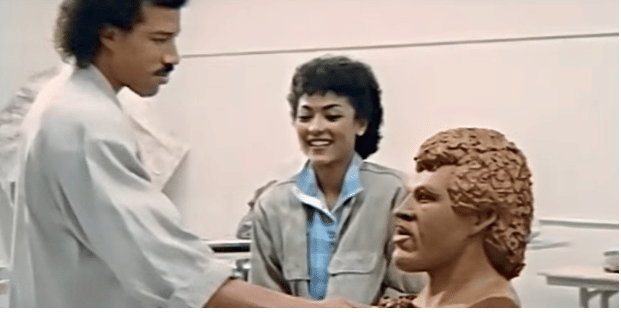
In 1984, my friend Jimmy had cable, which meant he had MTV. So, his basement was where we hung out after school. I was 14, solidly Gen X, and Lionel Richie's "Hello" was in heavy rotation. Richie was a Baby Boomer in his mid-30s, and we weren't his natural fans - we were into Van Halen, Rush, AC/DC - but "Hello" was there, so we absorbed it.
In 1991, I was 22 in Seattle, and Nirvana, Pearl Jam, and Soundgarden were reshaping the musical landscape. Seemingly out of nowhere, grunge had arrived, and things were different. It wasn't Boomers making music for us, but Gen X making music for Gen X. And then we were making music for Millennials, until we weren't. The recent conversation about Gen X's cultural legacy raises a question: was our musical revolution part of a predictable pattern, or something unique?
This pattern has a name: The Generational Music Theorem, developed by Matt Bailey. On a recent episode of the Nevermind the Music podcast, I discussed this idea with Mark and Nichole. We loved the framework but had some critiques about its descriptive power versus its predictive value. While the theorem describes my youth perfectly, my 10-year-old daughter's experience with music doesn't resemble mine at her age. She has options I couldn't have imagined. Does that break the pattern or make it harder to see?
What is the Generational Music Theorem?
The Generational Music Theorem explains how music changes through two alternating phases driven by the relationship between who creates music and who consumes it:
Evolution Phase
Older generation creates music
Younger generation becomes primary consumer
Musical style adapts but doesn't transform
Examples: British Invasion (1964), MTV era (1982), Teen pop (1999)
Revolution Phase
Younger generation begins creating music for themselves
Dramatic stylistic transformation occurs
Often triggers moral panic from older listeners
Examples: Rock 'n' roll (1955), Grunge (1991), EDM (2011)
These cycles repeat approximately every 18-20 years.
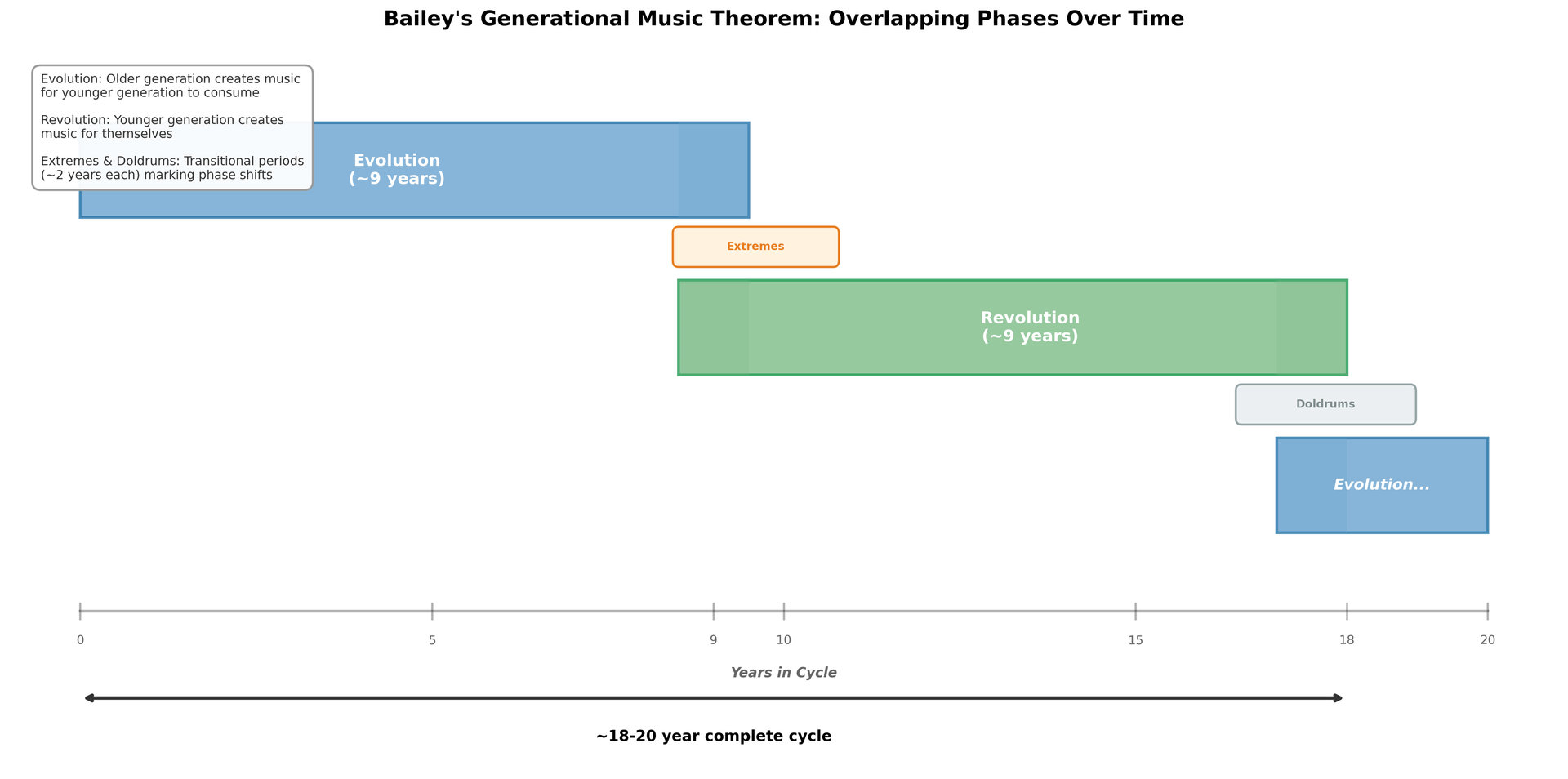
Bailey's Generational Music Theorem maps major musical revolutions to generational cycles, showing how genres like Rock & Roll (1956), Disco (1974), and Grunge (1991) emerged approximately 18-20 years apart as new generations created music for themselves rather than consuming what older generations produced.
Bailey's Framework: How Generations Shape Music
Matt Bailey developed the Generational Music Theorem by building on Guy Zapoleon's Music Cycle theory and the generational work of Strauss and Howe. The framework identifies how generational transitions drive musical change in ways that feel random but follow identifiable patterns.
The Evolution Phase: When Generations Collaborate
Evolution happens when an older generation creates music while a younger generation becomes the primary consumer. The younger audience (roughly ages 15-25) shapes what becomes popular, but they're not yet creating the music themselves.
Think about the British Invasion in 1964. The Beatles, the Rolling Stones, and the Kinks were creating music, but the youngest Baby Boomers were becoming the dominant consumers. Or consider Lionel Richie and Madonna in the MTV era - both born in the 1950s, achieving massive success with Generation X audiences just entering their prime music-consuming years. The teen pop era of 1999 followed the same pattern, with Britney Spears and *NSYNC creating music that Millennials eagerly consumed.
Evolution phases feel exciting. New energy enters popular music. But the fundamental style doesn't change dramatically because creators still carry the sensibilities of an older generation, adapted for younger tastes.
The Revolution Phase: When Generations Take Over
Revolution happens when the younger generation starts creating music for itself. This is the moment when consumers become creators, and everything changes suddenly.
Rock 'n' roll in 1955. The classic rock era started around 1970-71. Grunge's explosive arrival in 1991. EDM's emergence around 2011. These weren't gradual evolutions - they felt like overnight transformations because they were. A new generation was finally making music that reflected its own reality and values.
Revolution phases often trigger moral panic from older listeners. Parents worry about lyrics, volume, and attitude. But for the generation creating and consuming this music, it feels authentic in ways the evolution phase never could.
The Creator/Consumer Dynamic
What makes Bailey's framework compelling is its focus on the relationship between those who create music and those who consume it. Both roles matter, but they don't always align generationally. When they do align - when creators and consumers belong to the same generation - you get revolution. When they don't - when creators are older than primary consumers - you get evolution.
The handoff moment between these phases creates the pattern. Evolution leads to revolution leads back to evolution as the next generation emerges. The cycle repeats with remarkable consistency across decades. However, Bailey's full framework identifies transitional periods between phases—including "extremes" (fads appealing to the older generation) and "doldrums" (musical stagnation before the next revolution)—that add complexity beyond the scope of this article.
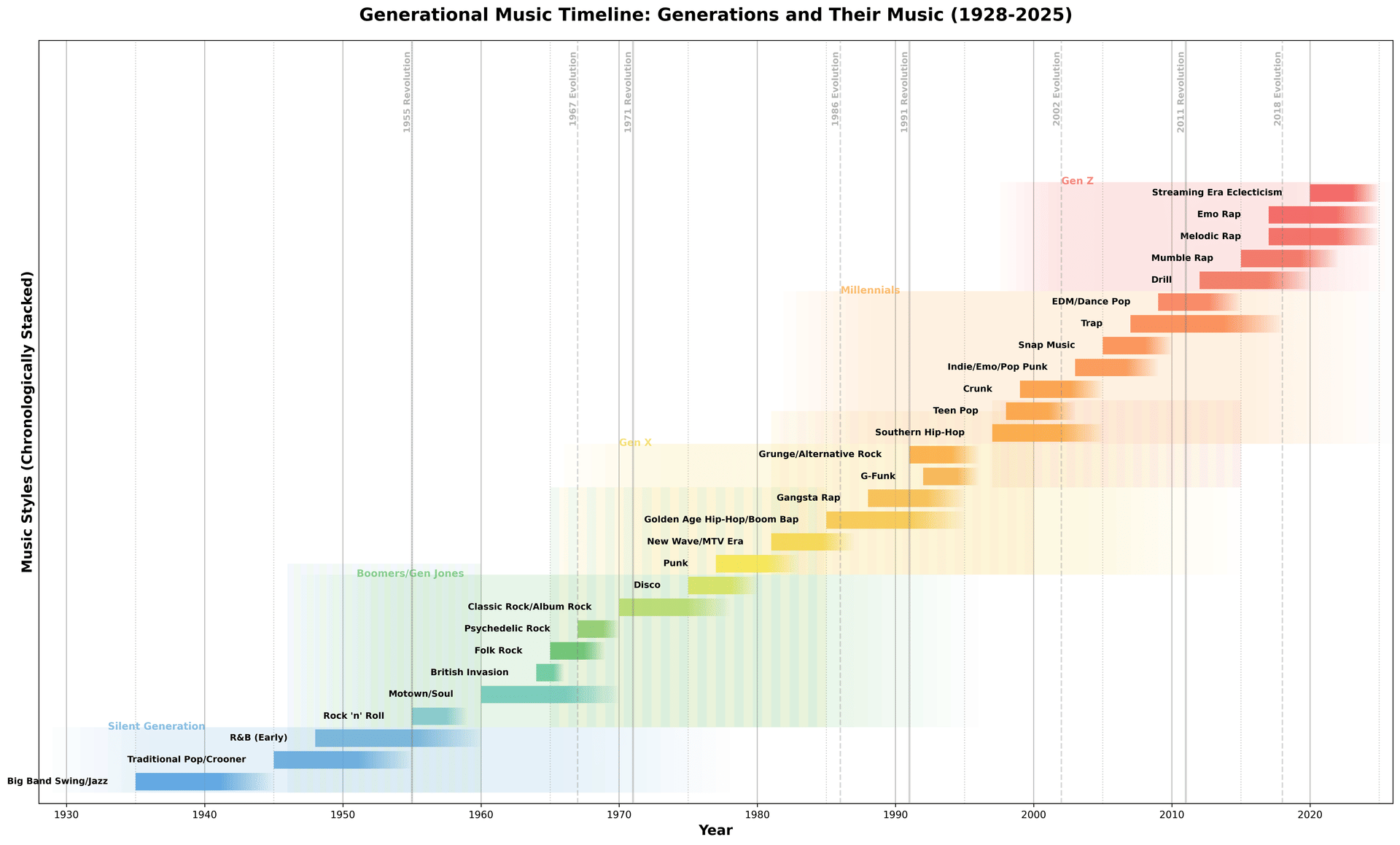
Bailey's Generational Music Theorem maps major musical revolutions to generational cycles, showing how genres like Rock & Roll (1956), Disco (1974), and Grunge (1991) emerged approximately 18-20 years apart as new generations created music for themselves rather than consuming what older generations produced.
The Birth Year Evidence
Bailey's most striking evidence comes from examining the timing of the births of revolutionary artists. The clustering isn't random. The Beatles generation - the artists who drove the British Invasion - were born primarily between 1941 and 1943. The MTV era superstars who defined the 1980s? Madonna, Prince, and Michael Jackson were all born in 1958.
The grunge revolution presents a more complicated picture. Kurt Cobain was born in 1967, but Eddie Vedder and Chris Cornell were both born in 1964 - closer to the MTV generation than to Cobain's cohort. This spread illustrates one of the framework's limitations: musical movements don't always align perfectly with narrow birth-year windows.
MTV accelerated these cycles by making music primarily visual in the 1980s. Today, YouTube, Spotify, Twitch, and TikTok are transforming music discovery and consumption in ways that could either accelerate these cycles or fragment them beyond recognition.
Why the Pattern Works
The framework works because it aligns with how adolescents form identity. As Nichole observed during our podcast discussion, teenagers develop their sense of self partly by differentiating themselves from their parents while finding belonging among peers. Music becomes a powerful tool for both rebellion and connection during this critical developmental window.
The music that becomes yours during late teens and early twenties literally shapes who you become. These preferences persist throughout life - not as nostalgia, but as fundamental identity formation. When a generation starts creating music for itself (revolution phase), that music resonates more deeply precisely because it reflects the creators' own identity formation process. The alignment between creator and consumer isn't just demographic - it's developmental.
Where the Framework Gets Complicated
Bailey's framework describes this pattern across multiple generational transitions. But applying it gets complicated in several ways.
The genre exception problem. Hip hop provides a compelling case study. Rather than a sudden revolution moment, hip hop emerged gradually from the late 1970s Bronx scene, gained mainstream traction through the mid-1980s with Run-DMC and the Beastie Boys, and continued rising through the early 1990s. This gradual ascent over 10-15 years doesn't fit Bailey's clean 18-20 year cycle, suggesting the framework works better for some musical movements than others.
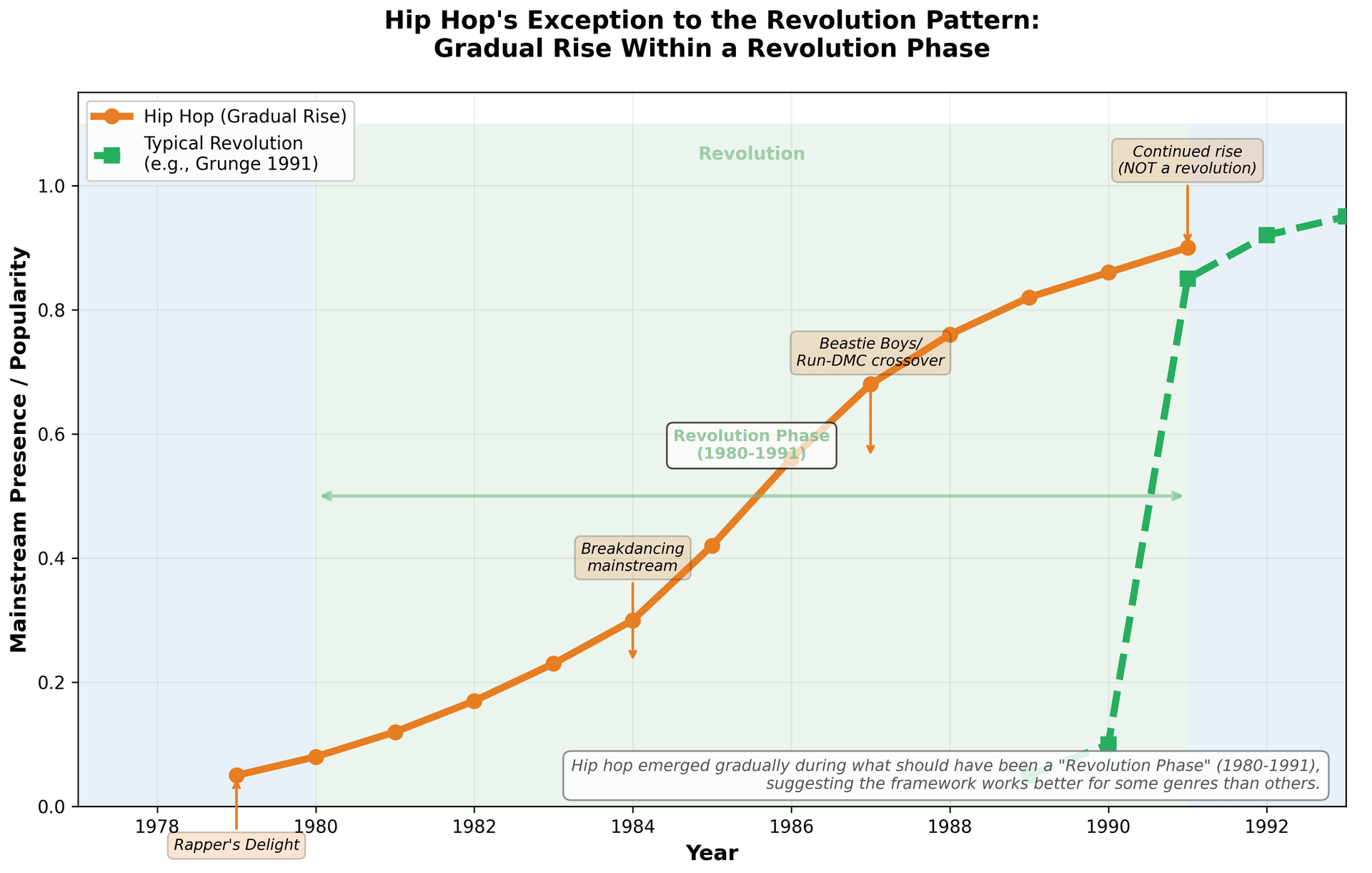
Hip hop's gradual rise from 1979-1991 contrasts sharply with typical revolution patterns. While grunge exploded overnight in 1991 (matching Bailey's framework), hip hop spent over a decade slowly building mainstream presence during what should have been a Revolution phase, suggesting the framework works better for some genres than others.
The platform fragmentation problem. The framework emerged from studying music during the monoculture era when radio, then MTV, created shared listening experiences. Everyone heard the same songs. But algorithmic personalization on Spotify and TikTok creates millions of micro-audiences consuming completely different music. My 10-year-old daughter can access the entire global history of recorded music from her device. When she listens to K-pop while I play Led Zeppelin or Soundgarden in the background, she's not rejecting my generation's music - she's adding to an infinitely expanding library. Previous generations experienced music sequentially: whatever was the hot new record or on radio, then MTV's curated rotation, then early internet's expanded choices. But algorithmic streaming presents genre as aesthetic choice rather than a generational identity marker.
The prediction problem. This brings us to the framework's biggest limitation: the difference between description and prediction. Like Isaac Asimov's psychohistory - which we discussed extensively during our Foundation coverage - the Generational Music Theorem might predict broad patterns while individual moments remain chaotic and unpredictable. Bailey's framework describes past patterns with remarkable clarity, but whether it can forecast Gen Z's revolution is another question entirely.
What Is Gen Z's Musical Legacy Going to Be?
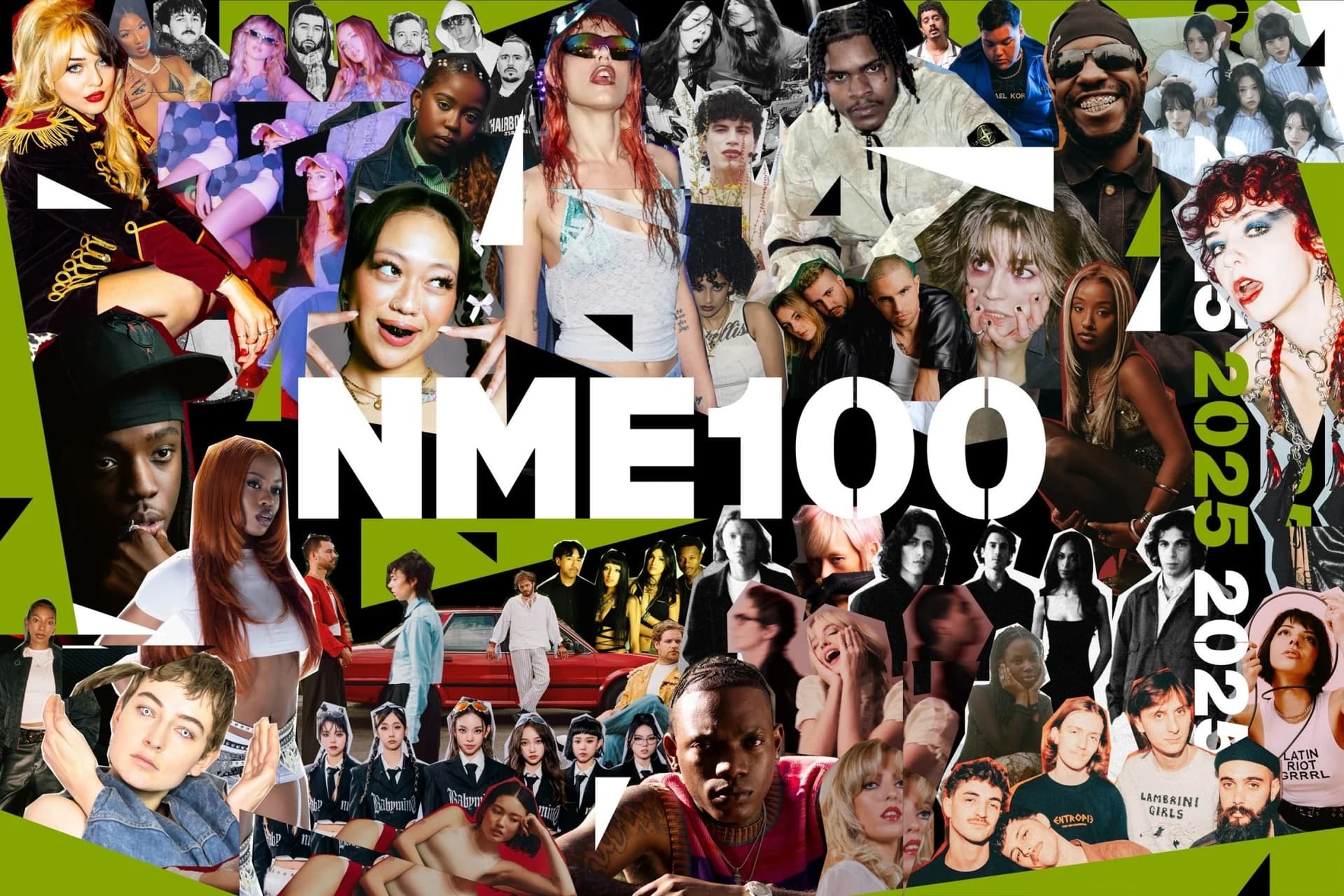
NME's 100 Essential Emerging Artists for 2025 represents Gen Z beginning to create music for themselves rather than consuming what older generations produce - potentially signaling the start of a new revolutionary phase. (Image: NME)
If the pattern holds, we should be experiencing or approaching a revolution phase. Millennials dominated music creation and consumption from the 2000s through the 2020s. Generation Z has been emerging as the primary consumer base for several years now and is increasingly creating music.
Several indicators suggest this transition is underway. Chappell Roan, Olivia Rodrigo, and Billie Eilish represent artists creating music that resonates with Gen Z in ways that feel distinct from Millennial sensibilities. Genre-blending has intensified. The intimate, vulnerable aesthetic that Bailey predicts for Gen Z - based on their alignment with the Silent Generation archetype in Strauss-Howe theory - appears in much of their popular music.
But we might be unable to recognize a revolution while we're in it, especially if platform fragmentation has changed how musical revolutions manifest. Previous revolutions felt sudden and total because monoculture made them visible. Rock 'n' roll displaced everything before it. Grunge seemingly ended hair metal overnight. But if there's no shared mainstream anymore, how does a revolution even happen?
Perhaps the revolution already happened, but it looks completely different than previous revolutions. When access is infinite and algorithmic, maybe Gen Z's "revolution" isn't rejecting Millennial music but creating alongside it - genre-blending, global fusion, simultaneous consumption of 1970s prog rock and 2024 hyperpop without seeing any contradiction.
Historically, musical revolutions don't start with mainstream artists. They emerge from marginalized youth and then explode into visibility when the broader generation adopts them. Today's equivalent might be LGBTQ+ teens, multilingual artists, or TikTok subcultures creating sounds that haven't reached broader awareness yet but could suddenly dominate. Or maybe we're measuring wrong entirely - streaming data provides different information than radio play or album sales, creating fame through mechanisms that might not map onto generational transitions the same way broadcast media did.
Understanding the Pattern
The Generational Music Theorem describes how creator/consumer alignment drives musical change, but it doesn't pretend to predict with certainty. Bailey's framework explains why Jimmy's basement felt different from Seattle ten some odd years later - evolution giving way to revolution as Gen X moved from consuming to creating.
When my daughter queues up K-pop on her device while classic rock plays in the background, she's experiencing something I never could: musical abundance without generational scarcity. Whether that breaks the cyclical pattern or transforms it into something we don't yet have language to describe, only time will tell. The framework may be evolving alongside the platforms that carry music, or we might simply lack the distance to recognize a revolution while living through it.
We explored the Generational Music Theorem in depth on Nevermind the Music with hosts Mark and Nichole, examining both Bailey's framework and its limitations. For Matt Bailey's ongoing analysis and data, visit his Graphs About Songs Substack. For more on psychohistory and large-scale pattern prediction, check out our Foundation coverage.
Author's Note on AI Assistance: This article was developed in partnership with Claude AI (research, framework organization, prose development) and Perplexity AI (SEO optimization, source validation). The core insights about generational music cycles, incorporation of Nichole's psychology perspective, and all analytical observations are my own.