
by Bryan C (Lorebrary Editor)
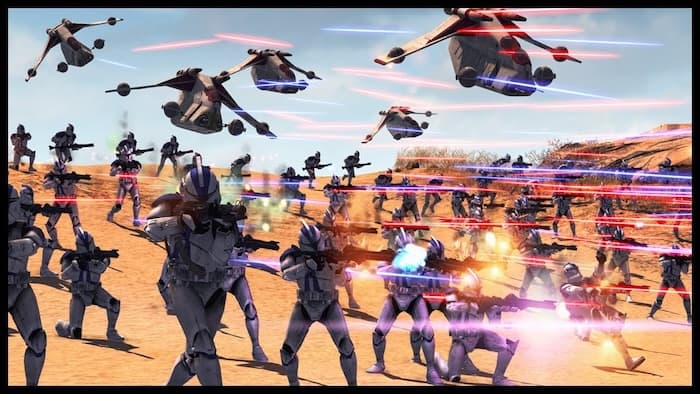
As I watch or read the Clone Wars, Foundation, Dune, and Halo, I think about the impact of these large-scale galactic wars. I see immense battles, and the resources needed to fight these long wars are hard to comprehend. Adding the large continental wars found in Lord of the Rings and House of the Dragon/Game of Thrones are essential as I write this.
I also keep thinking about the impacts of these wars. A world war is a seismic event reverberating throughout society, leaving profound and lasting effects. Economically, socially, culturally, and politically, the scars of such conflicts reshape nations and individuals. Beyond the apparent destruction, world wars redefine societies’ identities, priorities, and aspirations. If we look closely enough, these stories give us a small insight into the impact of these wars.
Economics
On an economic level, world wars often lead to massive infrastructure devastation and the redirection of resources toward military efforts. Industries are overhauled to meet wartime demands, creating temporary job booms but often at the expense of consumer goods. Post-war periods frequently require years of rebuilding, with nations grappling with debt, inflation, and disrupted trade networks.
In these stories, we tend to see profits running through war. In Star Wars, it’s the Trade Federation; in Dune, it’s Aurelius Venport and VenKee Enterprises. In many places, you also wonder who these shipbuilders, weapons makers, and mineral miners are who are reaping enormous profits here.
One strength of these stories is the devastation of planets, such as in Brian Herbert’s Legend of Dunes prequel trilogy or the Mandalorian city of Sundari. But we also find the economic hardship of planetary inhabitants in many of these stories.
Social
Socially, the impact is profound and multifaceted. Families are torn apart as soldiers are sent to the front lines, often resulting in a lost generation of youth. Women and minorities frequently step into roles traditionally denied to them, accelerating shifts in gender and racial dynamics. For example, during both World Wars, women entered the workforce en masse, paving the way for broader societal changes in the following decades. The collective trauma of war also shapes mental health, giving rise to terms like "shell shock" in World War I or "PTSD" in modern contexts.
These stories better explore the devastation of cities and planets, such as the Brian Herbert books about the Machine Wars or the Mandalorian city of Sundari. In Star Wars, Clone Wars does a good job of looking at the impact of war on individual soldiers, people, and the Jedi.
Culture & Religion
Culturally, the effects of a world war echo in art, literature, and philosophy. The experience of loss and resilience often leads to artistic movements that grapple with the meaning of existence, morality, and human suffering.
It’s interesting to note the impact of the Clone Wars on the Jedi as they fall after the Clone Wars.
Politics
Post-war societies may adopt new political ideologies, reject old hierarchies, or embrace global cooperation to prevent future conflicts. War has caused empires to fall and strongmen to rise.
Show and book writers dig deep into the political effects of a large-scale war. In Star Wars, I can find the fall of the Old Republic; in Dune, it’s the rise of a new emperor.
I know I missed many examples, but I hope watchers and readers in our community will recognize many others and ponder the impact of war as you watch and read these stories. As our world becomes more volatile, it's crucial to think about the effects of war. While the scars are deep, these wars often ignite powerful movements toward rebuilding and change.