

by Doove71 [Loremaster]
I want to be upfront about something. When Starfleet Academy was announced, I wasn’t the grumpy Gen X fan shaking his fist at the clouds (thanks, David). If I’m honest, I was just mildly disinterested. A show aimed at a younger audience, cadets navigating their futures, lighter in tone than the Trek I’ve become used to, “Starfleet 90210”. Fine. But I’m a Trek fan, I was always going to watch it, whatever the online noise said, and there was plenty of anti-Starfleet Academy noise out there, which I’ve learned to file in the same drawer as every other pre-release fandom outrage (the bin).
So, there I was, mildly disinterested but watching anyway, and after the first two episodes, my wife and I were completely hooked. David touched on something similar in the recent mid-season check-in podcast, and it resonated immediately. We look forward to it every week now. There’s a warmth and an infectious energy to this show that I think connects to something Roddenberry was always reaching for: the idea that the future doesn’t just happen to humanity, it’s built by people who actually enjoy building it together. It’s optimistic. It’s fun. And right now, in the timeline we’re all living in, that counts for rather a lot.
But the podcast discussion that really got my brain fizzing wasn’t about the cadets themselves. It was about the reaction some fans have had to Captain “Kitty” Nahla, specifically the criticism that her portrayal is somehow disrespectful to the reverence that should surround the rank of Starfleet captain. And this, I’m afraid, is just like David, Deneé, and Ian, where I have to respectfully but firmly push back.
Having had a pretty diverse career, I’ve spent a significant chunk of my working life observing, experiencing, and studying what leadership actually looks like in practice — this was reinforced about 10 years ago by earning a master’s degree in leadership. The argument being made against Nahla is one I’ve heard before, and it’s the argument of the dogmatist.
The Heroic Leader: A Comfortable Myth
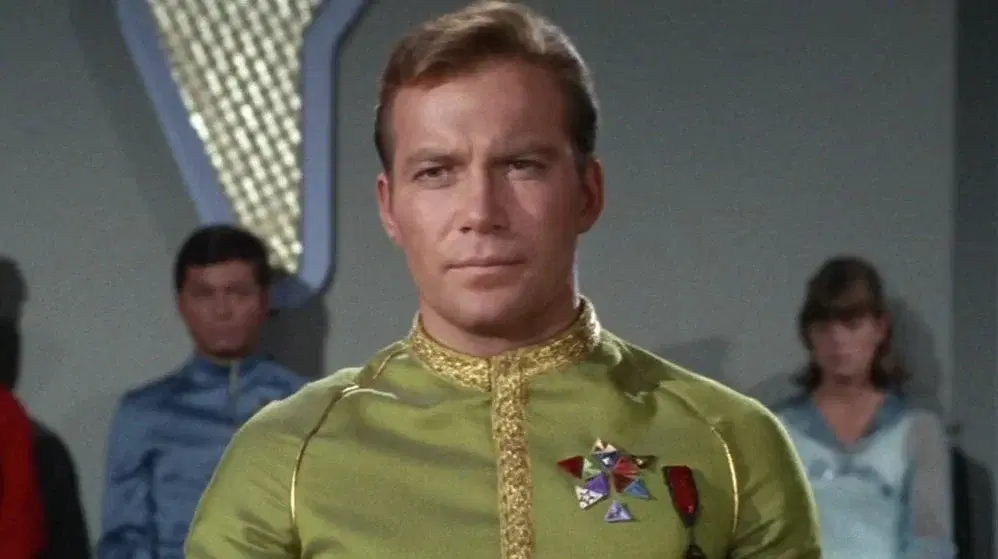
We have, as a culture (Western culture), some deeply ingrained images of what a leader looks like. Either it’s the hyper masculine, leads with their gut, “damn the torpedoes” type, or it’s the chin up, voice steady, commanding the room type. Patriarchal, decisiveness without visible doubt, authority that doesn’t need to be explained because it radiates from the person wearing it. In the Trek context, these archetypes have a name and a face, Kirk and Picard, making speeches that land like scripture.
Being of that Gen X generation, I have a nostalgic fondness for those archetypes. I got the goosebumps watching Star Trek: First Contact when Worf was commanding the Defiant, and in his desperate final command when battling the Borg cube, shouted “Ramming speed!” But I’ve spent enough time in uniform and enough time in leadership development to tell you plainly: that model, the stoic, singular, heroic leader, is not the full picture. It never was. It’s a shorthand, and like most shorthands, it tells you something true while leaving out a great deal that’s equally true.
The academic literature on leadership has been quietly (and sometimes not so quietly) dismantling the heroic model for decades. Transformational leadership, servant leadership, and distributed leadership aren’t just buzzwords from the endless corporate ‘self-help’ books. They describe real, observable patterns of how effective leaders actually operate, especially in complex, high-stakes, rapidly-changing environments. Which, unless I’m very much mistaken, is a fairly solid description of life aboard a Starfleet vessel as it’s been depicted on screen.
What I Actually Saw in Uniform
I’ve been fortunate, and occasionally unfortunate, if I’m being honest, to witness a very wide range of leadership styles during my career. I’ve served under people who absolutely fit the classical mold: composed, authoritative, able to walk into a room and establish command presence without saying a word. And yes, in certain specific circumstances, that style is exactly what’s needed. When things are going sideways fast, and there’s no time for a committee discussion, you want someone who can make a call and project certainty even when they don’t entirely feel it.
But I’ve also served under leaders who didn’t fit that mold at all, and who were, in many ways, more effective. Leaders who built trust through transparency rather than mystique. Leaders who asked questions, who made their people feel genuinely heard, who understood that the best information in any organization rarely lives at the top. Leaders who were funny and self-deprecating, leaders who admitted when they’d gotten something wrong and, importantly, called themselves out for it, and then pivoted to how they could learn from it, are not weak leaders at all. In environments that required sustained motivation, complex problem-solving, and genuine team cohesion, they were often the most effective leaders I ever encountered.
The criticism of Captain Nahla seems to boil down to: she doesn’t carry herself like a traditional Starfleet captain. She’s warmer, more accessible, and less formal in her authority. And to that I say, yes! That’s rather the point.
Dogma in a Galaxy Far… Actually, Quite Close to Home
There’s a particular kind of criticism that tends to dress itself up as principled concern while actually being resistant to change. “This isn’t how a captain should behave” is a version of that criticism. It assumes that the model of leadership established by one era, in one set of stories, reflecting one cultural moment, is the definitive and correct model for all time. It confuses the uniform with the person wearing it. As well as, and let’s face it, in the Trek timeline, over 900 years are separating the time of Kirk and Nahla, as if command styles don’t evolve over time.
This matters beyond the show, because we’re living through a moment where the question of what leadership should look like is genuinely urgent. Institutions that once commanded automatic deference are struggling. Trust in traditional authority structures, political, military, and corporate, is at historic lows in much of the world. The response to that from some quarters has been to double down: more authority, more projection of strength, less visible doubt. Others have asked whether the old model was ever as universally effective as its defenders claim.
Star Trek, at its best, has always been on the side of the second question. Roddenberry’s vision wasn’t of humanity perfected in the shape of its existing power structures; it was of humanity having grown past them. A future where reverence is for the mission, for the people around you, for the ethics you carry with you, not simply for the rank on your collar.
Captain Nahla and the Leaders We Actually Need
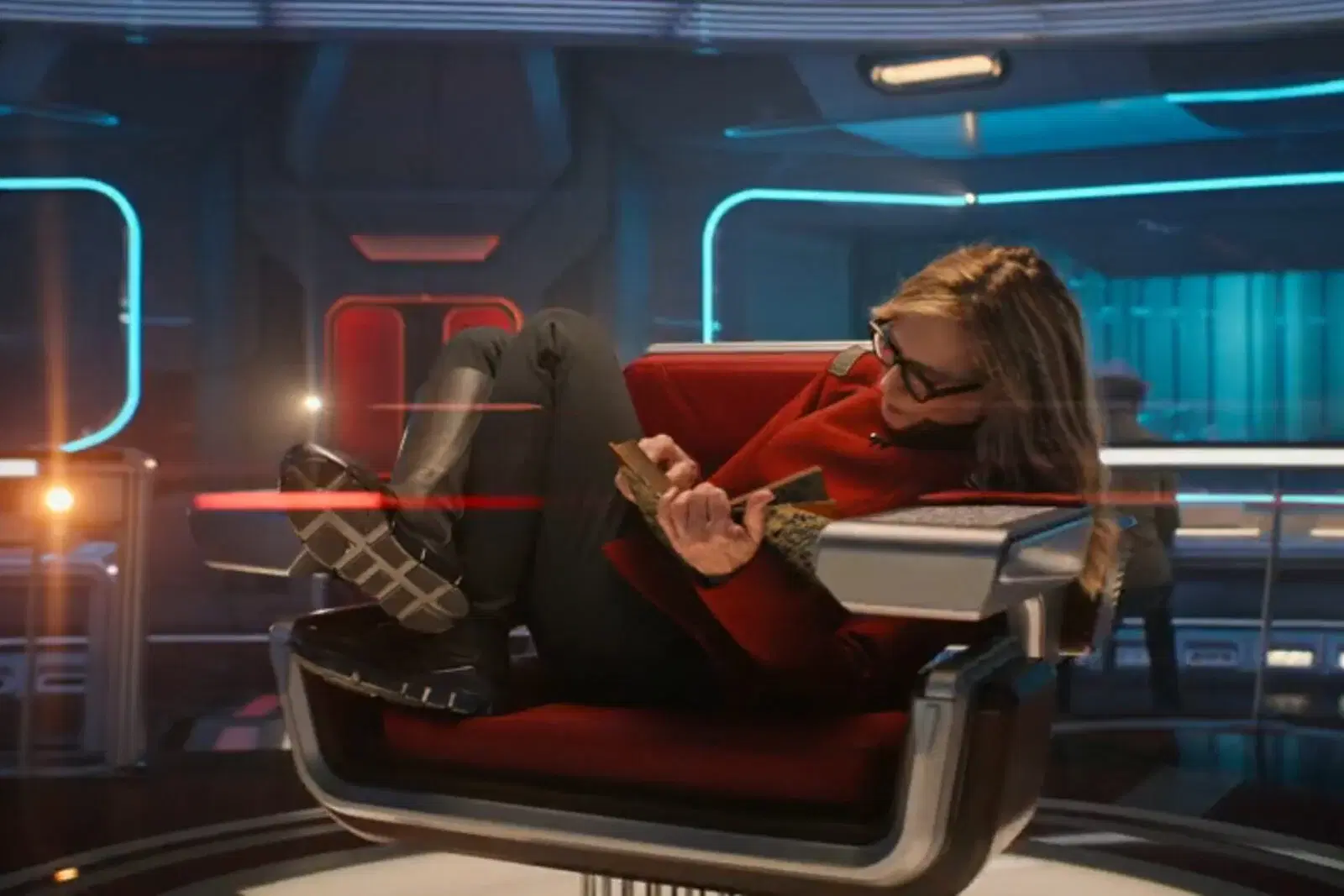
What Starfleet Academy is doing with Captain Nahla, whether entirely intentionally or not, is presenting a model of leadership that feels genuinely current. She leads a community of young people who have grown up in a shattered Universe, rebuilding itself and now saturated with information, where before there may have been very little. These are young people from an entirely different culture, one where they may be accustomed to having their views heard, where they may be deeply skeptical of authority that demands respect without earning it. If she walked onto the Athena channeling someone like Jellico (ick), she’d lose half the room before she opened her mouth.
Instead, she leads through relationships. Through presence rather than performance. That’s not a betrayal of what a Starfleet captain is; it’s a development of it. The mission is the same: the people, the ethics, the reach toward something better. The style has evolved with the context. That’s not a weakness. In the leadership literature, we’d call it adaptive leadership, and it’s one of the harder things to pull off consistently.
There’s also, and I don’t want to gloss over this, a gendered dimension to some of the criticism that I think is worth acknowledging. The qualities being coded as “not captain-like”, warmth, accessibility, and emotional attunement, are qualities that have historically been dismissed in leadership contexts when they appear in women, while being overlooked or simply not expected of men. Let’s not forget the trailblazing nature of Captain Kathryn Janeway, the “first” female captain explored in the Trek universe. Looking back at Voyager, it’s a portrayal that again reflects the era in which the show was created. Janeway has the empathetic, nurturing traits, but also has the ‘all guns blazing’ approach, basically the heroic leader trope, but just with different reproductive organs. I’m not suggesting everyone who has raised an eyebrow at Nahla is making that calculation consciously. But the pattern is worth noting.
Boldly Going Where the Dogma Hasn’t Been Before
I started this by admitting that Starfleet Academy, as David stated, shouldn’t, on paper, be my thing: Gen X Trek fan, military background, a certain fondness for the gravitas of the older shows. And yet here I am, watching it with my wife every week, enjoying it enormously, and finding in its optimism something that feels genuinely needed.
The show isn’t trying to replace what came before. It’s trying to add something, a version of the Trek universe that believes the future is still bright, that the work of building something better is joyful as well as serious, and that the people who lead that work don’t have to look or sound like any one fixed thing to do it well.
Captain Nahla, to my eye, is a great leader. Not despite the things that some fans find jarring about her, but in significant part because of them. And if that challenges the received wisdom about what a Starfleet captain is supposed to be, then I’d suggest that’s exactly the kind of challenge this franchise, and perhaps we ourselves, are ready for.
As always, I’m curious where the rest of the community lands on this. Does Nahla’s style feel like a genuine evolution to you, or does it pull you out of the story? Drop your thoughts in the Discord. I’ll be the one defending the accessible leader while probably also arguing about whether replicators can produce a proper cup of Yorkshire Tea (none of that Earl Grey nonsense!).