
by David Lorehound
| Spoilers for Season 1 Episode 6 of Pluribus on Apple TV |
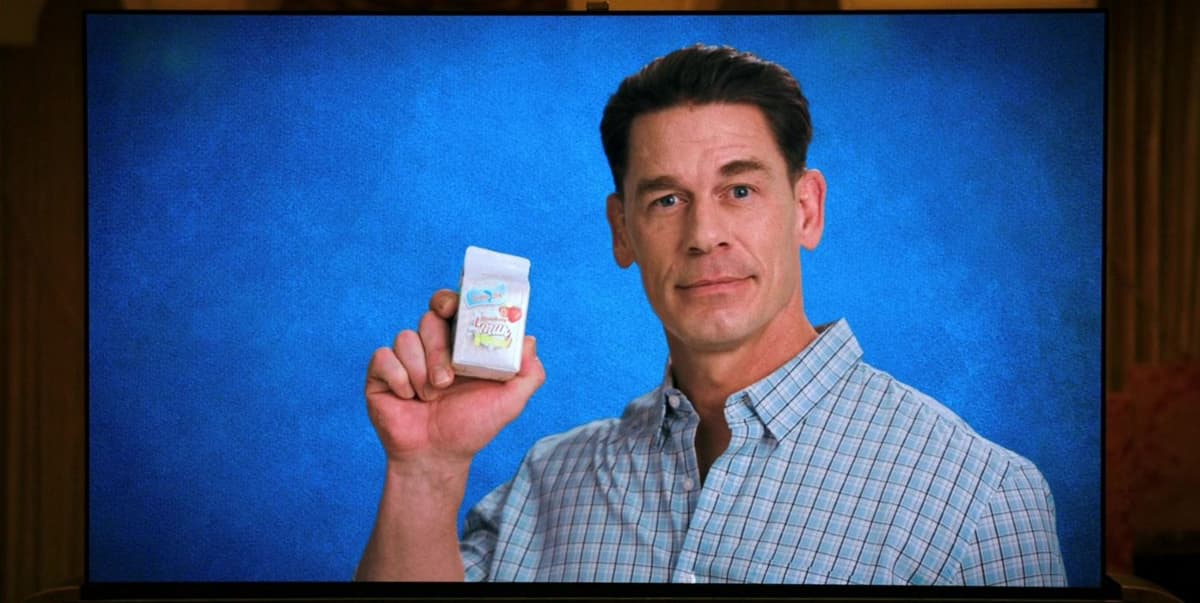
When a cheerful John Cena appears on screen in Pluribus Episode 6 to explain why the Hive Mind needs to process human bodies into protein, something interesting happens: his propaganda video somehow feels more reasonable than Carol Sturka's moral outrage. The Joined use a friendly celebrity face to justify cannibalism, and it works—at least enough to make me question whether Carol's resistance is heroic or privileged. This moment crystallizes why "HDP" forces an uncomfortable reassessment of who we're actually rooting for.
What Happened in Episode 6: Quick Summary
Carol discovers an industrial facility processing human bodies into "Human Derived Protein" (HDP)
She travels to Vegas to confront Koumba Diabaté with evidence
During breakfast, Diabaté watches fascinated as Carol makes avocado toast with bacon—something he's never seen before
She learns she's been excluded from the other eleven immune survivors' regular meetings
A John Cena-fronted video explains HDP as necessary for the Others' survival
The Others cannot force conversion without consent (requires invasive stem cell extraction)
Manousos in Paraguay finally leaves isolation after discovering Carol's VHS tape
Pluribus HDP Meaning: Human Derived Protein Explained
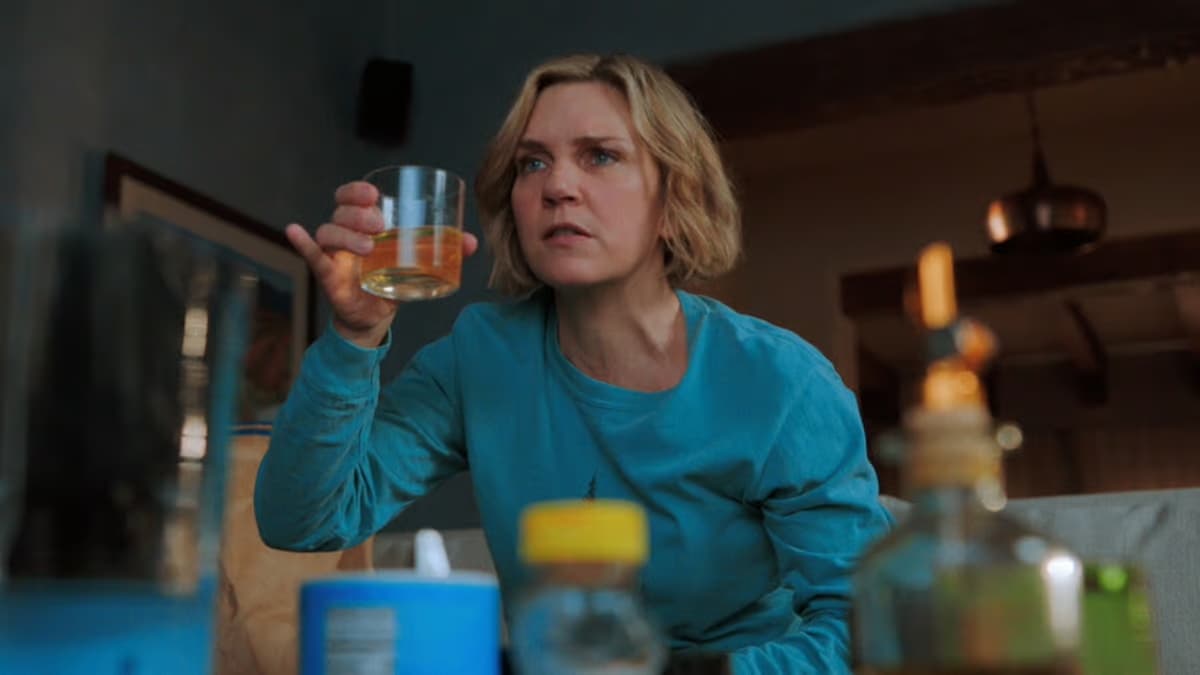
Human Derived Protein is the Others' solution to an impossible caloric deficit. The Others cannot willingly kill animals or any living creatures. Without an alternative protein source, they face mass starvation within a decade. Their solution: harvest from already-dead humans and process them into consumable protein.
Carol's horror is straightforward: it's cannibalism, full stop. But the episode asks an uncomfortable question: if they only use bodies after natural death and the alternative is mass starvation of billions, is this actually monstrous?
This is fundamentally a clash between utilitarian calculation—the greatest good for the greatest number—and deontological absolutes—the strict adherence to rules despite the consequences. In this case: don't eat people, ever, regardless of the math. This utilitarian versus deontological conflict is where traditional hero/villain frameworks for examining Carol and Diabaté begin to break down.
Indeed, the very act of trying to fit them into traditional frames causes a kind of mental friction that forces deeper analysis. Not unlike how Noah Hawley uses an intentionally misattributed quote to philosophical effect in Alien: Earth Season 1 Episode 4, the writers of Pluribus use plot structure itself to push us toward examining philosophical questions that resist simple answers.
The Privilege of Ascetic Resistance

Carol Sturka practices a kind of monastic resistance through chosen deprivation. She drives a police car instead of accepting luxury vehicles. She sits in non-reclining airline seats instead of first class. She eats microwave meals instead of having food prepared and delivered. This isn't poverty—it's disciplined resistance, a way of maintaining separation from what she finds abhorrent.
It occurs to me that monasticism requires a lot of material support. Medieval monks could focus on spiritual purity because the monastery provided food, shelter, and infrastructure. Carol can maintain her moral purity precisely because the Joined maintain everything else.
And she demands quite a bit. In Episode 3, she insists they restock the supermarket for her convenience. In Episode 5, she demands they turn on all the lights in Albuquerque, just for her. They even bring her a live grenade (despite their better judgment).
The contradiction: Carol receives constant service while condemning the Others' existence. She wants the Joined to maintain infrastructure for her comfort while she fights to destroy them. Her asceticism is affordable because she's not facing the actual constraints the Others face. Her "resistance" looks like demanding room service from the apocalypse.
The eleven other immune survivors appear to have noticed this. Carol's exclusion from their meetings doesn't read as manipulation by the Joined—it looks like peer rejection by people who've found ways to coexist with reality rather than making impossible moral demands.
Her philosophical position is pure deontology: moral duties are absolute. Eating people is wrong regardless of the math, regardless of who starves. Some rules cannot be broken, even for survival. It's a defensible position, but one she can afford to hold because others do all the work.
Koumba's 'Selfish' Generosity
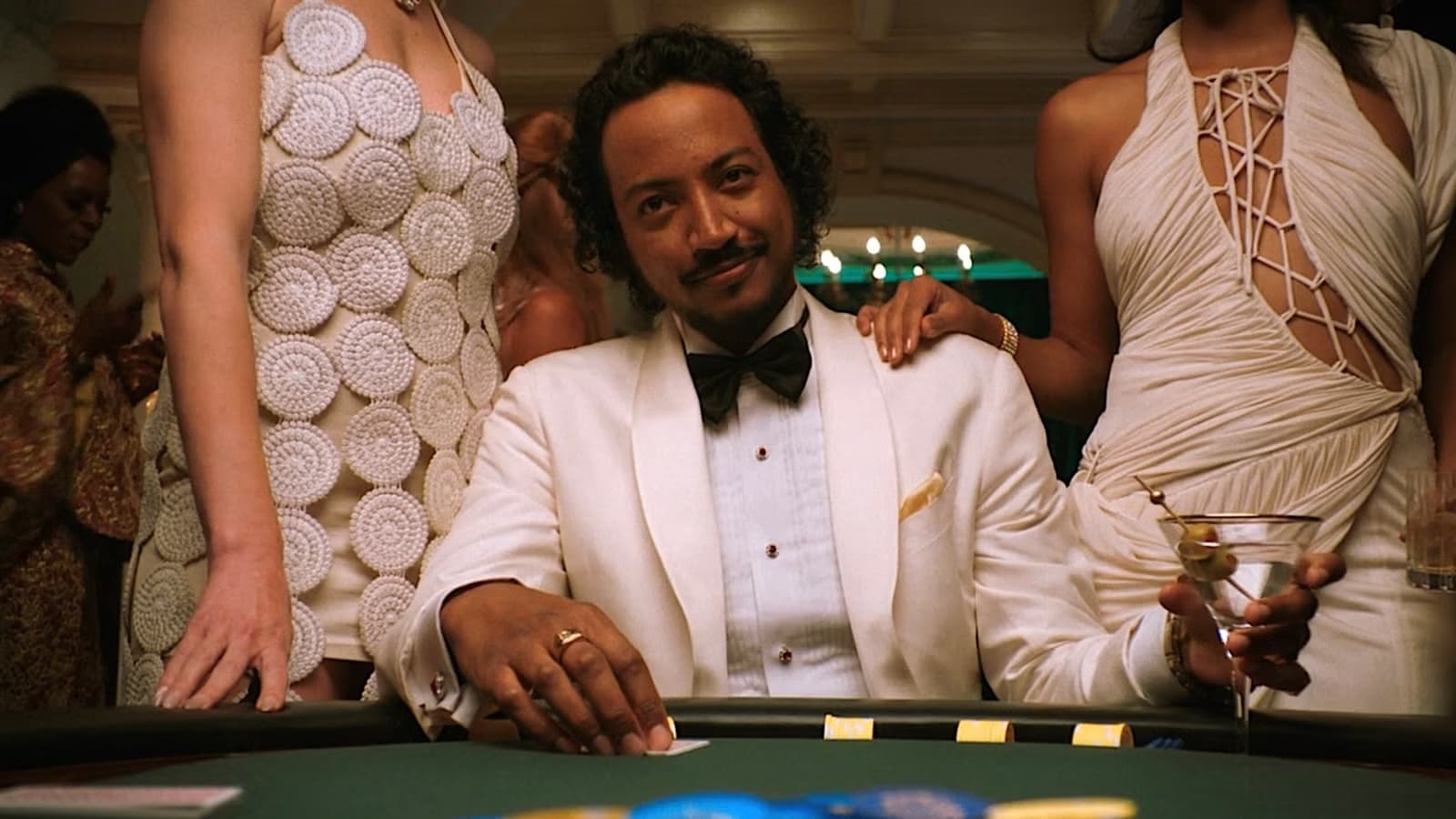
Koumba Diabaté looks like a kind of villain on the surface. He's turned post-apocalyptic Vegas into his personal playground—rigged poker games, rotating partners, keeping a fleet of high end luxury sports cars. He lives in opulence while the Others serve him. He knows about HDP and accepts it as tragically necessary. He declines to help Carol in her crusade to "save humanity."
But notice what else he does. He's rational and diplomatic where Carol is obtuse and brusque. He accepts the reality of the larger circumstances. He participates in the eleven survivors' meetings and understands issues of consent. He allows the Joined to express their kindness fully and creates seemingly positive experiences for everyone around him.
Yet, despite this curated perfection, that breakfast scene is revealing. When Carol makes avocado toast with bacon, Diabaté has never seen this before. It's completely new to him. His elaborate 007 casino fantasy, however perfectly executed by the Joined, is ultimately limited by what he already knows. He can ask the Joined to fulfill his fantasies, but only if he knows what to ask for. Carol, irritating as she is, represents something the Joined can't provide: genuine novelty, spontaneity, surprise. His hedonism might have a ceiling—he's trapped in a loop of known pleasures, no matter how perfectly executed.
Vince Gilligan and the writers establish a mirror between the two: his "selfishness" enables others' generosity, while Carol's "altruism" forces others to serve her demands against their will.
Diabaté's lifestyle reflects what philosophers call prudential hedonism—the view that well-being consists in a balance of pleasure over pain. More specifically, he embodies Cyrenaic hedonism—the active pursuit of bodily, kinetic pleasure rather than the mere absence of pain. Unlike Epicurean philosophy, which seeks tranquility through avoiding suffering, Diabaté pursues Vegas, gambling, and luxury. He wants positive sensory experiences, not just safety.
This creates a three-way philosophical friction:
Diabaté represents Cyrenaic hedonism: Pleasure itself is the goal
The Others represent radical utilitarianism: The end (collective survival) justifies the means (HDP)
Carol represents deontology: Moral duties are absolute regardless of consequences
Diabaté aligns with the Others because both prioritize outcomes over rules. For him, it's maximizing pleasure. For them, it's maximizing survival. Both accept HDP because the alternative—mass starvation or refusing pleasure—seems worse. Carol can't accept this calculus because some rules transcend consequences.
What complicates the "villain" reading: Diabaté may have faced hardship, poverty, or discrimination before the Joining. His hedonism might be a response to previous suffering—maybe this is the first time he's been treated like royalty instead of a threat? Maybe his acceptance isn't moral failure but a form of trauma recovery through experiencing safety and pleasure?
Two Survivors, Two Coping Mechanisms, Zero Oscillation
As I was researching topics for this blog post I came across what Psychologists studying bereavement have identified as the Dual Process Model of Coping. This Process suggests healthy grief requires oscillation between two orientations. Loss-Oriented coping involves dwelling on the deceased, processing pain, and maintaining connections to the past. Restoration-Oriented coping involves distraction, building new roles, and engaging with changed reality.
Neither orientation alone is healthy. The key is movement between them—feeling the grief, then engaging with life, then returning to grief, then moving forward again. The oscillation prevents both pathological avoidance and pathological rumination.
Carol and Diabaté might be stuck on opposite sides of this process.
Carol appears frozen in Loss-Orientation. She lost Helen who was someone she could experience vulnerability with. Clinging to pain might be her way of maintaining connection to what was lost. Rejecting comfort could feel like betraying the dead. She uses struggle itself to validate her identity. Her asceticism is a refusal of restoration-oriented coping. She can't move forward because moving forward means accepting Helen is gone.
Diabaté seems stuck in Restoration-Orientation. He may have escaped hardship before the Joining, and his hedonism might represent healing—using pleasure not as escape but as recovery. But he never processes the loss. He bypasses grief entirely. The Vegas lifestyle is permanent distraction. He can't mourn because mourning would mean confronting what he's become complicit in—a system that literally consumes the dead.
Both are profoundly alone. Carol pushes everyone away to preserve her grief. Diabaté surrounds himself with companions he knows aren't "real" in any meaningful sense. Neither approach works for saving humanity or finding peace. They need each other's coping mechanism but can't access it.
And here's what that avocado toast scene reveals about why Diabaté doesn't simply dismiss Carol: she has value the Joined cannot replicate. She's a source of experiences he doesn't yet know exist. Without Carol or people like her, he might be trapped forever in that loop of known pleasures. She represents access to genuine novelty—the one thing his perfectly executed fantasies can never provide on their own.
Manousos: The Third Way
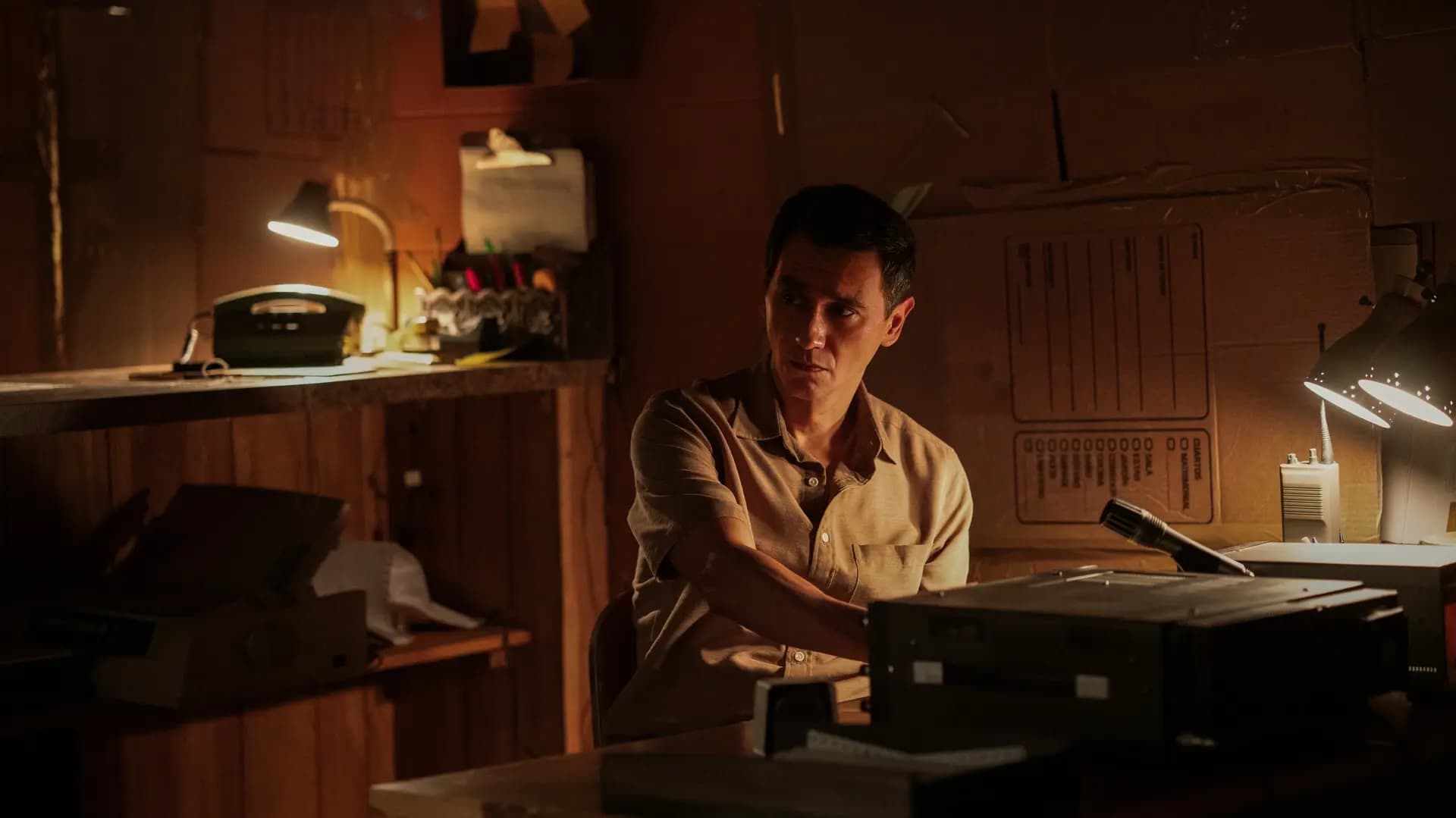
If Carol is Loss-Oriented and Diabaté is Restoration-Oriented, does Manousos represent the beginning of synthesis? When he finally watches Carol's VHS tape while isolated in his Paraguay apartment, he faces the Loss—acknowledges the horror and learns that he's not alone. Then he leaves his room. He packs a bag and heads toward his family home, moving toward Restoration through action.
Manousos embodies the Dual Process Model working correctly. He doesn't deny the horror, but he doesn't drown in it either. He feels it, then moves. This is what oscillation looks like—grief acknowledged, then translated into forward motion. He represents the hope that Carol's resistance and Diabaté's compliance both lack. By moving between facing loss and taking restorative action, he breaks the deadlock they're trapped in.
The Inadequacy of Hero/Villain Categories
So I return to that John Cena moment. Why does his cheerful propaganda work better than Carol's moral clarity? Because the Others are engaging with reality—the math of starvation, the constraints of their values—while Carol engages with principle divorced from consequence.
The episode deliberately uses traditional hero/villain forms to make us feel their inadequacy. Both Carol and Diabaté seem simultaneously right and wrong. What does "humanity" mean when individual consciousness becomes negotiable? Carol fights for something that may not exist anymore—individual identity as an absolute good. Diabaté accepts something horrific—cannibalism as utilitarian necessity. Neither position feels sustainable, but both are understandable. The show refuses to resolve this tension.
Manousos suggests a third possibility—that grief and action can coexist, that we can face horror without being consumed by it or fleeing from it entirely.
Maybe the real horror of Pluribus isn't the Hive Mind at all. It's discovering that survival without suffering feels like betrayal to those who grieve, and that comfort without freedom feels like death to those who remember what autonomy meant. Episode 6 doesn't answer who's right between Carol's deontological resistance and Diabaté's hedonistic pragmatism. It just shows us three people—two drowning in grief while reaching for opposite shores, and one finally learning to swim between them.
Author's Note on AI Assistance
This article was developed in partnership with Claude AI as a writing and research tool, with Perplexity AI used for SEO optimization and source recommendations. Claude helped organize philosophical frameworks, structure the analysis, and transform observations into polished prose. Perplexity was used to identify trending search terms, validate keyword strategy, and recommend authoritative philosophical and psychological sources. The core argument about Carol's privilege and Diabaté's pragmatism, the interpretation of both characters' grief processing, and all analytical insights are my own. Both AI tools served as research assistants and editorial partners, enhancing rather than replacing human analysis.