
by David Lorehound
Spoilers for the entirety of Pluribus Season 1.
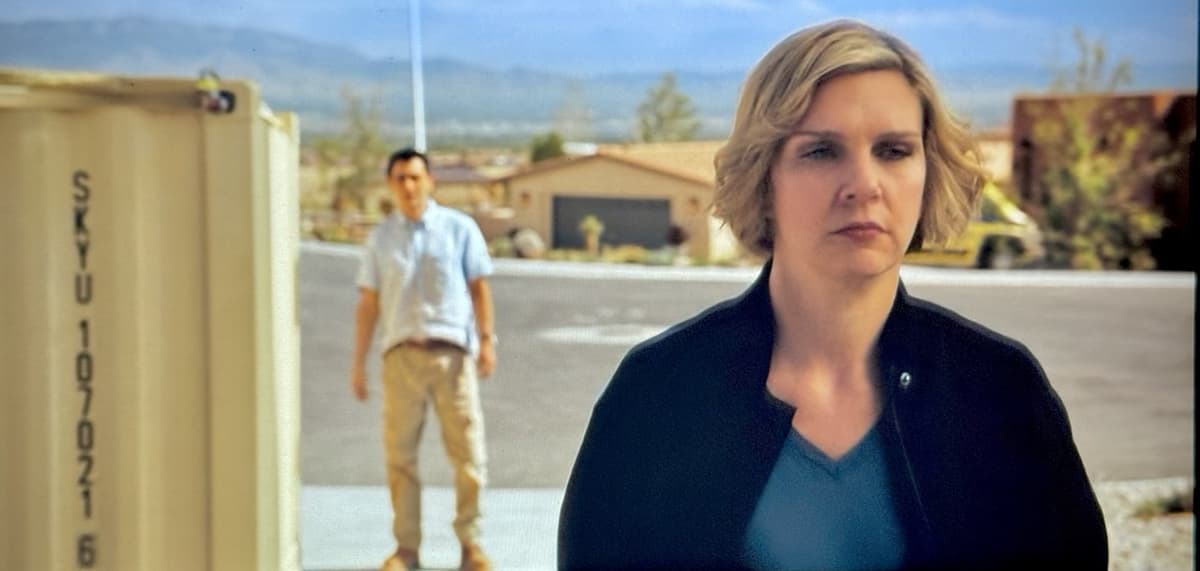
Season 1 has concluded. Carol Sturka stands beside an atom bomb, finally heeding the call she spent nine episodes refusing.
Vince Gilligan has said this is a show designed to showcase Rhea Seehorn, an exploration of happiness and what we'd sacrifice for it. But there's been surprisingly little conversation about the underlying theological structures or how allegory functions not as decoration but as plot architecture. I'm no theologian, but some structures are plain enough to trace.
The show invites open interpretation. Journalists have brought readings about AI, grief, addiction, pandemic anxiety. Even our own conversations on the Lorehounds community Discord have been widely divergent on how to interpret characters and actions. As Seehorn put it in a recent interview: "There is no right answer. It's everything. It's about human nature" (The Watch, December 24, 2025). Audiences decode what they bring; the show functions as a Rorschach test.
But some structures aren't just available for decoding, they're doing the work of plot itself. Christian allegory in Pluribus isn't window dressing or Easter eggs for the theologically literate; it's load-bearing architecture. The 40-day wilderness, the Eucharist, the incense of sanctification. They are the story's shape, not just merely symbols mapped onto a story.
Carol's journey from refusing the call to finally heeding it provides the monomyth scaffolding. What follows are three specific examples that trace the architecture. Attentive viewers can decode far more than this article will cover.
The 40 Days: Biblical Temptation in Episode 7
Episode 7 gives us two 40-day ordeals running in parallel: Manousos's journey and Carol's isolation.
Manousos aligns with tradition. His 40-day trek from Paraguay through the Darién Gap echoes Jesus's wilderness trial in Matthew 4. The Joined offer him three temptations—comfort, companionship, pragmatism—and his refusals mirror the Gospel responses. He suffers a crown of thorns when he stumbles backward, grasping for a vine that breaks, and is impaled by a chuga palm. He nearly dies from infection before the Plurbs arrive by helicopter to rescue him. Manousos is the orthodox Christ figure: suffering maintained as moral purity, isolation given meaning through purpose.
Carol diverges. Her 40 days alone in Albuquerque after the Joined withdraw don't end in triumph. She fails her temptation and succumbs to hedonism, loneliness, eventually seeks out Zosia. But the show doesn't frame this as damnation. Her reunion with Zosia affirms something the allegory might otherwise obscure: we are social creatures, and isolation without purpose is psychologically corrosive. Manousos endures because his suffering has direction. Carol breaks because hers doesn't. Her compromised humanity becomes essential, not shameful.
The allegory raises a question: what if the messiah's weakness is the point, not the failure? The show gives us two Christ figures, and both fail in instructive ways: one through purity that nearly kills him, one through compromise that preserves her.
HDP: The Dark Eucharist in Episode 6
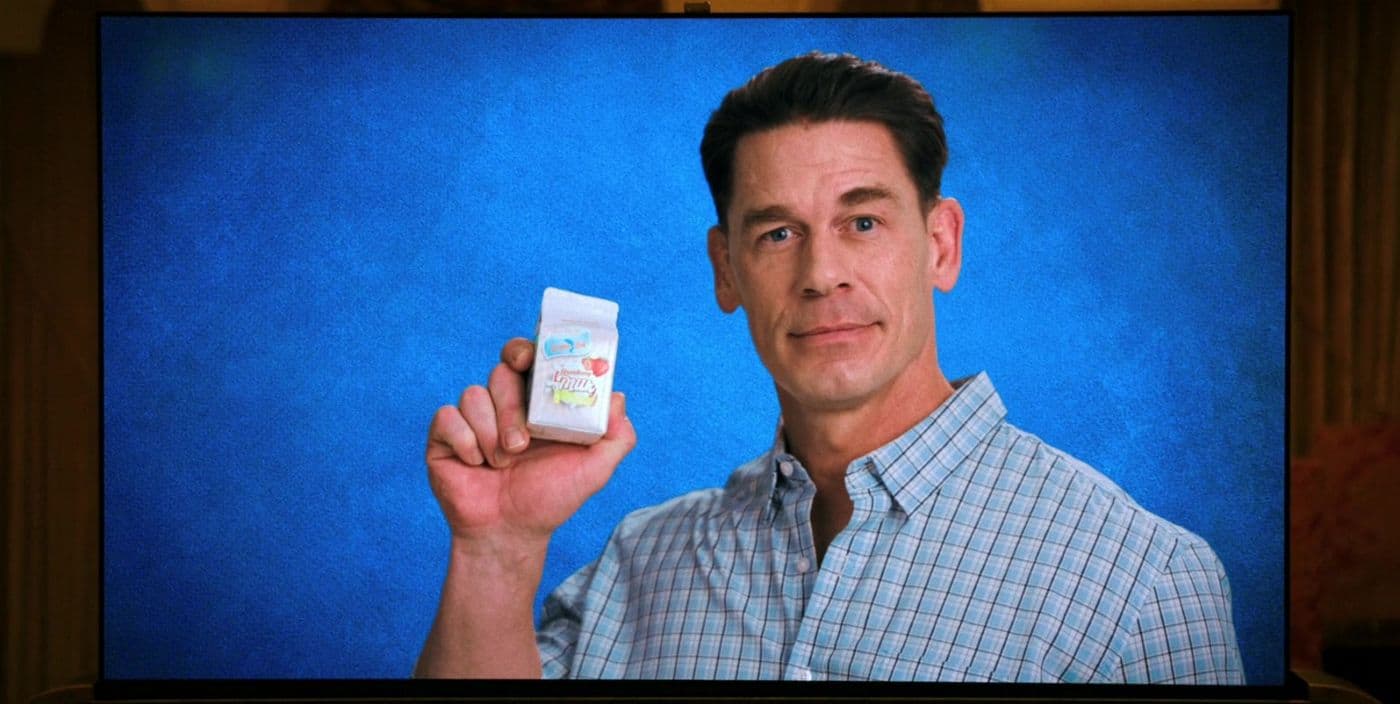
Episode 6 reveals the processed remains of the dead sustaining the living: Human Derived Product. "This is my body" taken to its literal conclusion.
The form of catechesis is unmistakable. John Cena appears as a flattened apologetics spokesman, the scene structured like a communion explainer video. The form echoes religious education; the content is horrifying.
The contrast with Christian Eucharist is precise. In the Eucharist, unity comes through shared participation while personhood is preserved; believers partake and remain distinct. In HDP, unity comes through consumption while personhood dissolves. The dead are reduced to biological material. The hive maintains its collective "body" by feeding on actual bodies.
The show uses eucharistic logic to ask what communion costs. Is the hive's version perversion or completion? The form is recognizable, the outcome monstrous.
For more on the ethics of HDP and Carol's refusal to accept its logic, see Pluribus Episode 6: The Pragmatism of 'HDP' and the Privilege of Grief.
Episode 9: Kusimayu's Joining as Sacred Ritual
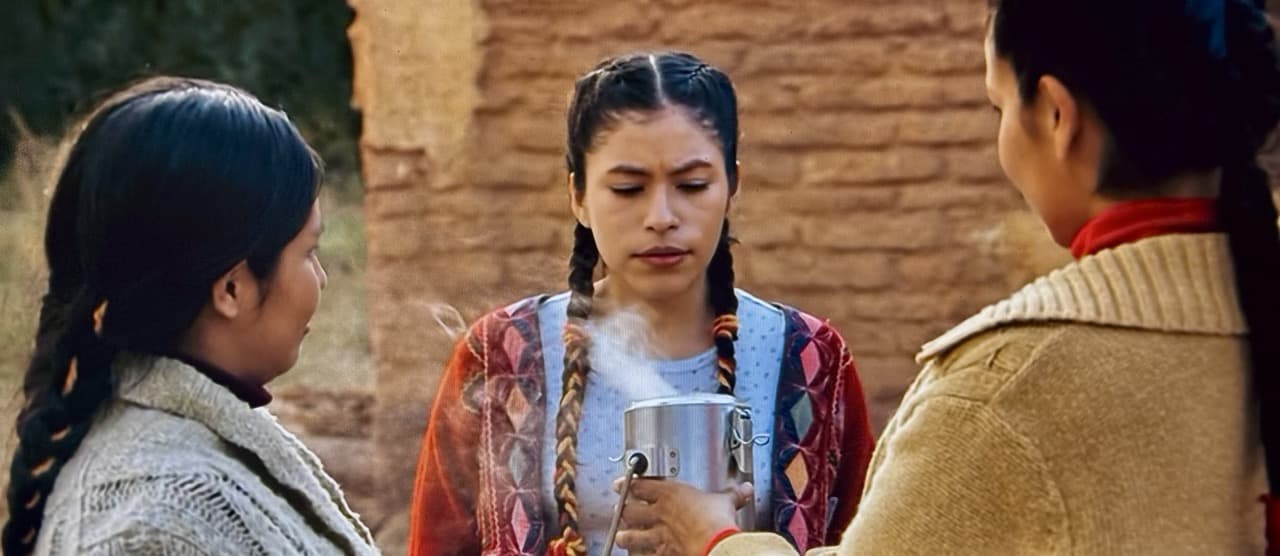
Episode 9 opens in a Peruvian village. Kusimayu inhales vapor in an elaborate ceremony supported by a communal gathering, traditional songs and sacred preparation. The form of liturgy. By Episode 9, the show has built enough theological architecture to stage an explicitly liturgical sequence.
The thurible, the metal censer on chains spreading fragrant smoke through worship space, carries deep significance in Catholic and Orthodox tradition. Psalm 141:2 asks, "Let my prayer be set forth before thee as incense." Revelation 8:3-4 describes incense mingled with prayers rising before God. The Holy Spirit descends to sanctify without destroying; grace perfects personhood rather than dissolving it.
Orthodox censers traditionally carry twelve bells representing the twelve apostles, and the show gives us thirteen immune individuals, with Carol as one among them. This maps onto apostolic structure: Carol as the Christ figure, or depending on your reading, its inversion.
The ceremony borrows the form. Community gathers to witness and support a sacred transition. Inhalation becomes participation as you breathe in the sacred, it becomes part of you. The aesthetic and emotional register belongs to worship: joy, togetherness, belonging.
But the direction and outcome differ. In liturgy, prayers rise from the person to God. Here, consciousness descends into Kusimayu. She is sanctified into the collective, not into her fullest self. The ceremony looks like sacred worship while depicting something else entirely.
Then comes the abandoned goat.
Kusimayu's baby goat follows her, confused and anxious. She coldly ignores it and walks away. The hive promises universal love but cannot love anyone in particular. This is the death of caritas—the Christian concept of love that recognizes the inherent worth of each creature. The detail lands with devastating precision because the liturgical framing has prepared us to expect grace. Instead we get abandonment.
Why vapor and inhalation specifically? Olfactory transmission is involuntary, intimate, liturgically resonant. You cannot choose not to breathe. The sacred enters without consent. The show weaponizes the most participatory element of worship.
The Religious Architecture Beneath Pluribus
By Episode 9, the show stages Kusimayu's joining as full liturgy. How did the allegory get here?
In a recent interview, Gilligan described his creative process: “It’s like having a bunch of Legos on a table and fitting them together. Is this pleasing? Let’s try this. That’s kind of the job. It’s not elegant. It’s not an elegant process. It is a brute force process sometimes” (The Watch, December 24, 2025).
They’re not saying “let’s tell a messiah story.” But once structures emerge, once the 40-day parallel becomes visible, once HDP starts rhyming with communion, they lean into what’s working. By Episode 9, the show has the confidence to open with full liturgical staging because the architecture can bear the weight.
The show engages Christian forms seriously enough to stress-test them. We see three sacramental moments: temptation, communion, sanctification and each are explored rather than simply inverted. Sometimes the allegory aligns, with Manousos’s temptation played straight. Sometimes it diverges, where Carol fails hers. Sometimes it uses the form to ask whether the content still holds.
Understanding the religious symbolism transforms how we read the finale and what we can expect from Season 2. Carol finally accepts the call, but the allegory suggests the cost of that acceptance. So, the question for Season 2 isn’t just “what will Carol do?” but “what does it cost to be the messiah?” And, whether any structure built on atom bombs and abandoned goats can still be called salvation?
Author's Note on AI Assistance: This article was developed using Claude and Perplexity AI as research and writing tools. The core insights about allegory as plot architecture, the interpretation of specific scenes, and the analytical framework are my own.